






Online Pokies and E-Wallets in Australia: Payments
 Available in AU
The guide separates wallet payments from game credits and outlines deposits, withdrawals, mobile access and the limits of Australian player protections.

Table of Contents
- E-Wallets and Real-Money Pokies: The Australian Context
- Logging In, Depositing and Getting a Withdrawal
- Australian Payment Options Without an Operator List
- AUD Deposits and Withdrawal Timing
- New Mobile Access: Browser Play and PWAs
- Offshore Casino Risks, Access and Player Protections
- No-Deposit Bonuses: The Wagering Calculation
E-Wallets and Real-Money Pokies: The Australian Context
“E-wallet pokies” describes a payment arrangement, not a separate kind of game. In the offshore real-money context, it refers to casino-style services where an electronic wallet may be used to move funds between an account and a gambling operator. MiFinity, Skrill and Neteller are examples of e-wallets used for both deposits and withdrawals. Their presence as payment methods does not make an offshore service legal to offer in Australia.
That distinction matters because “online pokies” can describe two quite different activities. One involves wagering money through an offshore casino-style service; the other involves social or free-play apps that use virtual credits. The interface may look similar, but the credits in a free-play app are not the same thing as a cash balance held for gambling. A wallet is a way of handling funds, not evidence that the service is authorised or that its credits can be cashed out.
Australian law places the restriction on operators. The Interactive Gambling Act 2001 prohibits operators from providing real-money online casino-style games, including pokies, to people in Australia. An offshore operator does not become lawful to provide such a service merely by accepting an e-wallet. Payment technology changes how money is transferred; it does not change the legal status of the underlying gambling service.
Choosing an e-wallet option for online pokies in Australia means checking the operator’s licensing details and any stated minimum deposit before deciding whether it suits your needs. This list provides a concise reference to the available information for each operator.
License: Curacao Gaming Control Board OGL/2023/174/0082 (Dama N.V.) SpinsUp is listed with a Curacao Gaming Control Board licence, OGL/2023/174/0082, held by Dama N.V.
License: Curacao – Antillephone N.V. (Versus Odds B.V.) · Min. deposit: EUR 20 Thor Casino is licensed in Curacao through Antillephone N.V. (Versus Odds B.V.). Its stated minimum deposit is EUR 20.
License: Curacao Gaming Control Board (TechSolutions Group N.V.) Bizzo Casino is listed with a Curacao Gaming Control Board licence held by TechSolutions Group N.V.
License: Curacao Gaming Control Board OGL/2023/176/0095 (Hollycorn N.V.) GoldenCrown is listed with a Curacao Gaming Control Board licence, OGL/2023/176/0095, held by Hollycorn N.V.
License: Curacao eGaming OGL/2023/174/0082 (Dama N.V.) · Min. deposit: A$15 LevelUp Casino is listed with a Curacao eGaming licence, OGL/2023/174/0082, held by Dama N.V. Its stated minimum deposit is A$15.
License: Curacao Gaming Control Board OGL/2023/176/0095 (Hollycorn N.V.) Rollero Casino is listed with a Curacao Gaming Control Board licence, OGL/2023/176/0095, held by Hollycorn N.V.
License: Curacao eGaming OGL/2024/923/0383 (Antillephone N.V.) · Min. deposit: A$30 WinSpirit Casino is listed with a Curacao eGaming licence, OGL/2024/923/0383, held by Antillephone N.V. Its stated minimum deposit is A$30.
License: Curacao eGaming (Roby Games Ltd) Roby Casino is listed with a Curacao eGaming licence held by Roby Games Ltd.
License: Curacao Gaming Control Board JustCasino is listed with a Curacao Gaming Control Board licence.
License: Curacao (operating since 2017) · Min. deposit: A$20 Uptown Pokies is described as operating since 2017 under a Curacao licence. Its stated minimum deposit is A$20.
Free-play casino apps sit on a different footing when they use virtual credits rather than real-money wagering. These apps are legal to use in Australia and are available directly through the Google Play Store and Apple App Store. Their use of casino imagery or familiar game formats does not, by itself, turn virtual credits into withdrawable money. The relevant distinction is whether the activity involves real-money gambling, rather than whether the screen resembles a casino.
The phrase “e-wallet pokies” can therefore create a misleading impression if read as a description of a locally approved product. It may refer to a payment method associated with offshore real-money play, while the legal position in Australia concerns the operator’s provision of that service. The wallet is not a licence, a safeguard, or a guarantee that funds can be recovered. It is simply a payment instrument used in a broader transaction.
Nor does an e-wallet’s use for both deposits and withdrawals settle what will happen in any particular account. The practical terms depend on the service involved. E-wallet availability should not be confused with a promise of a particular payout route or timing. Those details belong to the transaction terms, not to the meaning of the term “e-wallet pokies.”
This distinction also prevents confusion between a payment balance and virtual app credits. An e-wallet holds or transfers money through a financial service. Free-play credits are part of an app’s play system and are not necessarily cash, transferable funds or a claim on a withdrawal. Where an app is genuinely free-play, the presence of virtual credits does not establish a real-money cashout mechanism.


The words “e-wallet Australia pokies” may appear to join a local payment method to a local gambling product. That reading is not accurate as a statement about legal availability. The Australian context is defined by the prohibition on operators providing real-money online casino games to people in the country, not by whether a payment method is familiar or technically usable. No payment label alters that boundary.
For a clear comparison, the useful questions are whether the activity uses real money or virtual credits, whether the balance is withdrawable, and whether the service is being provided as real-money online casino gambling. A free-play app can be available through an app store without representing an approved route to real-money pokies. Conversely, an offshore service may describe e-wallets as a way to fund an account, but that description does not make its offer lawful in Australia.
In short, an e-wallet is a financial tool; “pokies” describes the gambling activity. Combining the terms does not create a distinct Australian product category. The same distinction applies whether the phrase appears as “pokies e-wallet” or “online pokies with an e-wallet”: the payment method and the legal status of the service remain separate matters.
Logging In, Depositing and Getting a Withdrawal
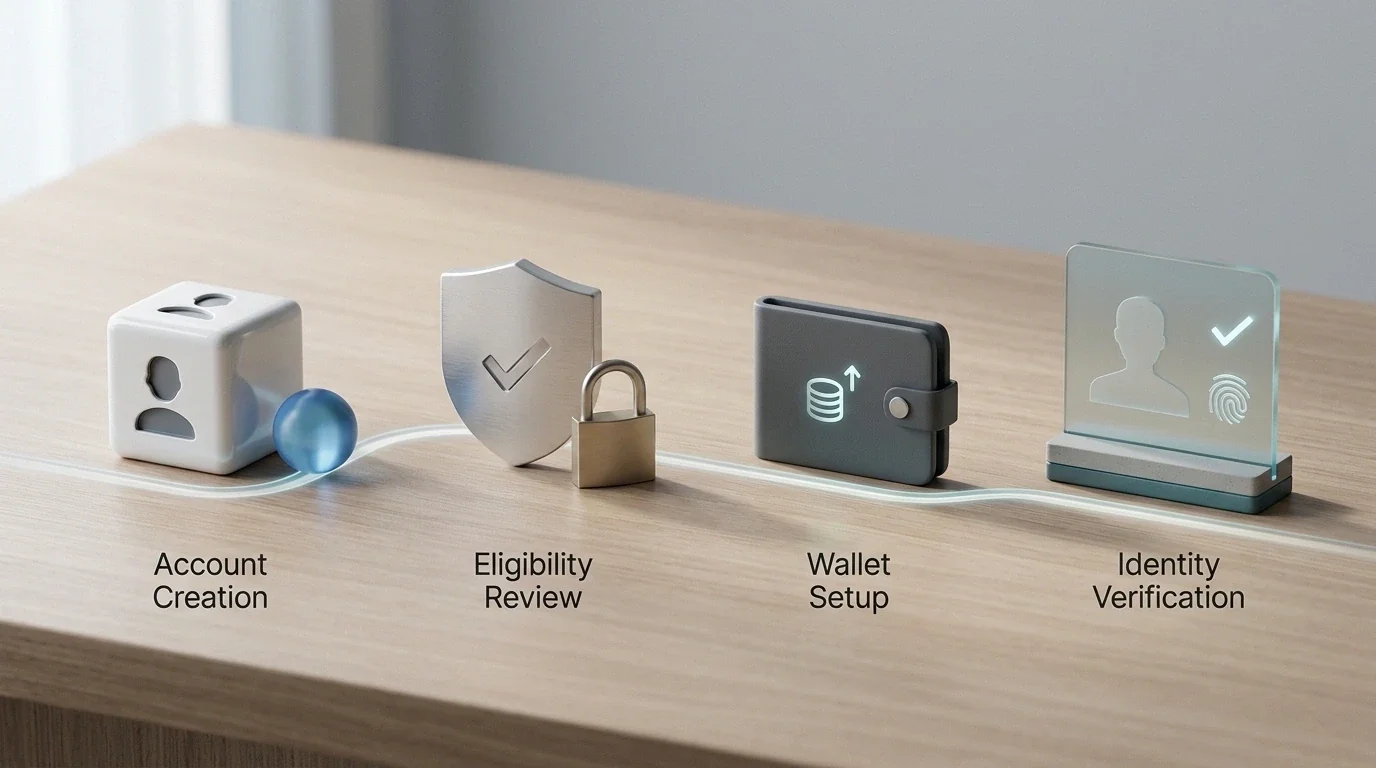
An e-wallet account and a casino account are separate parts of the transaction. The punter signs in to the casino account, selects a deposit route and authorises the transfer through the wallet. A successful wallet payment does not, by itself, confirm that a casino account is ready to withdraw. The casino may still need to verify the account holder and apply its own withdrawal rules.
Attention: A successful wallet payment does not confirm that a casino account is ready to withdraw, as the operator may still require account verification and apply specific withdrawal rules.
The same distinction matters at login. Access to an e-wallet does not replace casino credentials, and a wallet balance is not the same as a casino balance. The deposit has to be credited to the casino account before it can be used there. If the payment appears in the wallet record but not in the casino balance, the two records provide separate points to check: the wallet transaction status and the casino deposit history. A completed entry in one should not be treated as proof that the other has updated.
For a real-money e-wallet pokies account, the useful question is not simply whether a deposit method is displayed. The withdrawal route must also be understood before money is transferred. Some casinos require a withdrawal to return through the method used for the deposit; other methods may be available only for deposits. A specialist review describes these restrictions as varying between casinos, so the payment terms for the particular account determine what can be cashed out and how. A payment method that gets funds in is not necessarily a complete route back out.
This distinction can affect account planning. If a wallet is selected for the deposit, its role in a later withdrawal should be checked before the transaction is made. The relevant terms are those governing withdrawals, not just the deposit screen. Where the casino requires the original method, switching payment routes later may not be an option. Where a method is deposit-only, the withdrawal process may require another route and its own account details. The final amount received can also depend on terms beyond the payment screen, so a displayed deposit confirmation is not a statement of the eventual cashout.

Identity checks commonly enter the process when a first withdrawal is requested. KYC verification may require a selfie or identity document, together with proof of address. The purpose is to connect the account, the person requesting payment and the submitted records. Mismatches in names or address details can create additional review, so the information held in the account and the documents provided need to correspond. Verification is a separate step from the casino’s approval of the withdrawal: submitting documents does not mean a payout has already been released.
The transaction therefore has distinct stages: casino login, deposit authorisation, crediting to the casino balance, withdrawal request, any required identity review, the casino’s pending period, and payment processing after that period ends. A withdrawal marked as pending has not yet completed the casino’s processing stage. Once that stage is over, the payment provider still has to deliver the funds. Those are separate intervals, and treating them as one can make a stated processing estimate misleading.
A specialist review reports that e-wallet withdrawals may arrive within 24 hours after the casino’s pending period. That timing is not a universal commitment: the casino’s own review process comes first, and the wallet is involved only after release. The useful distinction is between the time a request waits inside the casino and the time taken after approval. A clock that starts at the withdrawal request can therefore include more than the wallet transfer itself.
Transaction Stages
Casino login and deposit authorisation via the selected e-wallet.
Crediting the funds to the casino balance and requesting a withdrawal.
Identity review (KYC) involving documents like selfies or proof of address.
Completion of the casino’s pending period followed by the payment provider delivering funds.
For offshore crypto-friendly casinos, these transaction steps do not change the legal position in Australia. The Interactive Gambling Act 2001 prohibits operators from offering real-money casino-style games to people in Australia; individual players are not made liable under that Act simply for playing. The offshore status is material, not a quality label. Before depositing, the site must be confirmed as accepting the punter’s location. Access may be blocked by the Australian Communications and Media Authority, and using a VPN to reach a blocked casino may void winnings or lead to account closure.
There is also no Australian government body to complain to if an offshore casino refuses to pay winnings. That makes the written withdrawal rules, verification requirements and payment route consequential before a balance is built up, rather than paperwork to consider only after a request is delayed. A login that works and a deposit that clears establish access to an account; neither establishes that a withdrawal will be approved or paid.
Australian Payment Options Without an Operator List
Payment labels on offshore crypto-friendly casinos do not establish that a method will work for every Australian punter. Availability depends on the payment service, the bank or wallet involved, and the individual site’s arrangements. A specialist review lists PayID, BPAY, cards and cryptocurrency among methods that may appear on mobile casino cashier pages, but that description is not a guarantee of current availability or successful processing.
That distinction matters because online casino-style games cannot lawfully be offered by operators to people in Australia under the Interactive Gambling Act 2001. Offshore sites may still present payment choices to Australians, but the presence of a button or logo is not evidence that the service is authorised locally. The payment method and the legal status of the underlying service are separate questions.

PayID and bank-based options
PayID is a bank-linked transfer method, and a specialist review describes deposits through it as near-instant and typically free. Those terms should be treated as a report about the method, not a universal price or timing promise. A payment can still depend on whether the casino lists PayID, whether the punter’s bank permits the transaction, and whether the details match the cashier’s instructions.
BPAY is another name that may appear in descriptions of mobile casino deposits. Its inclusion in a payment list does not mean every operator supports it, or that a particular BPAY transaction will be accepted. The relevant details are the exact payment route, any fee shown before confirmation, and the status displayed by the bank and cashier. A method that is advertised but unavailable at the point of payment has no practical value.
Bank cards require a separate check. A specialist review notes that some Australian banks block or flag gambling-related card charges, so a transaction may be declined even when the card details are correct. A failed payment does not, by itself, identify whether the cause was the bank, the card network, or the casino’s payment processor. Repeated attempts can also leave a confusing transaction record, so the displayed status should be checked before another attempt is made.
Credit-card payments for online gambling services are not an acceptable route. A card logo on a page should not be read as permission to use credit for a gambling transaction. Debit-card processing can also be subject to bank restrictions, and a bank may treat a gambling-related charge differently from an ordinary retail purchase.
POLi is not a current local method
POLi should not be counted as a working Australian option. Its local service ended in September 2023, after which it ceased handling Australian transactions. Older pages and payment lists can retain the name after the underlying service has changed; an outdated listing does not restore the payment route.
POLi Availability
POLi ceased handling Australian transactions in September 2023 and is no longer a working local payment method.
That makes the date relevant to interpreting search results, not to estimating a processing time. A cashier that still displays POLi may be showing stale information or a route that does not apply to an Australian bank account. The payment method should be regarded as unavailable for local transactions rather than as a slower alternative.
E-wallets and cryptocurrency
E-wallets and cryptocurrency are distinct from bank transfers and card payments. A specialist review identifies cryptocurrency as one of the methods that may be offered for mobile deposits, but acceptance depends on the casino’s cashier and the payment arrangement in place. A cryptocurrency label alone does not establish which assets are supported or what conversion costs may apply.
An e-wallet can sit between a bank account and a casino balance, but the cashier must support that wallet for the transaction to proceed. The name of a wallet on an external page is not enough; the live deposit screen and its stated fees and currency conversion terms determine the actual route. The same caution applies to any method presented as “available” in a general list.
For any method, the amount debited from a bank or wallet may not be identical to the amount credited if a currency conversion or payment charge applies. The terms visible before confirmation are therefore more useful than a general claim that a method is free. Where those terms are unclear, the cost cannot be calculated reliably.

A payment channel also does not remove the risks attached to an offshore casino. ACMA actively blocks access to illegal gambling sites, and Australian players have no government complaint body to approach if an offshore casino refuses to pay winnings. A site must accept the player’s location before any deposit is considered, and using a VPN to reach a blocked site may void winnings and lead to account closure. These are material conditions, not payment-processing details.
AUD Deposits and Withdrawal Timing
An AUD balance and a withdrawal timetable are separate parts of the same transaction. A displayed balance may be denominated in Australian dollars, while the time taken to receive a withdrawal depends on the payment route and the casino’s processing rules. The balance figure alone does not show when cleared funds will arrive.
A specialist review reports that crypto and e-wallet withdrawals can be processed in under 24 hours. That is a reported processing window, not a fixed promise for every withdrawal. It also does not establish that the money becomes available immediately: the casino may first apply a pending period, and the receiving service may have its own steps before the funds can be used. The clock therefore needs to be read against the relevant stages, rather than treated as a single guaranteed arrival time.
The distinction matters for an AUD-focused account. If a withdrawal is paid in a currency other than Australian dollars, the amount ultimately credited in AUD may differ from the displayed balance because of conversion. The timing and the final AUD value are different calculations. A short processing estimate does not settle the exchange rate, and a balance shown in AUD does not by itself confirm the currency in which a payment will be sent.
A short processing estimate for withdrawals does not settle the exchange rate, and a balance shown in AUD does not guarantee the currency in which a payment will be sent.
Bank transfers sit at a different end of the reported timing range. A specialist review gives a possible withdrawal period of up to five business days. “Business days” matters: the stated period is not the same as a run of calendar days, and weekends can affect the date on which the period is complete. The estimate also concerns a transfer route, not every stage that may precede it. A casino’s approval period and the bank’s handling period should not be merged into one assumption.
For a punter comparing payment routes, the useful figure is the full interval from submitting a request to funds becoming available, not merely the casino’s internal status. A request marked as received, pending or processed can describe different points in that sequence. Without a clear definition, a processing estimate can sound shorter than the wait experienced in practice. The practical comparison is therefore between stated stages and their starting points, not between isolated headline times.

Withdrawal limits add a separate constraint. Some casinos apply weekly or monthly caps; a specialist review describes limits often falling in the range of $4,000–$10,000 per week. The range is not a universal rule, and it should not be read as an AUD-denominated promise. A cap may govern how much can be paid out over a period even when the account balance is higher. In that case, timing and amount interact: the available balance may exceed what can be released within the applicable period.
A weekly cap and a monthly cap are not interchangeable. The wording of the limit determines the period over which withdrawals are counted, while the terms determine whether the cap applies to an individual request or cumulative withdrawals. The precise counting method affects the expected schedule. Where a limit is stated in a currency other than AUD, currency conversion can also affect how an AUD balance relates to the cap. These are contractual details, not conclusions that can be drawn from the balance screen.

A simple way to assess the cash-flow effect is to separate three quantities: the amount shown in the account, the amount permitted for withdrawal within the relevant period, and the time required for each permitted payment to arrive. The first is a balance; the second is a cap; the third is a processing estimate. Treating them as one figure obscures the actual outcome. A high balance does not remove a payout ceiling, and a short processing estimate does not remove a pending period or a limit.
For AUD e-wallet use, the same distinction applies. An e-wallet may be associated with a quicker reported processing window than a bank transfer, but that does not establish the casino’s approval time, the wallet’s receipt time or the currency ultimately credited. Crypto has a similar reported under-24-hour processing estimate, but that estimate should not be converted into a guarantee of same-day access or a particular AUD value. Timing claims are meaningful only when their scope is clear.
The figures worth comparing are therefore the payment route’s stated processing period, the casino’s pending period, the currency of payment, and any weekly or monthly withdrawal ceiling. Each changes a different part of the result. A reliable estimate of the date and amount received requires all of them to be read together; selecting the shortest quoted duration leaves the most important arithmetic unfinished.
New Mobile Access: Browser Play and PWAs
Mobile access to an offshore casino can take more than one form, but the distinction is between opening a website and saving a shortcut to it. Neither format changes the underlying service into an Australian-licensed product. The main practical difference is how the site is reached on a phone.
Opening the casino website directly via a mobile browser; the default route in Australia.
A website shortcut saved to the home screen that launches the site in an app-like presentation.
Software installed as an application, rarely found in local Australian app stores for casinos.
Browser access is the default
Most mobile access is through a browser, with the same account used on desktop. The site opens as a web page, and the account is not separate simply because it is being viewed on a phone. Browser play also avoids the need to find a dedicated casino app in an app store.
That matters in Australia because casino apps are rarely listed on Google Play or the Apple App Store. For casinos accepting Australian players, the ordinary browser is therefore the default access route. A page opened on a phone remains a website, even if its layout is designed for a small screen.
A browser-based session also keeps the access method relatively straightforward: open the casino website in the mobile browser and use the existing account. The format should not be mistaken for a separate account or a different type of game service. It is the website being viewed through a different device.
The term “mobile casino” can describe this browser experience, rather than a downloadable application. That distinction is useful when a site presents a mobile-friendly page or invites a visitor to save it to the home screen. A changed icon or launch shortcut does not, by itself, mean that a native app has been installed.
What a PWA changes
A Progressive Web App, or PWA, is a website shortcut that opens in an app-like way on a mobile device. It remains connected to the casino website; the PWA is not a separate casino service. Its purpose is to make access resemble launching an app, without requiring the casino to distribute a conventional native app through an app store.

Where the website provides an installation or add-to-home-screen prompt, the PWA can be added by selecting that prompt and confirming the action. The saved shortcut then provides another route back to the website. It does not create a new account, and it should not be treated as proof that the site has passed an app-store review.
This is the useful distinction: browser access means opening the website directly, while a PWA gives the website a saved, app-like entry point. Both depend on the casino website. The PWA changes the route into the service, not the identity of the operator or the terms attached to the account.
A PWA is also not the same as a native mobile application. A native app is software distributed for a particular mobile platform; a PWA is based on the website and presented through a mobile device’s web capabilities. For casinos serving Australian users, browser access and PWAs are more typical than native apps.
Native apps and store listings
An app-store listing is not the normal way to find casino access in Australia. Casino apps are rarely available through Google Play or Apple’s App Store here, which helps explain why mobile browser access remains the standard format. A lack of a store listing does not make a website shortcut a native app, and a PWA prompt should not be read as one.
A download offered outside the official app stores is a separate matter from browser play or a PWA. Sideloaded casino apps carry security risks, and their safety depends on the operator. An app-like icon alone does not establish that an installation is safe. The format label is not a substitute for checking what is being installed and who provides it.
Sideloading Risks
Downloading casino apps from outside official stores carries security risks, as their safety depends entirely on the operator.
That is a practical distinction rather than a promise about reliability. Browser access avoids installing a separate casino application; a PWA saves a website shortcut; a native app is software installed as an application. The first two are the formats commonly used by casinos accepting Australian players, while native casino apps are rarely listed in local app stores.
Choosing an access format
The choice between a mobile browser and a PWA is mainly a choice about entry point. Direct browser access opens the site in the browser. A PWA adds a home-screen shortcut that can launch the website in an app-like presentation. Neither format should be confused with a different account, a separate operator or a change in the service being accessed.
For an e-wallet pokies search, the word “new” may refer to a newly encountered mobile site or a fresh shortcut, not necessarily a newly released app. The access format can be identified by how it is opened: a browser address leads to the website, a home-screen shortcut is consistent with a PWA, and an app-store listing would be the route for a native app. In Australia, that last route is uncommon for casino apps.
The distinction is useful because mobile presentation can make unlike things look similar. A website may open in a compact layout; a PWA may have an icon and app-like launch; a native application is installed software. The appearance of the screen does not settle which format is in use. What matters is whether access is through the browser, a website shortcut, or an installed application—and, in the Australian context, browser play remains the usual route.

Offshore Casino Risks, Access and Player Protections
The legal position separates the operator from the punter. Under the Interactive Gambling Act 2001, offering real-money casino-style games to people in Australia is prohibited for operators. That category includes online pokies and other casino games. The Act does not make it illegal for an individual Australian to play at an offshore mobile casino. This distinction does not make the service locally regulated or provide a local route for resolving disputes.
Offshore crypto-friendly casinos may cite licensing jurisdictions such as Curaçao, Malta or Gibraltar. A foreign licence is not an Australian casino licence, and it does not change the prohibition on operators providing these services to people in Australia. Nor does a licence guarantee that a particular site is available from every location. Location acceptance needs to be confirmed before any deposit; an account opening page alone is not proof that the service can lawfully or practically serve an Australian address.
Access is not guaranteed
The Australian Communications and Media Authority (ACMA) works to restrict access to gambling sites that breach Australian rules. A site being visible at one point does not establish that access will continue. Blocking can interrupt access, and a punter should not treat a working page as evidence of regulatory approval.
Using a VPN to get around a block creates a separate account risk. If a casino’s terms prohibit masked or misrepresented location data, VPN use may result in account closure and winnings being voided. The issue is not merely whether a connection can be made: the operator may check location and compare it with account information. A successful login therefore does not settle whether a later withdrawal will be honoured.
Dispute Risk
There is no Australian government body to complain to if an offshore casino refuses to pay winnings, leaving players reliant on overseas jurisdictions.
The absence of a local complaints route is material. If an offshore casino refuses to pay winnings, there is no Australian government body that can be approached to compel payment or determine the dispute. A punter may have to rely on the operator’s own complaint process or any process associated with its overseas jurisdiction. That is a weaker practical position than having an Australian authority responsible for the service.
Age and account safeguards
Registration and gambling are restricted to people aged 18 or over in Australia. Age eligibility is a threshold condition, not a substitute for checking the operator’s terms or location rules. Account checks may also be used to establish identity and location; inconsistent details can become a practical obstacle when access or a withdrawal is reviewed.
Responsible-gambling controls may include deposit, loss and wager limits, session time limits, and self-exclusion. A specialist review describes these as controls available at some offshore casinos, but availability and operation depend on the individual site. Their presence should not be mistaken for Australian oversight. Self-exclusion and limits only help when the operator applies them as described and the account holder can access the relevant settings.

Sideloaded casino apps carry security risks, and their safety depends on the operator. An app obtained outside an official store does not gain independent approval merely because it installs successfully. Browser access avoids the sideloading issue, but it does not remove the legal, location or dispute risks attached to the underlying offshore service.
Any bonus claim creates a separate contractual condition: wagering requirements, game restrictions, expiry dates and cashout caps need to be read before acceptance. A stated offer is not the same as withdrawable money; the terms determine what must happen before a balance can be paid.
No-Deposit Bonuses: The Wagering Calculation
A no-deposit bonus can have no upfront price and still carry a substantial condition for converting bonus credit into withdrawable funds. The relevant calculation is not the headline value alone. It is the wagering requirement, any minimum deposit attached to the offer, the deadline for completing the wagering, and the rules governing eligible games and cashout.
A specialist review reports welcome-bonus wagering requirements in the range of 30x to 50x the bonus amount; the same type of review describes requirements above 40x as steep. These are reported terms, not a guarantee of what any particular offer will require. A multiplier applies to the amount specified in the offer’s rules, which may be the bonus alone or another defined total. The base matters: the same multiplier produces a different wagering target when applied to a different amount.
For a no-deposit offer, the first check is whether the bonus is genuinely available without a deposit or whether a minimum deposit is required before the credit can be claimed or used. A deposit condition changes the cost from zero to the amount required to qualify. The next check is the wagering base and multiplier. Without both, the clearance obligation cannot be calculated. A stated bonus value is not the same as its cash value.

Time limits affect the calculation too. If wagering must be completed before the offer expires, the deadline determines whether the requirement is practically achievable under the offer’s rules. A bonus that expires before clearance may be forfeited, along with any associated winnings, where the terms provide for that outcome. The deadline is therefore part of the price, even when no deposit is requested.
Game restrictions can further narrow which activity counts toward wagering, while a cashout cap can limit what remains payable after the requirement is met. Those conditions should be read alongside the multiplier rather than treated as footnotes. The offer’s apparent value can be reduced by excluded games, an unworkable expiry date, or a ceiling on withdrawals.
A useful comparison records four items: the wagering base and multiplier, any minimum deposit, the expiry deadline, and the cashout cap, with game restrictions checked separately. If any term is unclear, the final withdrawable amount cannot be estimated reliably. Offshore operators are prohibited from offering real-money casino games to people in Australia under the Interactive Gambling Act 2001; bonus arithmetic does not change that legal position.
Can players use real-money mobile casinos in Australia?
Australian players are not prohibited from playing at offshore mobile casinos, but operators are prohibited from offering online casino games to people in Australia. ACMA actively blocks access to illegal gambling sites.
What is a PWA casino?
A Progressive Web App (PWA) is a casino website shortcut that behaves much like a native app on a mobile device. You can install it from the casino website using the install or add-to-home-screen prompt.
How do wagering requirements actually work in practice?
A wagering requirement sets how much you must bet to clear a bonus; common requirements are 30x to 50x the bonus amount, and anything above 40x is considered steep. Many bonuses must be cleared within 7–10 days, or the bonus is lost.
Can I use the same account on my phone and computer?
Yes. Most Australian mobile casinos use browser play, and you can access the same account on your phone and desktop.
Should I accept a welcome bonus?
Accept one only if its wagering requirement, minimum deposit and deadline suit you. Requirements commonly run from 30x to 50x the bonus, and many offers expire after 7–10 days.
Written by the editors at Oscarspin Casino.