






Safe Online Casino in Australia: What the Law Says
 Available in AU
An offshore licence or secure-looking website does not establish that a real-money casino offer is authorised in Australia.

Table of Contents
- What Australian Law Means by a “Safe Casino”
- PayID Payments: Speed Does Not Establish Safety
- Real-Money Play and the Limits of Player Protection
- Why a “Best” or “Safe Bet” Claim Needs Legal Proof
- How ACMA Restricts Illegal Gambling Websites
- Safer Play Controls Do Not Make an Illegal Offer Legal
- Game Safety, RTP and What the Help Screen Can Show
- Mobile Access, Encryption and Identity Checks
- Is an Online Casino Safe in Australia? The Enforcement Record
- Australian Dollars and the Meaning of “Safe AU Casino”
What Australian Law Means by a “Safe Casino”
In Australia, “safe” cannot be assessed as a technical or financial label alone. The legal position comes first: the Interactive Gambling Act 2001 makes it unlawful for operators to provide real-money online casino games to people in Australia. A site may describe itself as secure, reputable or licensed offshore, but those claims do not establish that it is authorised to offer casino gambling to Australians.
The law’s focus is on the service being provided, not on whether its website looks professional or whether its operator holds a credential elsewhere. Online casino-style services—including slots and table games—are prohibited when offered to people in Australia. A foreign regulator’s approval may relate to the operator’s activities in that regulator’s jurisdiction. It is not an Australian authorisation, and it does not change the Australian legal status of an offer made to local customers.
That distinction matters because “licensed” is incomplete without identifying where the licence applies. An offshore licence is not the same thing as being licensed in Australia. Nor does a licence issued overseas override the Interactive Gambling Act 2001. In this market, therefore, an offshore credential cannot convert an online casino offer to Australians into a lawful Australian service.
The statute also draws a distinction between the operator and the individual player. It does not explicitly criminalise a person simply for using an offshore casino site. That is a limited statement about the law’s treatment of players; it is not approval of offshore gambling, a finding that a site is safe, or a promise that a customer will have an effective remedy if something goes wrong. The operator’s prohibition remains the central point when assessing whether an online casino is legally available in Australia.
ACMA is Australia’s primary online gambling regulator. Its role gives the legal framework a practical regulator, rather than leaving the issue as a statement in legislation alone. ACMA’s position is relevant to claims about services offered to people in Australia, while an offshore regulator’s licence concerns a different jurisdiction. Those two forms of oversight should not be treated as interchangeable.

A “safe online casino Australia” claim is consequently ambiguous unless “safe” is defined. It might refer to data handling, account procedures or the reliability of a game. None of those features answers the prior legal question: whether the operator may offer online casino games to people in Australia. A polished site and an offshore licence can speak to the operator’s presentation or to its status elsewhere, but neither amounts to permission under Australian law.
The same reasoning applies to phrases such as “safe casino” or “safe casino online”. They are not legal categories. They do not create an exception to the Act, and they cannot make an otherwise prohibited service lawful. Legal status is not an extra feature that can be added through branding; it is the condition against which the offer itself has to be assessed.
For Australian residents, the baseline is therefore narrow but decisive. Domestic operators cannot lawfully offer online casino games to them, and an offshore licence does not supply Australian authorisation. Individual use of an offshore site is not explicitly criminalised by the Act, but that does not transform the service into a locally authorised casino. Any safety claim that skips this distinction leaves out the most consequential term.

PayID Payments: Speed Does Not Establish Safety
PayID describes a way to send a payment, not a standard for assessing the business receiving it. A quick transfer can confirm that funds moved through a payment system; it cannot establish that an online casino is safe, that its offer is lawful in Australia, or that a withdrawal will be processed on the same timetable. Those are separate questions.
A specialist review of casino payment methods describes PayID transfers as generally travelling over the New Payments Platform (NPP), where a transfer may clear within minutes after it has been released. That timing concerns the payment rail and the point at which a transaction is sent. It does not include any separate approval process imposed by a receiving service. A displayed PayID option therefore says little about when a deposit will be credited, and nothing by itself about whether funds can later be withdrawn.
Attention: A fast bank transfer through PayID does not serve as a guarantee of a casino’s conduct or a promise regarding its account procedures.
The distinction is easiest to see as a sequence. A payment may be entered, checked or approved by the receiving service, released through the payment network, and then reflected in an account. The NPP can handle the transfer quickly once it is released, while a delay at an earlier stage remains possible. A fast bank transfer is not a receipt for a casino’s conduct or a promise about its account procedures.
Deposit speed and withdrawal terms are separate
Payment descriptions often compress different events into one claim of “fast payments”. The relevant timing may refer only to the deposit leg. A withdrawal involves a separate request and its own processing arrangements; the fact that PayID was used to send money does not establish that the same route is available for receiving it back.
A specialist review characterises PayID and some e-wallet payments as potentially quick after approval, while bank transfers and card transactions may take several business days. The condition matters: approval happens before the payment is released, and the listed transfer method does not settle how long approval takes. The review’s timing description is not a service guarantee and should not be converted into one.
The same review treats POLi mainly as a deposit method, so its presence should not be read as confirmation that withdrawals can be made through POLi. Card withdrawals are another separate case: a specialist review notes that they can be slower or unavailable depending on the processor. These are method-specific limitations, not evidence that another payment option is safer.


For a money decision, the useful comparison is not simply “instant” against “slow”. It is whether the stated timing concerns deposits or withdrawals, whether it begins before or after approval, and whether the method is available for both directions. If those terms are unclear, the advertised speed does not resolve the uncertainty.
What PayID can and cannot establish
PayID’s transfer speed is a narrow operational feature. It may explain how quickly a released payment can move; it does not verify the recipient’s status, the conditions attached to a payment, or the handling of a later withdrawal. Treating the payment method as a safety certificate confuses infrastructure with the service using it.
That distinction also applies to claims framed around a “safe PayID casino” or a casino with a no-deposit offer. PayID does not make an offer safer, and a bonus label does not change the nature of the payment process. Any conditions governing an offer or a withdrawal remain distinct from the speed of the underlying transfer. No deposit requirement is not a measure of payment security.
Accordingly, the answer to whether PayID is safe for online casino payments depends on what “safe” is meant to describe. For transfer timing, specialist reviews report that a released PayID payment can clear quickly through the NPP. For the safety or legality of the receiving service, that timing establishes nothing. A payment button can be technically efficient while the broader transaction remains uncertain.
PayID transfer speed is a narrow operational feature of the payment rail and does not verify the recipient’s legal status or the safety of the receiving service.
Real-Money Play and the Limits of Player Protection
Putting money into an online casino changes the question from whether a game appears safe to what happens if the balance is disputed or winnings are not paid. In Australia, real-money online casino games are prohibited when offered to people in the country. An offshore site may accept Australian customers, but that does not give its services Australian legal protection or make the arrangement equivalent to using a locally authorised product.
The distinction matters because an offshore licence, if a site claims to hold one, does not establish that it is licensed in Australia. The operator may describe rules for deposits, account balances, withdrawals or disputes, but those terms do not create the protections of Australian gambling law. A safe online casino for real-money play cannot be assessed solely by whether its pages load, its games run or its account screen displays a balance. The practical test is what options remain if the operator does not honour that balance.

For an unlicensed gambling service, consumer protections are absent. If winnings are withheld, Australian laws may not assist in recovering them. That does not establish that every offshore operator will withhold funds; it sets out the exposure if a dispute arises. The amount shown on an account is not the same as money successfully received, and a site’s own terms do not guarantee that a claim will be resolved in the player’s favour.
This is why “safe” needs a narrower meaning in reviews. A review may describe the operator’s stated rules or report how a service presents itself, but neither description makes an illegal offer lawful or supplies a local remedy. The word can otherwise bundle several different propositions—secure handling, fair game outcomes, reliable withdrawals and legal status—into one reassuring label. Those propositions are separate, and evidence for one does not prove the others.
The risk is not limited to a disputed win. Any funds placed with an unlicensed service are subject to the operator’s account terms and its handling of the transaction. If access to the account is interrupted, or the operator refuses a withdrawal, the user may have limited practical options. Australian authorities can take action against operators that breach the Interactive Gambling Act 2001, including blocking websites and imposing fines. Those measures target the service; they do not amount to a guarantee that an individual’s balance will be recovered.
Financial Risk
Funds placed with unlicensed services are subject to the operator’s terms, and Australian laws may not assist in recovering winnings if they are withheld.
Australian law does not explicitly make individual players criminally liable simply for using an offshore casino. That point should not be confused with an endorsement or a finding that the activity is protected. The legal restriction is directed at operators providing prohibited online casino games to Australians, while the player still faces the financial consequences of dealing with a service outside local consumer safeguards.
Accordingly, searches for a safe Australian real-money casino can produce a misleading standard if safety is treated as a feature badge. A mobile interface, an account statement or a favourable review cannot change the legal position or ensure a remedy when funds are contested. The relevant calculation is straightforward: money is exposed to the operator’s decisions, while Australian protections may not be available if the operator fails to pay. That is a materially different risk from ordinary inconvenience, and it cannot be removed by calling the site safe.
Why a “Best” or “Safe Bet” Claim Needs Legal Proof
For a safer starting point when considering online casinos in Australia, check the licensing information available for each operator and make sure the site suits your needs. The details below are limited to the information provided for this page.
License: Curacao Gaming Control Board OGL/2023/174/0082 (Dama N.V.) SpinsUp is listed with a Curaçao Gaming Control Board licence, OGL/2023/174/0082, held by Dama N.V.
License: Curacao – Antillephone N.V. (Versus Odds B.V.) · Min. deposit: EUR 20 Thor Casino is listed as licensed in Curaçao through Antillephone N.V. (Versus Odds B.V.). Its stated minimum deposit is EUR 20.
License: Curacao Gaming Control Board (TechSolutions Group N.V.) Bizzo Casino is listed with a Curaçao Gaming Control Board licence associated with TechSolutions Group N.V.
License: Curacao Gaming Control Board OGL/2023/176/0095 (Hollycorn N.V.) GoldenCrown is listed with a Curaçao Gaming Control Board licence, OGL/2023/176/0095, held by Hollycorn N.V.
License: Curacao eGaming OGL/2023/174/0082 (Dama N.V.) · Min. deposit: A$15 LevelUp Casino is listed with a Curaçao eGaming licence, OGL/2023/174/0082, held by Dama N.V. Its stated minimum deposit is A$15.
License: Curacao Gaming Control Board OGL/2023/176/0095 (Hollycorn N.V.) Rollero Casino is listed with a Curaçao Gaming Control Board licence, OGL/2023/176/0095, held by Hollycorn N.V.
License: Curacao eGaming OGL/2024/923/0383 (Antillephone N.V.) · Min. deposit: A$30 WinSpirit Casino is listed with a Curaçao eGaming licence, OGL/2024/923/0383, held by Antillephone N.V. Its stated minimum deposit is A$30.
License: Curacao eGaming (Roby Games Ltd) Roby Casino is listed as licensed in Curaçao, with Roby Games Ltd named in the licensing information.
License: Curacao Gaming Control Board JustCasino is listed with a Curaçao Gaming Control Board licence.
License: Curacao (operating since 2017) · Min. deposit: A$20 Uptown Pokies is listed as operating since 2017 under a Curaçao licence. Its stated minimum deposit is A$20.
“Best” and “safe” are promotional descriptions, not regulatory categories. A polished website, a familiar payment logo or a claim of independent testing may describe parts of a service, but none establishes that an online casino is authorised to offer games to people in Australia. The distinction is material: under the Interactive Gambling Act 2001, operators cannot provide real-money online casino games to people physically located in Australia.
An offshore licence is evidence of a regulatory relationship elsewhere. It is not an Australian licence, and it does not convert an online casino into a service authorised to offer casino games here. The regulator named on a site’s footer may oversee the operator in another jurisdiction; the presence of that name does not change the Australian legal position. “Safe bet” language does not bridge the gap.
The verification test is narrower than promotional copy suggests. ACMA maintains a public register that can be used to check whether a wagering service holds a valid Australian licence. ACMA has also directed people to its website and the national register for information about legal gambling products available in the market. That register is relevant when checking a wagering service’s Australian status; it is not a general endorsement of every service that appears on a site, nor proof that an online casino may provide prohibited games.
This distinction matters because “wagering service” can cover legal products that are not online casino games. A record relating to a service or product does not establish that the same operator is authorised to offer slots, poker or table games to Australians. The claim must match the service actually being offered. A licence reference without a corresponding Australian entry is not verification.


Nor does a foreign certificate, a testing badge or a statement about fair games answer the authorisation question. Such claims may relate to oversight or game operation in another context, but they cannot substitute for the Australian register. The useful check is not whether a page displays credentials; it is whether the specific wagering service holds a valid Australian licence and whether the claimed product falls within that service’s lawful scope.
A site’s use of Australian-facing language does not alter that test. Neither does calling itself a casino, bookmaker or betting service. Labels are cheap to publish; regulatory status is not created by the label.
Accessing an offshore casino through a VPN does not change its authorisation status. Use of a VPN may lead to winnings being voided, an account being closed and a deposit being lost. That is a practical risk, not a route to Australian approval.
Accordingly, a claim that an online casino is among the safest or best available to Australians needs legal proof that the wording itself cannot provide. An offshore licence may describe the operator’s position abroad; only the relevant Australian register can verify an Australian licence for a wagering service. Neither a ranking nor an assurance should be treated as a substitute for that check.
How ACMA Restricts Illegal Gambling Websites
ACMA’s enforcement can affect whether an online gambling website is reachable from Australia. It can ask internet service providers to block websites that offer prohibited interactive gambling services to Australian customers, as well as unlicensed services offered to adults in Australia. The measure acts at the point of access: a website may remain available elsewhere while connections through Australian providers are blocked.
ACMA Blocking Statistics
Since November 2019, ACMA has restricted access to 1,369 illegal gambling and affiliate websites through requests to internet service providers.
A block is an enforcement step, not a finding that every page on a website has been individually assessed or that a site is safe if it remains accessible. Equally, a page loading successfully does not establish that the service is authorised for Australians. Reachability and legal status are separate questions; treating one as proof of the other turns a technical outcome into a credential it cannot supply.
ACMA can also issue blocking orders as a last resort when it considers customer safety to be at risk. That qualification matters. A blocking order is not described as the routine first response to every concern; it is an escalated measure tied to a safety assessment. The distinction is practical: requests to providers and formal orders are tools ACMA can use to limit access, rather than ratings of a site’s service quality.
For someone assessing claims about safe Australian online casinos, this makes the meaning of “available” particularly narrow. A website that is not blocked has not thereby passed an ACMA safety test. A blocked website, meanwhile, is subject to an access restriction; the restriction does not itself tell a visitor every detail of the case or provide a substitute for the legal status of the service. Neither result should be read as a consumer-review verdict.


The scale of ACMA’s work shows that blocking is an active part of enforcement, not a theoretical possibility. Since ACMA made its first blocking request in November 2019, access has been restricted to 1,369 illegal gambling and affiliate websites. That total is evidence of intervention across the market. It is not a register of safe sites, and it does not certify any individual operator.
The practical limit is therefore straightforward: ACMA can use requests to internet providers, and in defined circumstances blocking orders, to reduce access to prohibited or unlicensed services. These actions may change whether a site can be reached from Australia, but availability alone cannot establish that an online casino is safe, licensed in Australia or suitable for Australian customers. A polished site, an Australian-facing presentation or a functioning page does not alter what a block does—or what it does not prove.
Safer Play Controls Do Not Make an Illegal Offer Legal
Deposit limits and gambling-harm information can reduce some risks, but neither changes the legal status of an online casino serving people in Australia. A site may display controls that appear responsible while still offering a service that is prohibited in this market. The feature and the authorisation are separate questions; one cannot stand in for the other.
Under the Interactive Gambling Act 2001, licensed wagering operators must meet responsible-gambling requirements. That obligation applies to services licensed in Australia, not as a general certificate for every offshore site that presents itself as careful. For online casino games, the distinction matters: operators cannot lawfully provide those games to people in Australia simply by adding protective tools to an account page.
Do
- Use deposit limits to manage spending risk
- Use harm-support information to find professional assistance
Don’t
- Assume protective tools make an illegal offer lawful
- Treat a help link as a substitute for a license
Deposit limits are one type of risk-management measure. A specialist gambling review describes platforms offering settings that allow a player to cap deposits by day, week or month. That is a report about features on particular platforms, not an established standard across the market. Even where a limit is available, it only governs deposits under the platform’s terms. It does not establish that the operator is licensed in Australia, or that the service is lawful to offer here.
The same separation applies to information about gambling-related harm. Reputable platforms provide such information and direct people to professional support services in Australia. Its presence may show that a support route has been included; it does not prove that an online casino is authorised to accept Australian customers. A help link is a support feature, not a licence.
The practical assessment therefore has two distinct parts. First, controls such as deposit settings and harm-support information concern the management of gambling risk. Their usefulness depends on the service’s actual terms and on whether the controls can be applied and maintained. Second, legality concerns whether the operator may provide that product to people located in Australia. A polished responsible-gambling page cannot answer that legal question.
This is why “play safe” language should not be read as a legal assurance. Nor does an account setting make an otherwise prohibited offer compliant. The presence of a limit may affect how much can be deposited through that control; it does not convert an offshore casino into a service licensed in Australia. Likewise, support information can point to assistance without protecting funds or conferring consumer rights.

Responsible-gambling measures have a defined role: they address harm and spending risk. They are not evidence that an Australian-facing online casino is safe to use under Australian law. When the product itself is not permitted, the controls remain packaging around a prohibited offer.
Game Safety, RTP and What the Help Screen Can Show
A pokie’s information screen can disclose its return-to-player (RTP) setting. The figure may sit behind an information icon or within a menu, rather than appearing beside the game title. This is a narrow check of the game version being presented; it is not a general safety rating for a casino or proof that the game may lawfully be offered in Australia.
The distinction matters because a game’s name alone does not identify its RTP configuration. Some providers issue the same game in several RTP versions, and the operator selects which version to run. Two versions can therefore share the same title while displaying different RTP figures. A help screen can show the setting attached to the version in use, but the title by itself cannot establish which setting applies.
RTP is useful as a stated game characteristic, not as a forecast of an individual session’s result. It does not show that a particular player will receive the stated return, nor does it verify how an operator handles accounts or payments. Reading the information screen answers a limited question about the game configuration. It does not answer whether the surrounding service is safe.
That limitation is especially important in Australia. Online slots and casino games such as blackjack are illegal here. A visible RTP, a polished help menu or a familiar game title does not change that position. Game information is not authorisation to offer or use an online casino game in the Australian market.
Return-to-Player (RTP) figures are game-specific configurations and do not reflect the overall safety of the casino or the legality of the service in Australia.
The same applies to free-play labels. A practice mode may remove the immediate stake from the interaction, but its presence does not establish that the service is an authorised Australian casino. Nor does a game’s apparent fairness resolve the legal status of the online casino offering it. Those are separate questions, and the RTP screen addresses only the first in a restricted way.
The practical reading is therefore precise: locate the game’s information or help screen, note the RTP version shown, and treat that figure only as information about the selected game configuration. It cannot certify an online casino as safe, make an illegal offer lawful, or turn game-level disclosure into consumer protection.
Mobile Access, Encryption and Identity Checks
A mobile login can involve sensitive information before any game loads: account credentials, personal details and transaction data. Casinos use SSL encryption to protect transactions and sensitive information as they move between a device and the service. That describes a data-protection measure, not a finding that the operator is trustworthy or authorised to serve people in Australia.
Encryption has a defined job. It can help protect information in transit; it does not verify the operator’s legal status, guarantee that an account will remain accessible, or determine whether a withdrawal will be paid. A secure-looking login page therefore answers only a technical question. It does not establish that a mobile casino is safe to use in the broader sense.

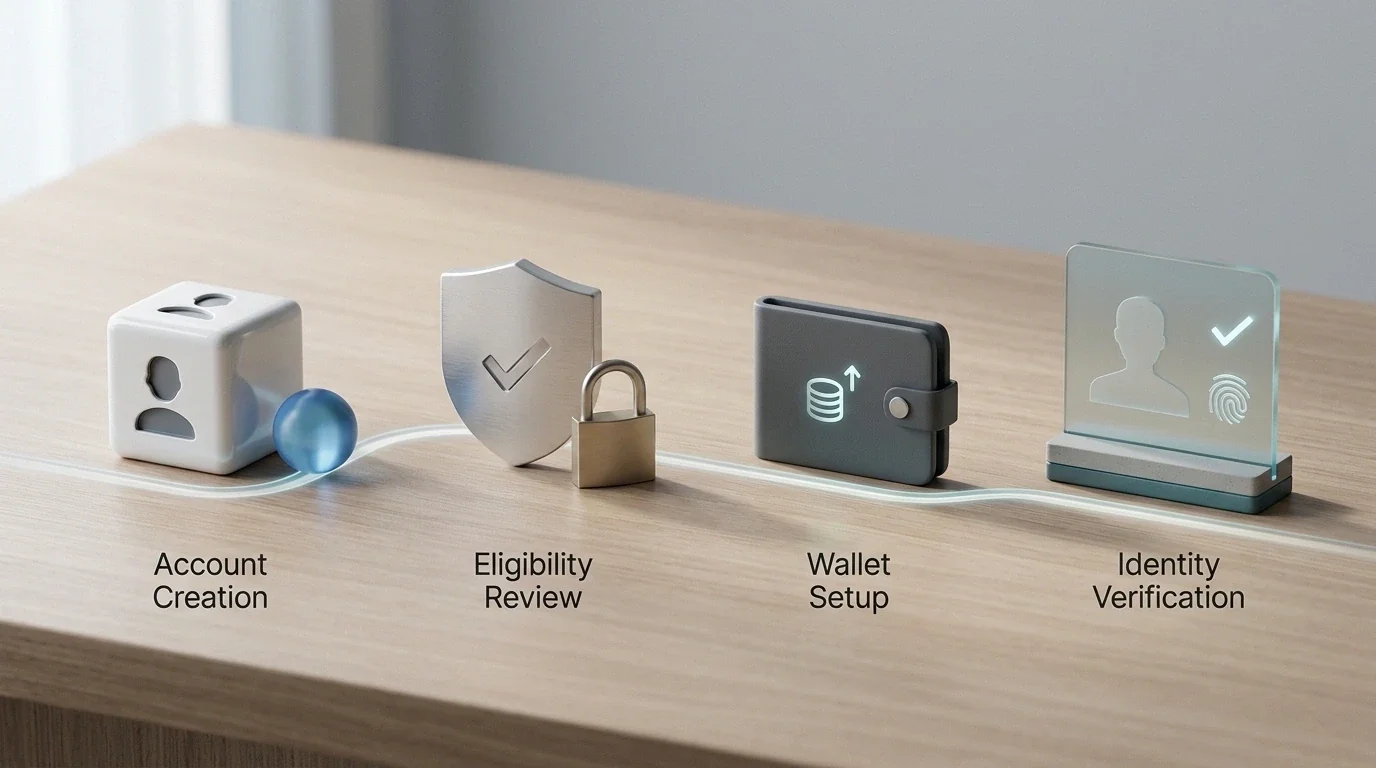
Account verification is a separate control. Casino KYC procedures require identity checks before withdrawals. The requested evidence commonly includes photo identification, proof of address and proof that the payment method used belongs to the account holder. These checks connect an account to a person and to a payment instrument; they are not a substitute for Australian authorisation.
The timing matters operationally: verification is required before withdrawal, so document requests can arise when funds are being taken out rather than when an account is first opened. The documents also contain sensitive personal information. Encryption may protect their transmission, while KYC explains why they are requested; neither measure changes the legal status of the service. A platform can apply both controls and still be an illegal offer in Australia.
The same distinction applies to a safe AU casino login or a casino accessed from a phone. A mobile-friendly interface says something about access, not consumer protection. Nor does a payment option, including a digital currency option, establish safety. Account checks and technical safeguards should be read as narrow controls, not as a combined certificate.
Using a VPN to reach an online casino may lead to winnings being voided, account closure and loss of the deposit. That is a material account and funds risk, not a workaround that improves safety. Online casino games remain illegal to provide to people in Australia, regardless of whether the service encrypts a login or completes identity checks.
The practical distinction is therefore between protecting data and protecting a customer’s position. SSL encryption addresses the former; identity, address and payment-ownership evidence support account verification. Neither makes an illegal online casino lawful, and neither guarantees that a customer can resolve a dispute or recover funds.
Using a VPN to access an offshore casino can result in voided winnings, account closure, and loss of deposits.
Is an Online Casino Safe in Australia? The Enforcement Record
Safety cannot be inferred from a site remaining accessible or from the number of services removed from the market. ACMA’s enforcement record shows that illegal gambling services have faced sustained pressure, but those figures describe action across the market; they do not certify any particular website.
Since ACMA made its first blocking request in November 2019, access has been restricted to 1,369 illegal gambling and affiliate websites. Separately, around 220 illegal services have voluntarily left the Australian market since stricter online gambling rules were enforced in 2017. The first figure concerns website access; the second concerns services leaving the market. Neither is a count of safe alternatives.
That distinction matters when assessing claims about safe online casinos in Australia. A site may continue operating, change its address or use Australian-facing language without that being evidence of authorisation or consumer protection. Equally, a service appearing in an enforcement count does not provide a complete measure of every risk attached to a particular site. Aggregate enforcement figures are not individual safety assessments.
The record does establish that the market is not static. Some services have exited, while ACMA has pursued action against illegal gambling and affiliate websites. A list of safe casinos cannot be derived from those totals: the figures name no approved operators and do not verify the terms, ownership or protections of any individual service. An offshore credential or continued availability should not be treated as a substitute for that verification.
The practical answer to “is an online casino safe?” therefore depends on what “safe” is meant to establish. Enforcement data can show that illegal services are being addressed and that some have withdrawn. It cannot turn an offshore site into an Australian-authorised service, guarantee that funds will be returned, or establish that a specific platform is safe to use. The record is evidence of enforcement activity, not a quality rating.

Australian Dollars and the Meaning of “Safe AU Casino”
An Australian dollar balance, an AU label or locally familiar wording describes how a site presents its service. None establishes that the operator is licensed in Australia or that Australian consumer protections apply. A wallet display is a currency feature, not a regulatory credential.
That distinction matters because online casino games are prohibited when offered for real money to people in Australia. Offshore licensing does not become Australian authorisation through AUD support, an Australian-facing app or localised payment information. The same applies to claims made in a forum: a user’s account of a smooth transaction cannot verify an operator’s legal status or the protections available if a dispute arises.
ACMA’s blocking record illustrates the gap between targeting Australian customers and being authorised to serve them. Since its first request to block gambling sites in November 2019, access has been blocked to roughly 1,011 illegal gambling and affiliate websites. Separately, blocking-order requests have led to permanent access restrictions for 1,154 illegal gaming and affiliate websites since 2019. Those totals describe enforcement across websites; they do not certify any individual service, whether it accepts Australian dollars or calls itself safe.
An unlicensed gambling service lacks Australian consumer protections, and Australian laws may not help recover winnings that an operator withholds. A displayed balance therefore cannot be treated as money secured by Australian oversight. The distinction is practical: a number shown in an account is not the same as an enforceable entitlement to receive it.
Using a VPN to reach an offshore casino can also expose an account to closure, voided winnings and loss of the deposit. A site’s Australian branding does not remove that risk or change its status. “Safe” in a name, currency selector or wallet screen is a marketing description unless the service is authorised under Australian law—which online casinos are not.
What are the legal consequences for Australian players using offshore casinos?
The Interactive Gambling Act 2001 does not explicitly criminalise individuals for using offshore casino sites. However, offshore casinos are not thereby authorised to offer games in Australia, and ACMA can seek to block prohibited services.
What documents might be needed for verification?
You may be asked for photo identification, proof of address and proof that you own the payment method used. Identity checks are commonly required before withdrawals.
Which banking methods are available for deposits and withdrawals?
The methods mentioned include PayID, e-wallets, bank transfers and cards; POLi is mainly used for deposits. A method offered for deposits does not necessarily support withdrawals, and card withdrawals may be slow or unavailable.
Written by the editors at Oscarspin Casino.