






Real-money online casinos in Australia: legal access
 Available in AU
A practical overview of offshore casino access, mobile transactions, bonus clearance, and the checks that can affect withdrawals.

Table of Contents
- The Legal Position of Offshore Casino Play in Australia
- What Real-Money Casino Access Looks Like in Australia
- Casino Play on Mobile: Deposits and Transaction Options
- Playing with Real Money: The Deposit-to-Withdrawal Path
- Real-Money Slots and the Cost of Bonus Wagering
- How Casino Games Count Toward Bonus Clearance
- Live Casino Play and Its Wagering Trade-Off
- Winning and Withdrawing: Timing, Verification and Holds
- Assessing Established and New Casino Operators
The Legal Position of Offshore Casino Play in Australia
Australian law draws a distinction between the conduct of an online casino operator and that of an individual using an offshore site. The Interactive Gambling Act 2001 places the relevant prohibition on companies that provide real-money interactive casino services to people in Australia. It does not make an Australian resident’s act of playing at a foreign-licensed casino a criminal offence.
That difference matters because a site’s foreign licence and a player’s legal position answer separate questions. A licence issued in Curaçao, Malta or Anjouan does not turn the provision of casino games to people in Australia into a service authorised under Australian law. At the same time, the prohibition on supplying the service does not mean that an individual player commits an offence simply by accessing a foreign-licensed site and playing.
The statutory focus is the supply of the gambling service. Where a company offers real-money casino games to people physically in Australia, the operator-facing restriction applies. The law’s treatment of online casino play for real money therefore cannot be reduced to the question of whether an individual has broken the law. The operator’s conduct and the player’s conduct must be kept distinct.
Choosing a real-money casino in Australia calls for checking what is known about its licensing and any stated deposit requirement. This list offers a concise reference to those details for each operator.
License: Curacao Gaming Control Board OGL/2023/174/0082 (Dama N.V.) SpinsUp is listed with a Curacao Gaming Control Board licence, OGL/2023/174/0082, held by Dama N.V.
License: Curacao – Antillephone N.V. (Versus Odds B.V.) · Min. deposit: EUR 20 Thor Casino is listed with a Curacao licence from Antillephone N.V. (Versus Odds B.V.). Its stated minimum deposit is EUR 20.
License: Curacao Gaming Control Board (TechSolutions Group N.V.) Bizzo Casino is listed with a Curacao Gaming Control Board licence, with TechSolutions Group N.V. identified.
License: Curacao Gaming Control Board OGL/2023/176/0095 (Hollycorn N.V.) GoldenCrown is listed with a Curacao Gaming Control Board licence, OGL/2023/176/0095, held by Hollycorn N.V.
License: Curacao eGaming OGL/2023/174/0082 (Dama N.V.) · Min. deposit: A$15 LevelUp Casino is listed with a Curacao eGaming licence, OGL/2023/174/0082, held by Dama N.V. Its stated minimum deposit is A$15.
License: Curacao Gaming Control Board OGL/2023/176/0095 (Hollycorn N.V.) Rollero Casino is listed with a Curacao Gaming Control Board licence, OGL/2023/176/0095, held by Hollycorn N.V.
License: Curacao eGaming OGL/2024/923/0383 (Antillephone N.V.) · Min. deposit: A$30 WinSpirit Casino is listed with a Curacao eGaming licence, OGL/2024/923/0383, from Antillephone N.V. Its stated minimum deposit is A$30.
License: Curacao eGaming (Roby Games Ltd) Roby Casino is listed with a Curacao eGaming licence, with Roby Games Ltd identified.
License: Curacao Gaming Control Board JustCasino is listed with a Curacao Gaming Control Board licence.
License: Curacao (operating since 2017) · Min. deposit: A$20 Uptown Pokies is listed as operating under a Curacao licence and has been operating since 2017. Its stated minimum deposit is A$20.
What the Act restricts
The Interactive Gambling Act 2001 prohibits companies from providing real-money interactive casino games to Australian residents from within Australia. The covered category includes casino-style services rather than only one particular game format. A company cannot avoid the central issue merely by describing a service differently: the relevant question is whether it is providing real-money casino gambling to people in Australia.
This is an operator restriction, not a general statement that every person who places a bet on a foreign site is committing an offence. The Act does not criminalise individual Australian players for using foreign-licensed sites. Australian residents are not committing an offence by playing at offshore casinos licensed in Curaçao, Malta or Anjouan under this law.
That separation is the core of the legal position. An operator may face a prohibition on supplying casino games to the Australian market while the player is not criminally liable for taking part. Treating these two outcomes as interchangeable would misstate the law in either direction: the player’s position does not make the operator’s service lawful, and the operator restriction does not itself establish a player offence.
What an offshore licence does—and does not—mean
A foreign licence identifies the jurisdiction under which an offshore casino is licensed. It does not replace Australian law or create local authorisation to provide real-money casino games to residents. In other words, a licence from Curaçao, Malta or Anjouan can be relevant to the operator’s status in that jurisdiction, but it does not cancel the Australian restriction on supplying the service to people here.


For an individual considering whether to play casino online for real money, the distinction is narrower than a blanket claim that offshore play is either fully authorised or criminalised. The player is not committing an offence under the Interactive Gambling Act 2001 merely by playing on a foreign-licensed site. The operator, however, remains subject to the prohibition on providing the service to Australian residents. A foreign licence does not convert that operator-facing rule into permission for Australian-facing supply.
The legal position also should not be described as a domestic licensing framework for real-money casino sites. The relevant point here is the division of responsibility under the Act: it restricts supply by companies and does not impose criminal liability on individual Australian players for playing at foreign-licensed casinos. That distinction says what the law does to each party; it does not establish that an offshore service has Australian approval.
Reading the position accurately
Statements about online casinos for real money in Australia can become misleading when they leave out who is being regulated. Saying simply that “online casinos are illegal” may imply that a player is committing an offence, which is not the position set out by the Act. Saying that players are not criminalised can create the opposite misunderstanding if it is taken to mean that operators may lawfully supply the service to Australian residents.
Legal Distinction
While the Interactive Gambling Act 2001 does not criminalise individual Australian players for using foreign-licensed sites, it strictly prohibits companies from providing these services to residents.
The more precise reading is that the law places the relevant restriction on companies providing real-money interactive casino games to people in Australia, while not criminalising individual Australian residents for playing on foreign-licensed sites. The distinction applies to casino games offered for real money, rather than changing according to whether the service is called an online casino, a casino site or an interactive game.
For Australian residents, the legal question about personal participation and the legal question about an operator’s supply are therefore separate. The first does not produce a player offence under the stated rule; the second remains subject to the Interactive Gambling Act 2001. Keeping those questions apart gives a more accurate account than treating the foreign licence as local approval—or treating the operator prohibition as a criminal ban on every player.
What Real-Money Casino Access Looks Like in Australia
The Australian market has a structural gap: there are no real-money casino sites licensed domestically for Australian players. As a result, people looking for online pokies or other casino games for money encounter platforms operating from overseas rather than a local casino service. This is a description of how the market is arranged, not an indication that an offshore platform has the same status or safeguards as a domestic service.
The distinction matters because an Australian-facing website can look local without being regulated locally. Its currency, language or presentation does not establish where the operator is registered, which authority oversees it, or what recourse is available if a dispute arises. The relevant point is the platform’s offshore status: it sits outside the domestic licensing structure for real-money casino sites.


Why offshore platforms appear in the market
Restrictions on local pokies help explain why offshore casino platforms feature in the choices encountered by Aussie gamblers. Operators registered outside Australia, including those licensed in Curaçao, Malta or Anjouan, are used by people seeking real-money casino play. Among online casinos that accept Australian customers, Curaçao registration is particularly common.
That concentration does not mean every platform has the same ownership, operating arrangements or oversight. Nor does a foreign licence make an operator a domestically licensed Australian casino. The place of registration and the regulator responsible for the licence are separate from the fact that a site can be reached by someone in Australia.
The absence of domestic real-money casino sites also changes what a comparison of platforms can reasonably establish. A list of offshore services is not a list of Australian-licensed casinos, because there are no such domestic sites in this category. The term “best” therefore cannot, by itself, signal local approval or a domestic standard of consumer protection. It is important to distinguish a comparison of offshore operators from a claim that those operators are part of Australia’s regulated casino market.
This is particularly relevant where a platform presents itself as tailored to Australian customers. Local-facing design may make the service easier to recognise, but it does not move the operator into Australia’s domestic framework. The market remains divided between a domestic licensing gap for real-money online casino sites and offshore services that Australian customers may encounter.
Many offshore platforms accepting Australian customers are registered in Curaçao, though operators licensed in Malta and Anjouan are also present in the market.
The reach of domestic protections
Domestic regulators such as the Australian Communications and Media Authority (ACMA) have a role in Australia’s regulatory environment, but protections provided through domestic regulators do not extend to offshore casino platforms. A customer dealing with an overseas operator cannot assume that domestic oversight applies simply because the site accepts Australian customers or displays information relevant to Australia.
That limitation affects the practical meaning of a licence. A foreign licence indicates an association with an overseas regulatory authority; it is not a substitute for domestic licensing, and it does not make domestic regulator protections available. The operator’s stated jurisdiction and the route for handling complaints are therefore distinct from the protections associated with Australian-regulated services.
The difference is not merely administrative. If a dispute concerns an account or a service, the fact that the operator is offshore matters to which authority and processes may be relevant. Domestic regulatory protections should not be treated as a backstop for a service outside their reach. The market structure offers no basis for assuming that a local-facing interface creates a local route to resolution.
What the market label does—and does not—tell
“Online casino” describes the type of service, not its regulatory position. A real-money casino online may be operated from another jurisdiction and remain outside Australia’s domestic licensing framework. Likewise, an offshore casino’s presence in a comparison does not establish that it is locally approved, or that its customers receive the protections available through domestic regulators.

This is why the market is best understood through two separate facts: Australian players do not have domestically licensed real-money casino sites available to them, and offshore platforms are part of the landscape they encounter instead. Most of those platforms accepting Australian customers are registered in Curaçao, while offshore operators associated with Curaçao, Malta and Anjouan are also used in response to the restrictions on local pokies. Those details describe the market; they do not certify a particular operator.
For anyone assessing the category, the central distinction is between a service aimed at Australian customers and a service licensed within Australia. The two are not interchangeable. An offshore platform may be accessible in the sense that it appears in the online market, yet its foreign location and regulatory status limit the relevance of domestic protections. That is the defining feature of real-money casino access in Australia: the visible options are offshore, while domestic regulator safeguards do not travel with the customer to those platforms.
Casino Play on Mobile: Deposits and Transaction Options
A mobile interface does not change the status of an online casino service in Australia. The Interactive Gambling Act 2001 prohibits operators from providing real-money online casino games to people physically located in the country. Payment options displayed by an offshore site are therefore not evidence that the service is authorised locally.
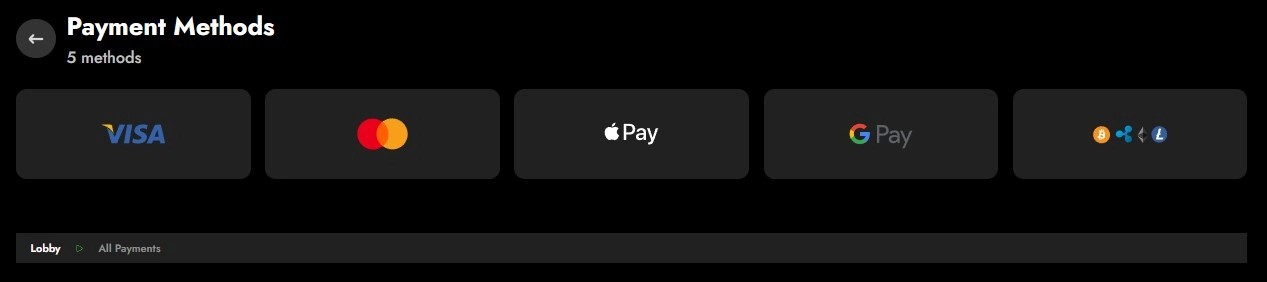
At a broad level, casino deposit systems use cards, e-wallets and cryptocurrency. The categories differ in how funds are routed: a card transaction passes through a card issuer, an e-wallet uses a separate payment account, and cryptocurrency moves through a digital-asset network. A mobile site or app may present some of these options, but availability can depend on the operator and payment provider. A logo on a cashier page establishes neither that a transaction will be accepted nor that the underlying gambling service is lawful to provide in Australia.
Attention: Australian market restrictions prohibit the acceptance of credit-card payments for online gambling services.
Card payments require particular care. Australian market restrictions prohibit accepting credit-card payments for online gambling services. A payment method being labelled “card” does not resolve whether it is a credit or debit transaction, or whether the operator is permitted to offer it. The label is not a compliance check.
E-wallets and cryptocurrency are separate funding categories, not guarantees of privacy, reversibility or player protection. Offshore casinos do not receive the protections available through domestic regulators such as the Australian Communications and Media Authority. A successful payment does not extend those protections to the account or settle a dispute with the operator.
For a real-money mobile casino, the useful distinction is not which button appears first on a phone screen. It is whether the payment route is permitted, what account or asset is being used, and what terms govern the transaction. Mobile access changes the screen size, not the regulatory position. No deposit method turns an offshore casino into a domestically licensed service.
Playing with Real Money: The Deposit-to-Withdrawal Path
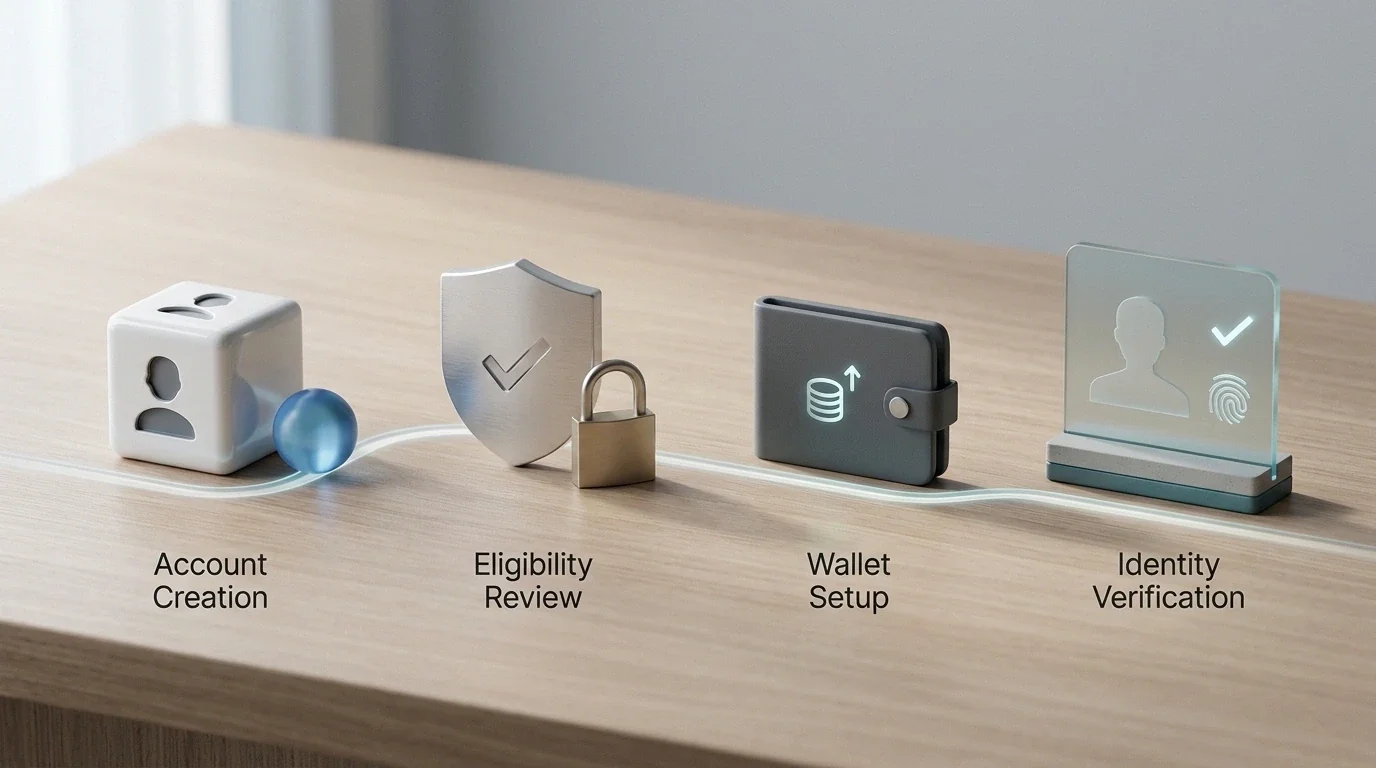
A real-money casino transaction has three stages: funds enter an account, the balance changes through play, and any remaining eligible balance is submitted for withdrawal. These stages are separate. A successful deposit does not establish that the same payment route can be used to cash out.

Neosurf illustrates the distinction. Its vouchers can fund an account, but they cannot receive withdrawals. A deposit made with a voucher therefore needs a separate cash-out route, subject to the operator’s payment rules. The practical value of a deposit depends not only on whether it is accepted, but also on what happens when the balance is ready to leave the account.
During play, the displayed balance can include deposited funds, winnings, or funds subject to promotion conditions. Those categories may not have identical withdrawal status. An active promotion can prevent a withdrawal until its wagering requirement is met; attempting to cash out before clearance may lead to rejection or loss of the bonus and related winnings. The final amount available to withdraw can consequently differ from the balance shown on screen.
The transaction path should be assessed as one set of linked conditions: which methods accept deposits, which methods support withdrawals, and whether any promotion changes when funds become withdrawable. The terms and conditions, including the rules in the account’s promotions area, determine those points. A payment method that works at the first stage is not, by itself, a complete route from deposit to cash-out.
Real-Money Slots and the Cost of Bonus Wagering
A bonus attached to online casino slots is not automatically cash that can be withdrawn. Its wagering requirement sets the amount of qualifying bets that must be made before winnings become eligible for withdrawal. The calculation is based on the stated bonus amount and multiplier; the balance shown in an account can therefore include funds that remain subject to conditions.
Calculating the turnover target
To find the turnover target when a requirement applies to the bonus alone, multiply the eligible bonus amount by the wagering multiplier.
A specialist review of pokies offers reports wagering requirements of 30x–45x the bonus amount. That range is a report about offers covered by that review, not a fixed market rule. The terms attached to an individual promotion determine the actual multiplier and which funds it applies to. A requirement tied to the bonus alone produces a different qualifying-bet total from one that also includes a deposit, so the wording of the calculation matters as much as the headline multiplier.
Slots generally contribute fully toward wagering requirements. In practical terms, each qualifying bet on a slot counts in full toward the required turnover, unlike formats that may receive reduced weighting. Full contribution does not make a requirement small; it only means slot betting is counted at its stated face value. The total amount required can still be substantial when a high multiplier is applied to a bonus.
A useful way to assess the cost is to separate the promotion into three parts: the eligible bonus amount, the wagering multiplier and the rules governing qualifying play. Multiplying the first two gives the turnover target when the requirement applies to the bonus alone. The game contribution then determines how much of the actual betting counts toward that target. Where slots count fully, the full value of qualifying slot bets is credited. If the promotion defines a different basis or excludes particular games, the apparent calculation changes.

The headline figure is not the whole contract. Bonus terms may also impose a maximum bet while wagering and exclude certain games. Exceeding the stated maximum or playing an excluded game can void bonus winnings. An active promotion can also prevent a withdrawal request from being accepted until wagering is complete. A request made before clearance may be declined, or the bonus and related winnings may be forfeited, depending on the terms.
That makes the promotion’s final value conditional. The displayed bonus is not equivalent to an immediately available balance: it carries a turnover obligation, game rules and limits on play. A lower multiplier is not necessarily the only relevant comparison if the qualifying amount, contribution rules or restrictions differ. The calculation should be read as a set of linked conditions, not as a cash figure standing alone.
For slots, the full contribution can make the turnover arithmetic more direct, but it does not remove the need to check the terms before play begins. The relevant details are the amount used for the multiplier, the games that qualify, the maximum permitted bet and the consequence of withdrawing before clearance. Once wagering is active, those conditions govern whether funds remain locked to the promotion and whether winnings remain eligible.
The distinction between nominal bonus value and withdrawable value is straightforward: the first is offered subject to conditions; the second depends on satisfying them. Online pokies may count fully toward the requirement, yet every qualifying bet still carries the ordinary risk of losing the funds used to place it. The turnover target is a condition to meet, not a promise that the required balance will remain intact while it is met.
Bonus Wagering Essentials
- The displayed bonus is not immediate cash but carries a turnover obligation.
- Slots generally contribute fully toward wagering requirements.
- Maximum bet limits and excluded games can void bonus winnings.
- Funds remain locked until the wagering requirement is fully cleared.
How Casino Games Count Toward Bonus Clearance
A bonus balance does not clear at the same rate across every game. The wagering contribution assigned to a game determines how much of each stake counts toward the requirement. A real-money casino game can therefore provide entertainment while making little progress on bonus clearance.
The percentage is applied to the amount wagered, not to the amount won. If a game has a low contribution, only a fraction of the stake is credited toward the wagering total. The rest still represents money at risk, but does not advance the requirement. This distinction matters when comparing table games, live tables and instant-win formats.
Table games: only part of each stake counts
Table games typically contribute 10–20% toward wagering requirements. A stake of any size therefore adds only a portion of that stake to the amount credited for clearance. The percentage is not a payout rate and does not describe the chance of winning; it is an accounting rule attached to the bonus.
That weighting makes table games slower for clearing a promotion than games credited at a higher rate. The balance may change through wins and losses, but those outcomes do not alter the contribution percentage. A large-looking wagering total can consequently remain far from complete if most play has been on lower-weighted formats.
The relevant figure is the game’s contribution in the promotion terms, not a general assumption about how a particular game should be treated. Where a casino offers several versions of a table game, the stated weighting may also distinguish between them. The terms determine what counts.

Live tables: a lower contribution than slots
Live-table play contributes less toward wagering requirements than slots. That makes it a less efficient route for clearing a bonus, even if the same stake is placed. The amount of progress depends on the casino’s assigned weighting, rather than on the fact that a game is played with a live dealer.
For someone comparing casino games played for real money, the practical calculation is straightforward: compare the amount wagered with the amount that the promotion credits. Lower weighting means more play is needed to generate the same credited wagering, with more exposure to wins and losses along the way. Live casino games are therefore not interchangeable with higher-contribution formats when a bonus is active.
Instant-win formats: check whether they count
Some instant-win games may contribute nothing toward wagering requirements. In that case, stakes placed on them add no progress to bonus clearance. Playing them while a promotion is active can use funds without reducing the outstanding requirement.
An online casino game may be available for real-money play and still be excluded from bonus wagering. Availability in the lobby is not evidence that the game qualifies. The promotion terms are the controlling document: they identify eligible categories, excluded games and any different weightings.
This is particularly important where a casino groups instant-win products alongside other games. A shared menu or similar presentation does not establish that they share the same contribution. If the weighting is unclear, the amount credited should not be assumed.
Typically contribute 10–20% toward wagering requirements, making them slower for clearance.
Generally provide a lower contribution than slots, often ranging from 0–10%.
May contribute nothing toward requirements; some games are completely excluded.
Compare contribution before choosing a format
The same bonus can require very different amounts of play depending on the mix of games used. Higher contribution means more of each stake is counted; lower contribution stretches the clearance process; zero contribution leaves the requirement unchanged. A game’s entertainment value does not change that arithmetic.
Bonus terms also set conditions beyond contribution, including maximum-bet rules and excluded games. Exceeding the stated maximum or using an excluded format can void bonus winnings. Active wagering must be fully cleared before a withdrawal request is accepted, so game choice affects both the pace of progress and whether the balance is eligible to cash out.
Live Casino Play and Its Wagering Trade-Off
Live-dealer games can look like a natural match for a casino promotion: the format resembles a conventional table, with a dealer and real-time decisions. For bonus clearance, however, appearance is irrelevant. The terms assign each game a contribution rate, and live-dealer play often counts for only 0–10% of wagering requirements.
That rate changes the arithmetic. If a qualifying wager is placed on a live table, only the permitted share may reduce the outstanding wagering balance. A game can therefore involve substantial betting while making little progress towards making bonus funds withdrawable. At the upper end of the stated range, a small fraction of the stake counts; at the lower end, the wager may add nothing to clearance.

The relevant figure is not the total amount wagered but the amount credited towards the requirement. In practical terms, a live-casino bonus can require far more table turnover than its headline wagering multiplier suggests, because the game contribution applies in addition to the multiplier. The promotion’s apparent value and its usable value are not the same calculation.
Before accepting an offer, the live-game contribution should be checked in the promotion terms. The same table may be treated differently across operators or offers, so a general category label is not a substitute for the specific rule. If live dealer games are excluded, their wagers do not advance clearance. If they receive a low weighting, only that weighted portion counts. Either way, using the bonus on live tables can leave the wagering balance largely intact.
The trade-off is straightforward: live play may suit the chosen format, but it is inefficient for clearing a promotion when its contribution is low. Bonus conditions also govern maximum bets and excluded games; breaching them can void bonus winnings. An active wagering requirement must be completed before a withdrawal request can be accepted. Where live play is the priority, declining a promotion avoids tying the balance to a clearance calculation that the chosen games barely reduce.
Winning and Withdrawing: Timing, Verification and Holds
A displayed balance is not the same as money received. A withdrawal passes through separate stages: the casino reviews the request, may ask for identity documents, and then sends an approved payment through the selected method. A delay at any stage can leave a win from an online casino appearing ready to cash out while the funds remain unavailable.
Withdrawal Process
The player submits a withdrawal request, which may be subject to a hold of zero to twenty-four hours.
The casino reviews the request and may require KYC documents, such as government ID and proof of address.
Once approved by the casino, the funds are sent via the payment method, though bank processing may add further delays.
Account verification is a frequent point of friction. A specialist review identifies incomplete verification as the most common trigger for withdrawal delays. Casinos may request know-your-customer documents when withdrawals exceed their stated thresholds. These can include government-issued identification and proof of address. The threshold and document specifications depend on the operator, so the relevant terms should be checked before play rather than after a request is pending.
Verification is not only a question of whether documents were uploaded. The casino must accept them, and any mismatch between account details and submitted records can require further review. Completing identity checks before requesting a payout reduces the risk of a preventable pause, though it does not set the time the operator or payment provider will take to process the transaction.
Some operators also place a hold on a withdrawal request. A specialist review reports holds ranging from zero to twenty-four hours at many casinos; during that period, a player may be able to cancel the request and wager the balance again. That option changes the practical value of a win: a cash-out request is not final if it can still be reversed. The operator’s terms should make clear whether a pending request can be cancelled and when it becomes irreversible.
Approval is not the same as arrival. A specialist review notes that credit-card refunds can take days after casino approval, with a bank able to add further delay. The clock therefore has at least two parts: the casino’s review and the payment institution’s handling after release. A completed casino-side status does not confirm that the receiving account has been credited.

For a win at an online casino offering real-money play, the useful distinction is between three statuses: requested, approved and received. Each describes a different point in the process. A withdrawal marked as requested may still be held or awaiting checks; approval means the casino has authorised it, not that the bank has posted it. Only receipt confirms the funds are available.
Terms should also be checked for any condition that prevents a request from being accepted. If an active promotion remains subject to wagering, the withdrawal may be declined until the requirement is cleared, or the bonus and associated winnings may be forfeited. That is separate from a payment delay: one concerns eligibility to withdraw, the other concerns processing after approval.
Assessing Established and New Casino Operators
An established name and a newly launched casino present different questions, but neither label settles whether an operator is dependable. Longevity can make an operator easier to assess over time; a new brand has less of a public track record. Neither is a substitute for checking what the operator says about its licensing and understanding which protections apply.
In Australia, offshore licensing should be read as a statement about the operator’s claimed authorisation, not as evidence of local approval. An offshore licence does not make a casino domestically licensed, and protections available through Australian regulators such as the Australian Communications and Media Authority (ACMA) do not apply to offshore platforms. That distinction matters more than whether a site presents itself as a top real-money online casino or has been operating for years.
An offshore licence identifies the jurisdiction of the operator but does not provide Australian regulatory recourse or domestic consumer protection.
A specialist review of four casinos reported that each held an active licence from a recognised offshore authority at the time of that review. This is a finding attributed to that review, not a permanent market-wide guarantee. Licensing status can change, and the review’s statement does not establish that every operator has the same standing or that an offshore licence provides Australian regulatory recourse.
What a licence claim can establish
A stated licence identifies the authority an operator says oversees it. It does not, by itself, show that the operator is authorised in Australia or that an Australian regulator can resolve a dispute with it. The jurisdiction named on a casino’s site is therefore relevant to understanding the operator’s position, but it should not be confused with local consumer protection.
The practical distinction is between a claim and its limits. Operator pages may describe a licence, while the protections available through domestic regulators remain outside the relationship with an offshore platform. A licence label is not a complete account of what happens if there is a disagreement about an account, a promotion or a payment. Those matters depend on the operator’s own terms and the applicable offshore framework; Australian protections do not fill the gap.
This is why comparisons of top online casinos for real-money play should not treat a licence badge as a quality score. It is one piece of information about the operator’s stated status. It does not establish how a particular dispute will be handled, or guarantee a particular outcome.
Established operators and newer brands
For an established casino, the relevant question is whether its current claims and terms can be assessed consistently—not whether its name is familiar. A longer operating history may leave more material to examine, but age alone does not verify current licensing or create domestic oversight. A recognised brand can still require the same careful reading of its stated jurisdiction and conditions as a less familiar one.

A new online casino offering real-money play calls for a narrower conclusion: newness means there is less history to assess, not that the operator is automatically unsafe or automatically better. A launch announcement, polished design or introductory offer cannot replace a clear account of the operator’s stated licensing. Nor does a recently opened site gain Australian regulatory protection simply by being new.
For an Australian audience, the useful comparison is therefore not “established versus new” in isolation. It is whether each operator clearly identifies its offshore status, whether its terms are intelligible, and whether the limits of offshore protections are understood. Where a site’s claims are difficult to interpret, that uncertainty is itself part of the assessment; it should not be converted into an assumed endorsement.
Reading operator comparisons
A comparison can summarise differences between operators, but a ranking does not change the legal or regulatory position. The word “top” is an editorial judgement, not a regulatory category. A prominent placement or favourable verdict should not be read as confirmation of Australian approval, a guarantee of service, or a promise that a dispute will be resolved through ACMA.

The same applies to a new casino in Australia: the relevant distinction is the stated offshore licensing and the limits attached to it, not the date the brand appeared. An operator’s terms should be considered as conditions that govern the relationship, rather than as a substitute for local oversight. Familiarity, novelty and presentation are signals about branding; none independently establishes the level of protection available to an Australian customer.
A disciplined assessment keeps those categories separate. Licensing describes the operator’s stated offshore authorisation. Domestic protection describes the recourse available through Australian regulators. Reputation and age describe the brand’s history. Combining them into one broad label—“best,” “trusted” or “top”—obscures what each can and cannot establish. For Aussie gamblers comparing established operators with new brands, the central distinction is not how confidently a casino markets itself, but what its stated status means and which protections do not extend to it.
Can you play online casino games in Australia?
Yes, Australian residents are not criminally liable under the Interactive Gambling Act 2001 for playing at foreign-licensed casinos. However, the Act prohibits companies from providing real-money interactive casino games to people in Australia, and an offshore licence does not amount to Australian approval.
What types of games are available?
Online casino offerings can include pokies or slots, live dealer and other table games, and instant-win games. Game types may count differently toward bonus wagering requirements.
Are withdrawals simple, and how long do they take?
Withdrawal speed depends on the payment method and whether your account has completed verification. Crypto is generally the fastest option: Bitcoin Cash withdrawals took under four hours in testing, while bank transfers averaged 3.2 business days; KYC checks can also delay a withdrawal.
How long does a casino take to pay out?
It varies by payment method: Bitcoin Cash withdrawals took under four hours in testing, bank transfers averaged 3.2 business days, and credit-card refunds can take days after casino approval. PayID transfers arrive almost immediately once sent, while crypto payouts are released before blockchain confirmation, which usually arrives within an hour.
Prepared by the Oscarspin Casino editorial staff.