






No-KYC Casinos in Australia: Withdrawal Checks
 Available in AU
Compare payment trade-offs and see why crypto, PayID and live-casino play do not remove withdrawal verification.

Table of Contents
- What “No KYC” Means at Withdrawal
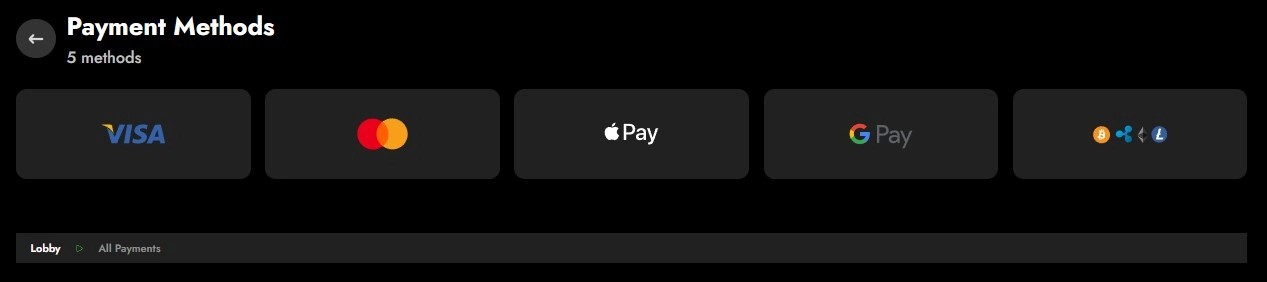
- Online Casino Payments in Australia: The Methods and Their Trade-Offs
- Bitcoin and Crypto Payments: Speed Is Only One Part of the Calculation
- Crypto Casinos and the Withdrawal Route
- Ethereum, Tether and Ripple: Coin Choice Does Not Remove Verification
- USDT, Crash Games and Deposits: Separate the Game from the Payment
- Bonuses and Free Spins: Calculate the Wagering Before the Cashout
- PayID and Other Withdrawal Methods: Approval Time Is Not Arrival Time
- Live Casino Withdrawals Still Follow the Same Verification Rules
What “No KYC” Means at Withdrawal
“No KYC” describes a claim about an account or sign-up process; it does not establish that a withdrawal can be paid without identity checks. KYC, or “know your customer”, is the process an operator uses to verify who holds an account. A service may allow an account to be opened or funded with limited checks, then request verification when money is due to leave it. The label is therefore not a reliable description of every stage of an account’s use.
A first cashout is a point at which that distinction can become visible. A specialist review reports that first withdrawals often prompt identity-verification requests. That account is not a timetable or a guarantee that every operator follows the same sequence. It does show why a claim of no-KYC access should not be read as a promise that identity will never be checked. Casinos must verify a player’s identity before processing withdrawals.
The practical question is not only whether checks occur at registration. It is whether an account can be verified before a withdrawal is requested, what information the operator requires, and whether the withdrawal remains pending until the review is complete. If verification is outstanding, the casino’s approval stage cannot be treated as complete. A payment method described as fast does not remove that condition: identity review and transfer speed are separate parts of the process.
A “no KYC” label does not by itself explain what checks may apply to an account or withdrawal. Use this list as a starting point, and check each casino’s current terms before depositing.
License: Curacao Gaming Control Board OGL/2023/174/0082 (Dama N.V.) SpinsUp is listed with a Curacao Gaming Control Board licence, OGL/2023/174/0082, held by Dama N.V.
License: Curacao – Antillephone N.V. (Versus Odds B.V.) · Min. deposit: EUR 20 Thor Casino is listed under a Curacao licence from Antillephone N.V. (Versus Odds B.V.). Its minimum deposit is EUR 20.
License: Curacao Gaming Control Board (TechSolutions Group N.V.) Bizzo Casino is listed with a Curacao Gaming Control Board licence held by TechSolutions Group N.V.
License: Curacao Gaming Control Board OGL/2023/176/0095 (Hollycorn N.V.) GoldenCrown is listed with a Curacao Gaming Control Board licence, OGL/2023/176/0095, held by Hollycorn N.V.
License: Curacao eGaming OGL/2023/174/0082 (Dama N.V.) · Min. deposit: A$15 LevelUp Casino is listed with a Curacao eGaming licence, OGL/2023/174/0082, held by Dama N.V. Its minimum deposit is A$15.
License: Curacao Gaming Control Board OGL/2023/176/0095 (Hollycorn N.V.) Rollero Casino is listed with a Curacao Gaming Control Board licence, OGL/2023/176/0095, held by Hollycorn N.V.
License: Curacao eGaming OGL/2024/923/0383 (Antillephone N.V.) · Min. deposit: A$30 WinSpirit Casino is listed with a Curacao eGaming licence, OGL/2024/923/0383, held by Antillephone N.V. Its minimum deposit is A$30.
License: Curacao eGaming (Roby Games Ltd) Roby Casino is listed with a Curacao eGaming licence held by Roby Games Ltd.
License: Curacao Gaming Control Board JustCasino is listed with a Curacao Gaming Control Board licence.
License: Curacao (operating since 2017) · Min. deposit: A$20 Uptown Pokies is listed as operating under a Curacao licence since 2017. Its minimum deposit is A$20.
The distinction matters across searches for a BTC, ETH, LTC or Solana casino described as no-KYC. A cryptocurrency option changes the payment route, not the identity condition attached to a cashout. A wallet transfer may have its own transaction characteristics, but those do not establish that an operator has approved a withdrawal or waived verification. The same principle applies to a newly launched casino using the no-KYC label: “new” and “no KYC” do not, by themselves, define what happens when funds are requested.
The label also leaves practical details unanswered. It does not tell whether verification is required before any withdrawal, what documents or checks may be requested, how long a review will take, or whether a withdrawal can be processed while a request is unresolved. Those terms need to be read as conditions, not inferred from a short marketing description. If the operator’s rules reserve the right to verify an account, the broad label cannot cancel that condition.
For an Australian audience, there is a further legal boundary. Under the Interactive Gambling Act 2001, operators cannot lawfully provide real-money online casino games to people physically located in Australia. The prohibition covers casino-style services such as slots, poker and table games. A “no KYC” description does not alter the legal status of the service, and it should not be mistaken for an assurance that access or withdrawals are protected from scrutiny. The Act’s restriction concerns operators; players do not incur a penalty simply for using an offshore casino.

A useful reading of “no KYC” is therefore narrow: it may describe a limited check at account opening, but it cannot be relied on to mean “no identity verification before payment”. Before treating a displayed balance as withdrawable, the relevant conditions are whether identity checks remain outstanding and whether the operator can withhold approval until they are satisfied. The amount shown in an account is not the final amount received while a required review is unresolved. The label is packaging; the withdrawal conditions determine the outcome.
Online Casino Payments in Australia: The Methods and Their Trade-Offs
Payment options described in material about offshore real-money casino services do not make those services lawful in Australia. The Interactive Gambling Act 2001 prohibits operators from providing online casino games to people physically located in the country. The comparison below describes reported payment categories, not an endorsement or an invitation to use them.
A specialist review of Australian-facing casino payment options lists debit cards, PayPal and Skrill e-wallets, and bank transfers; it also notes that some services list cryptocurrency. The same review refers to card payments broadly, but credit cards must not be accepted for online gambling services. A payment logo or a deposit option is therefore not, by itself, evidence that a service is lawful or that the same route can be used to receive funds.
Legal Prohibition
Under the Interactive Gambling Act 2001, operators cannot lawfully provide real-money online casino games to people physically located in Australia.
Deposits and withdrawals are different tests
A deposit method answers one question: how funds might be sent to an account. A withdrawal method answers another: how funds can be returned, under what conditions, and whether the operator supports that route for cashouts. The two lists may not match. A method that appears at the cashier for deposits can be of little practical value if withdrawals must be sent another way.
Prepaid vouchers illustrate the distinction. A specialist review reports that products such as Neosurf are generally offered for deposits rather than withdrawals. That can make a voucher convenient at the point of payment while leaving the cashout route unresolved. The relevant comparison is not just how easily a deposit can be made, but whether the available withdrawal options are clear before any funds are committed.
E-wallets and bank transfers appear in reviews as payment categories that may support both sides of a transaction, but availability depends on the service and its terms. A listed brand does not establish that every account holder can use it, or that a deposit and withdrawal will follow the same path. Payment rules can also specify that funds return through the original method where possible. Those details matter more than the number of logos displayed.
A specialist review also reports that some real-money casino services have offered instant banking through providers such as POLi. The word “instant” describes a payment feature, not a complete assessment of a transaction or of the service providing it. The route, eligibility conditions and withdrawal support still need to be distinguished from deposit convenience.

What the comparison should establish
A useful payment comparison records whether a method is presented for deposits, withdrawals, or both; whether the operator’s terms restrict the route; and whether costs or limits are disclosed. Without those details, a broad “payments accepted” label leaves the main cashout question unanswered. A method can be easy to select and still be unsuitable for receiving funds.
For Australian residents, there is a further threshold before comparing payment convenience: real-money online casino services are prohibited when provided to people in Australia. Offshore payment options do not change that legal position. The practical distinction between depositing and withdrawing remains important when assessing claims, but it should not be mistaken for a basis to treat an offshore casino as an authorised local service.
Bitcoin and Crypto Payments: Speed Is Only One Part of the Calculation
Bitcoin and other cryptocurrencies are often associated with near-instant transactions. A specialist review describes crypto payments in those terms, but transaction speed alone does not establish how quickly a withdrawal request will be approved or whether identity checks will be skipped. Those are separate parts of the process.
For a casino withdrawal, the practical distinction is between the payment moving and the operator authorising it. A crypto transfer may be fast once sent, while a request can still be held for review before funds are released. The visible promise of speed therefore applies to only one stage. It is not a reliable measure of the time from requesting a withdrawal to receiving funds.
Withdrawal Timing
Transaction speed refers only to the payment moving after it has been authorized; it does not include the time the operator takes to review and approve the request.
This distinction matters in searches for a Bitcoin casino with no KYC. The label can suggest that cryptocurrency itself removes identity checks. It does not. Casinos must verify a player’s identity before processing withdrawals, and first withdrawals are identified in specialist reviews as a point at which verification requests often arise. A crypto deposit does not change that condition. A claim of “no KYC” should not be read as a guarantee that a withdrawal will proceed without checks.
The calculation has at least two separate questions: how the payment is transmitted, and whether the operator has approved the payout. Crypto may offer a fast transfer mechanism; approval remains subject to verification. Treating the first as proof of the second is a category error, not a payment advantage.
Bitcoin is one example within the broader crypto category. The same reasoning applies when a service advertises other digital currencies: the payment asset and the operator’s identity-check process are not the same thing. Choosing a different coin cannot, by itself, establish that a casino will waive verification or release a withdrawal without review.
A useful way to assess any “instant” claim is to identify exactly what it describes. If it refers to the transfer after approval, it says nothing about how long approval takes. If the claim does not distinguish those stages, it leaves out the condition that controls whether the payout is sent at all. The word “instant” is not a substitute for a clear withdrawal policy.
The distinction also prevents a misleading comparison between crypto and other payment methods. A transfer method can be technically fast while the complete withdrawal remains pending. The relevant outcome is not just how quickly a transaction can move, but whether the request is approved and the funds are actually released. Without that separation, a fast-network claim can sound like a promise about the entire cashout when it only concerns the payment leg.

For Australian readers, there is a further legal boundary. Under the Interactive Gambling Act 2001, operators cannot provide real-money online casino games to people located in Australia; casino-style offerings such as slots, poker, blackjack and roulette fall within the prohibited services. Changing the payment instrument to Bitcoin or another cryptocurrency does not alter the nature of the service. The law addresses the provision of the games, not merely the currency used to fund an account.
That boundary is relevant to phrases such as “crypto casino no KYC” or “best no KYC casino Australia”. They can combine two distinct claims: that a service accepts crypto, and that it does not require identity verification. Neither phrase establishes that withdrawals bypass KYC. Nor does payment in crypto make an online casino service lawful to provide to someone physically in Australia.
The more defensible reading of a no-KYC claim is narrow: it may describe the operator’s stated approach at a particular stage, but it cannot override the requirement for identity verification before withdrawal processing. A specialist review reports that first withdrawals often bring verification requests. That does not mean every request follows an identical sequence; it does mean the label should not be treated as a promise that the first cashout will be exempt.
Speed and verification should therefore be evaluated as independent conditions. Crypto can be associated with near-instant transactions, while an operator may still need to verify identity before releasing funds. For Australian residents, the legal status of the underlying real-money casino service remains separate from both payment speed and the wording of a no-KYC claim.
Main Conclusions
- Crypto transfer speed does not bypass mandatory identity verification for withdrawals.
- No-KYC labels often apply to registration but not necessarily to cashouts.
- Real-money online casino services remain prohibited for people in Australia regardless of payment method.
Crypto Casinos and the Withdrawal Route
A crypto payment option describes how funds may move; it does not establish that an account can withdraw without identity checks. Those are separate terms. Casinos must verify a player’s identity before processing a withdrawal, so a “no KYC” label cannot remove that condition. A crypto deposit may be accepted while a cashout remains subject to account review.
The legal setting matters in Australia. The Interactive Gambling Act 2001 makes it illegal for operators to provide real-money online casino games to people physically located in Australia. Casino-style services such as slots, poker and table games fall within that prohibition. Payment availability does not change the status of the service, and a crypto option is not a legal workaround.
A payment route has more than one stage
A deposit and a withdrawal are distinct transactions. A specialist review of payment options describes Australian-facing services as potentially supporting cards, PayPal or Skrill, bank transfers and, at some operators, cryptocurrency. That range should not be read as a universal menu: payment methods differ by platform, and a method shown for deposits may not be available for withdrawals.
The useful comparison is therefore not simply “crypto or cash.” It is whether the same method can be used in both directions, what conditions attach to each transaction, and how the operator handles a withdrawal request. Operators generally require funds to be returned to the original deposit method where possible. If the chosen crypto route is deposit-only, or if the account cannot receive a payout through it, the withdrawal may have to follow another permitted route under the operator’s terms.

A payment page that displays a cryptocurrency logo answers only a narrow question: whether that method is listed. It does not, by itself, disclose whether withdrawals are supported, whether the method must match the deposit route, or what account checks take place before funds are released. Those details belong in the payment and withdrawal terms. If the terms do not make the route clear, the advertised payment option is not enough to calculate the cashout.
Speed is not the same as approval
A specialist review reports that cryptocurrency can support near-instant transactions. That describes the potential payment phase, not the entire withdrawal process. Before funds can move, the operator may need to review the request and verify the account. Network speed cannot shorten a pending identity check or turn an unapproved request into a completed payout.
This distinction matters especially when “instant” appears beside a withdrawal claim. The word can refer to the transfer after approval; it should not be read as a promise that the full sequence—from request to receipt—takes no time. The operator’s review, the receiving route and any account conditions remain separate steps. A crypto route may reduce delay at one stage without settling the others.
Do
- Prepare verification documents before requesting a payout
- Check if the withdrawal route matches the deposit method
- Verify the operator’s actual withdrawal terms
Don’t
- Assume a “no KYC” label guarantees check-free withdrawals
- Equate network transfer speed with total approval time
- Treat a deposit logo as proof of withdrawal availability
Identity checks can also make a first withdrawal different from later ones. Preparing verification documents before requesting a payout can reduce avoidable back-and-forth, but it does not guarantee a particular processing time. A request may still be reviewed under the operator’s procedures. The practical value of a no-KYC claim is therefore limited if the withdrawal terms preserve identity checks before release.
What to compare before treating a route as usable
A clear assessment separates the deposit route from the payout route and checks the conditions attached to both:
- Availability: Is cryptocurrency listed for deposits, withdrawals, or both?
- Route rules: Must withdrawals return through the original method where possible?
- Verification: What identity checks are required before a withdrawal is processed?
- Limits and charges: What withdrawal limits, fees and processing conditions appear in the terms?
- Timing language: Does “instant” describe the transfer after approval, rather than the full request-to-receipt process?
These are operational distinctions, not endorsements. A service can advertise crypto payments and still require KYC, restrict the withdrawal route, or apply a manual review. A “no KYC crypto casino” label does not alter those terms or the legal status of real-money online casino services in Australia.
The final amount available through a payment route depends on more than the speed of the underlying transaction. If a method cannot receive the payout, if the operator has not approved the request, or if required verification remains incomplete, a near-instant transfer capability has no practical effect on the withdrawal. Payment choice is only one part of the route; approval and account conditions determine whether that route can be completed.
Ethereum, Tether and Ripple: Coin Choice Does Not Remove Verification
Ethereum, Tether and Ripple can look like different answers to the same payment question, but the currency does not determine whether identity checks apply. A specialist review describes cryptocurrency transactions as capable of being near-instant. That concerns the transaction itself, not the operator’s approval of a withdrawal or the release of funds.
The phrase “no KYC” refers to a claimed absence of identity checks; it is not proof that a withdrawal will proceed without them. Specialist reviews report that first withdrawals can prompt requests for identity documents. Separately, operators must verify a player’s identity before processing withdrawals. Coin choice therefore cannot remove that condition: an Ethereum balance, Tether balance or Ripple balance does not change the verification step.

The practical distinction is between transferring cryptocurrency and authorising a cashout. A fast transaction does not establish that an account has passed review, and a casino accepting a particular coin does not establish that it dispenses with checks. Treating those as equivalent confuses payment mechanics with account approval.
There is also a legal boundary in Australia. Under the Interactive Gambling Act 2001, operators cannot provide real-money online casino games to people physically located in the country. A search for crypto-based casino services does not alter that rule.
For any withdrawal process, the relevant condition is whether verification has been completed, not whether the chosen asset is Ethereum, Tether or Ripple. Near-instant transaction potential may shorten one part of a transfer, but it says nothing by itself about the operator’s review. The apparent shortcut is a property of the payment rail, not an exemption from identity checks.
USDT, Crash Games and Deposits: Separate the Game from the Payment
USDT may appear in searches about casino deposits, while crash games describe a type of game rather than a way to pay. These are separate choices: a payment option says how funds enter an account; it does not establish whether a particular game is available or what conditions apply when money is withdrawn.
Attention: Prepaid vouchers like Neosurf are generally offered for deposits and are often unavailable for withdrawals.
A specialist review reports that cryptocurrency transactions can be near-instant. That describes the transfer leg, not the operator’s handling of a withdrawal request. A deposit made in USDT therefore does not, by itself, demonstrate that an account is anonymous or that a later cashout will be free of identity checks. Payment speed and verification are separate parts of the process.
The distinction is also practical with prepaid options. A specialist review describes prepaid cards and vouchers such as Neosurf as deposit methods that are generally not available for withdrawals. That can leave a gap between the route used to fund play and the route through which any approved balance can be returned. The available withdrawal options and any account conditions matter before a deposit is made; the deposit screen alone does not settle them.
“No deposit” language changes the funding question, not the verification question. A balance credited without a cash deposit may still be subject to conditions before it can be withdrawn. The label “no KYC” should not be treated as proof that an operator will release funds without checking identity.
In Australia, real-money online casino games, including crash-style games, are prohibited services when supplied to people in the country. The Interactive Gambling Act 2001 places the prohibition on operators; it does not make the payment method a way around it. A coin, voucher or game format does not alter that legal distinction.
Bonuses and Free Spins: Calculate the Wagering Before the Cashout
A bonus headline gives the promotional amount, not the amount available to withdraw. The difference is the wagering condition: a requirement may attach to the bonus funds alone or to the combined deposit and bonus. Those bases produce different calculations, even when the advertised offer is identical.
Let D represent a deposit and B the bonus. If wagering applies only to bonus funds, the amount used as the basis for the requirement is B. If it applies to the combined balance, the basis is D + B. The second calculation includes money supplied by the player as well as promotional funds. A bonus-funds-only requirement is preferable because its wagering base is narrower.
That distinction matters more than the headline label. “No deposit” describes the absence of a deposit condition for receiving an offer; it does not establish that the bonus can be withdrawn without wagering. Nor does it say which balance the requirement covers. The terms must identify the applicable base before the offer can be assessed.
For a no-deposit offer, D is zero, so the combined base reduces to the bonus amount. In that particular calculation, wagering on the bonus alone and wagering on the combined deposit-and-bonus balance have the same base. The label still does not settle the remaining question: whether a wagering requirement applies, and what conditions govern release of any resulting balance. A no-deposit bonus is not, by its name alone, a cashable amount.
Calculating Wagering
Determine the amount deposited (D) and the bonus amount granted (B).
Check if wagering applies only to bonus funds (B) or to the combined balance (D + B).
Apply the wagering multiplier to the identified base to find the total amount that must be bet before withdrawal.
A deposited offer has a more visible difference. If the requirement applies to B, the deposit is outside that wagering base. If it applies to D + B, the deposit is included. Comparing only the bonus amount therefore omits a material input from the calculation. The offer with the larger headline can impose the broader base; the headline itself cannot show which one applies.
Free spins need the same separation between promotional wording and cashout terms. The label describes a promotion, but does not by itself specify how any resulting balance is treated for wagering. The relevant terms must make clear whether a requirement applies and whether its base is bonus funds or a combined deposit-and-bonus balance. Without that distinction, a projected cashout cannot be calculated from the promotion’s advertised value alone.
A useful comparison records the terms in a fixed order:
| Term to identify | Why it changes the calculation |
|---|---|
| Whether wagering applies | Establishes whether a wagering condition stands between the offer and withdrawal |
| The wagering base | Shows whether the calculation uses bonus funds alone or the combined deposit and bonus |
| Whether the offer requires a deposit | Separates a no-deposit promotion from one tied to deposited funds |
The comparison should use the wording of the actual offer, not the shorthand in its title. “No deposit,” “free spins,” and “bonus” are descriptions, not substitutes for the wagering clause. If the clause says the combined amount counts, the deposit cannot be treated as outside the calculation merely because it is not promotional money. If only bonus funds count, the deposit should not be added to that base.
Searches for a no-KYC casino bonus, including a crypto or Bitcoin promotion, do not change this arithmetic. Payment currency and the verification label are separate from the wagering base. A promise framed around instant withdrawal does not alter whether wagering applies or which balance it covers. Promotional language cannot turn an unmet wagering condition into a completed one.
In Australia, the legal context also matters: the Interactive Gambling Act 2001 prohibits operators from providing real-money online casino games, including slots, poker and table games, to people located in the country. A bonus description does not change that position. The calculations above explain how wagering bases differ; they are not an endorsement or invitation to use an offshore real-money casino.
For a financially meaningful comparison, the advertised amount should be set aside until the wagering clause has been read. First identify whether there is a deposit condition. Then identify the base to which wagering applies. Only after those points are clear can the promotional balance be distinguished from the balance that may become withdrawable. Where terms leave the base unclear, the headline amount cannot support a reliable cashout calculation.
PayID and Other Withdrawal Methods: Approval Time Is Not Arrival Time
A payout has two clocks: the casino’s review and release, then the payment network’s delivery. “Instant withdrawal” can describe only the second stage. A PayID transfer may move in real time once released, but that does not make a pending request instant from submission to receipt. Identity checks, account matching and other internal review can hold up the first stage.
PayID is Australia’s bank-to-bank instant payment system, operating through the New Payments Platform (NPP). A specialist review reported that some leading PayID services handled withdrawals in under five minutes, while standard bank transfers took one to three business days. Those figures describe reported performance, not a guaranteed timetable for every request. The payment rail can be fast; the operator’s approval process remains a separate variable.
PayID Performance
Some leading PayID services have handled withdrawals in under five minutes, compared to one to three business days for standard bank transfers.
The same review described automatic approval for PayID withdrawals below $5,000 AUD at some top-tier services. Automatic approval is not the same as automatic receipt: it removes or shortens a review step only where the request qualifies. A different request, account issue or identity check can change the timing. PayID processing times therefore depend on both the release decision and the transfer itself.
Comparing payment stages
| Method | What affects the timing |
|---|---|
| PayID | The casino must approve and release the request. After release, the NPP supports real-time bank-to-bank transfers. |
| E-wallet | The operator’s review comes first; the e-wallet then receives the funds. E-wallet withdrawals are described as being processed within 24 hours. |
| Bank transfer | The casino’s processing is followed by the bank’s handling time. Standard bank transfers were reported at one to three business days in a specialist review. |
| Card payment | Processing can take several days, with the casino’s approval stage still separate from payment delivery. |
The comparison matters because “processing time” is not used consistently. It may mean the time an operator takes to approve a withdrawal, the time a payment provider takes to transmit it, or the combined interval. A claim about fast payment rails cannot establish how long the full request will take. Terms should identify the method, the approval process and the expected payment stage; withdrawal limits and fees also belong in the published terms.
For PayID, the payment identifier links the transfer to a bank account. The withdrawal should use the same PayID details as the deposit, and funds should go only to an account linked to the casino profile. A mismatch can prompt a security review rather than speed up the payout. The described request route is to open the Wallet or Withdrawal area, enter the PayID identifier and amount, then confirm; that describes a transaction flow, not a promise of approval.
The word “instant” is consequently narrow. It may refer to the transfer after release, not the time from requesting a cashout to seeing money in an account. E-wallets, bank transfers and card payments all have the same distinction between operator approval and payment delivery, even though their payment stages differ. A casino no-KYC withdrawal claim does not remove that distinction: identity checks can still affect approval, and the method alone cannot establish that a request will bypass them.
Real-money online casino games are prohibited for operators serving people physically located in Australia under the Interactive Gambling Act 2001. Payment-speed comparisons do not change that legal position or make an offshore service locally authorised. They describe the mechanics of a payout, not a recommendation or assurance that a real-money platform is available for lawful use in Australia.
Live Casino Withdrawals Still Follow the Same Verification Rules
A live dealer format does not create an exception to identity checks. Before a withdrawal is processed, the operator must verify the account holder’s identity; the game format does not alter that condition. Specialist reviews have reported that verification requests can arise with a first withdrawal, so a “no KYC” label should not be read as a promise that funds can be cashed out without checks.
There is also a legal distinction that matters in Australia. Under the Interactive Gambling Act 2001, providing real-money online casino services to people physically in Australia is illegal for operators. Casino-style services include live table games as well as slots and other formats. A live stream or human dealer changes the presentation, not the legal status of the service.
Accordingly, “live casino no KYC” is not a reliable description of a lawful withdrawal route for Australian residents. Where an offshore operator accepts an account or a deposit, that does not remove its verification obligations or establish that a withdrawal will be released without review. The practical condition remains straightforward: identity verification precedes payout processing, regardless of whether play involved a live table or another casino-style game.
What payment methods are available?
Reported options include debit cards, PayPal and Skrill, bank transfers, PayID and cryptocurrency; prepaid vouchers such as Neosurf are generally for deposits, not withdrawals. Credit cards must not be accepted for online gambling services, and operators cannot lawfully provide real-money online casino games to people in Australia.
What are easy withdrawal casinos?
They are casinos with clear cashout limits, supported withdrawal methods and prompt processing after any required checks. Reported PayID payout examples include Fastpay Casino, PlayAmo and National Casino, but real-money online casino operators cannot lawfully serve people located in Australia.
How do you choose the best easy withdrawal casino site?
Check that withdrawal methods and minimum, maximum and any weekly or monthly limits are clearly published, and confirm that your preferred method works for cashouts as well as deposits. Complete identity verification early, check for fees and same-method return rules, and read any bonus wagering terms; bonus-only wagering requirements are preferable to wagering on the combined deposit and bonus.
How fast are withdrawals?
E-wallet withdrawals are typically processed within 24 hours, while bank transfers and card payments can take several days; traditional bank transfers may take up to five business days. PayID transfers can arrive almost instantly once the casino releases them, but internal reviews, first-withdrawal checks and other processing conditions can cause delays.
Written by the editors at Oscarspin Casino.