






Under-an-hour casino withdrawals in Australia: how timing
 Available in AU
PayID can move a released payment quickly, but it does not control operator approval or establish that a casino service is lawful in Australia.

Where the Under-an-Hour Window Actually Comes From
In Australia, the timing question sits inside a legal restriction: the Interactive Gambling Act 2001 prohibits operators from providing real-money online casino games, including slots, poker and table games, to people located in the country. That context matters when interpreting claims about an “under-an-hour” casino withdrawal. A published payment estimate is not evidence that a service is lawful to provide in Australia, nor does it turn a payment feature into an available local entitlement.
The timing claim itself depends on what the clock measures. A withdrawal has at least two distinct stages: the operator’s handling of the request and the movement of funds after release. PayID’s advantage concerns the second stage. It is Australia’s bank-to-bank instant payment system, operating through the New Payments Platform (NPP), with transfers processed in real time through the Osko network. That infrastructure can move a released payment rapidly. It does not, by itself, determine how long an operator takes to approve a request.
This is the distinction behind an under-an-hour claim. If the clock starts only after approval, a near-instant transfer can fit inside that window. If the clock starts when the withdrawal request is submitted, operator processing is included, and the result can be different. Treating those two measurements as interchangeable makes a short payment-stage estimate sound like a complete request-to-receipt promise. It is not.
Withdrawal speed can depend on payment method and account checks, so a casino’s inclusion here should not be taken as confirmation that payouts arrive within an hour. Use the available operator details as a starting point and verify current withdrawal terms before depositing.
License: Curacao Gaming Control Board OGL/2023/174/0082 (Dama N.V.) SpinsUp is listed with a Curacao Gaming Control Board licence, OGL/2023/174/0082, held by Dama N.V. The supplied details do not establish its withdrawal speed.
License: Curacao – Antillephone N.V. (Versus Odds B.V.) · Min. deposit: EUR 20 Thor Casino is listed with a Curacao licence associated with Antillephone N.V. and Versus Odds B.V.; its minimum deposit is EUR 20. No payout timing information is provided.
License: Curacao Gaming Control Board (TechSolutions Group N.V.) Bizzo Casino is listed with a Curacao Gaming Control Board licence associated with TechSolutions Group N.V. Its withdrawal speed is not specified in the available details.
License: Curacao Gaming Control Board OGL/2023/176/0095 (Hollycorn N.V.) GoldenCrown is listed with a Curacao Gaming Control Board licence, OGL/2023/176/0095, held by Hollycorn N.V. The supplied information does not confirm under-one-hour withdrawals.
License: Curacao eGaming OGL/2023/174/0082 (Dama N.V.) · Min. deposit: A$15 LevelUp Casino is listed with a Curacao eGaming licence, OGL/2023/174/0082, held by Dama N.V., and a minimum deposit of A$15. No withdrawal timeframe is provided.
License: Curacao Gaming Control Board OGL/2023/176/0095 (Hollycorn N.V.) Rollero Casino is listed with a Curacao Gaming Control Board licence, OGL/2023/176/0095, held by Hollycorn N.V. The available details do not say how quickly it processes withdrawals.
License: Curacao eGaming OGL/2024/923/0383 (Antillephone N.V.) · Min. deposit: A$30 WinSpirit Casino is listed with a Curacao eGaming licence, OGL/2024/923/0383, associated with Antillephone N.V.; its minimum deposit is A$30. Withdrawal timing is not stated.
License: Curacao eGaming (Roby Games Ltd) Roby Casino is listed with a Curacao eGaming licence associated with Roby Games Ltd. No payout-speed details are available.
License: Curacao Gaming Control Board JustCasino is listed with a Curacao Gaming Control Board licence. The supplied information does not establish whether withdrawals can be completed within an hour.
License: Curacao (operating since 2017) · Min. deposit: A$20 Uptown Pokies is listed as a Curacao operator that has been operating since 2017, with a minimum deposit of A$20. No withdrawal processing timeframe is provided.
The clock has a start point and a release point
A withdrawal request is not the same event as a payment being sent. Before funds can move, the operator must decide whether to release them. PayID operates at the transfer end of that process: once a payment is released, the system is designed to transfer funds between bank accounts in real time. The operator’s decision happens before that transfer.
A useful way to read any timing statement is therefore to identify its starting event. “Paid in seconds” could describe the interval between release and arrival, rather than the interval between clicking a withdrawal control and seeing funds in a bank account. “Processed within an hour” may describe a different interval again, depending on whether “processed” means reviewed, approved, sent or received. Without a defined start and finish, the headline does not provide a complete elapsed time.
The arithmetic is straightforward. Request-to-receipt time consists of the operator’s handling period plus the transfer period after release. A very short transfer period does not cancel a longer handling period. If a request remains pending, the payment network has not yet been asked to move the funds. Its speed is beside the point until release occurs.
That is why the word “instant” needs a narrow reading. In this context, it refers to the payment phase after operator approval, not to the entire journey from withdrawal request to receipt. A casino cannot make the full process immediate merely by offering PayID. The bank-to-bank rail can be real-time while the request remains subject to a separate operator process.

The distinction also prevents a common timing error: subtracting the network’s advertised speed from the total delay and treating what remains as a technical transfer problem. Before release, the funds are still in the operator’s process. After release, the network transfer is the relevant stage. Each has its own start and finish, and only the second is the part PayID directly addresses.
What PayID changes
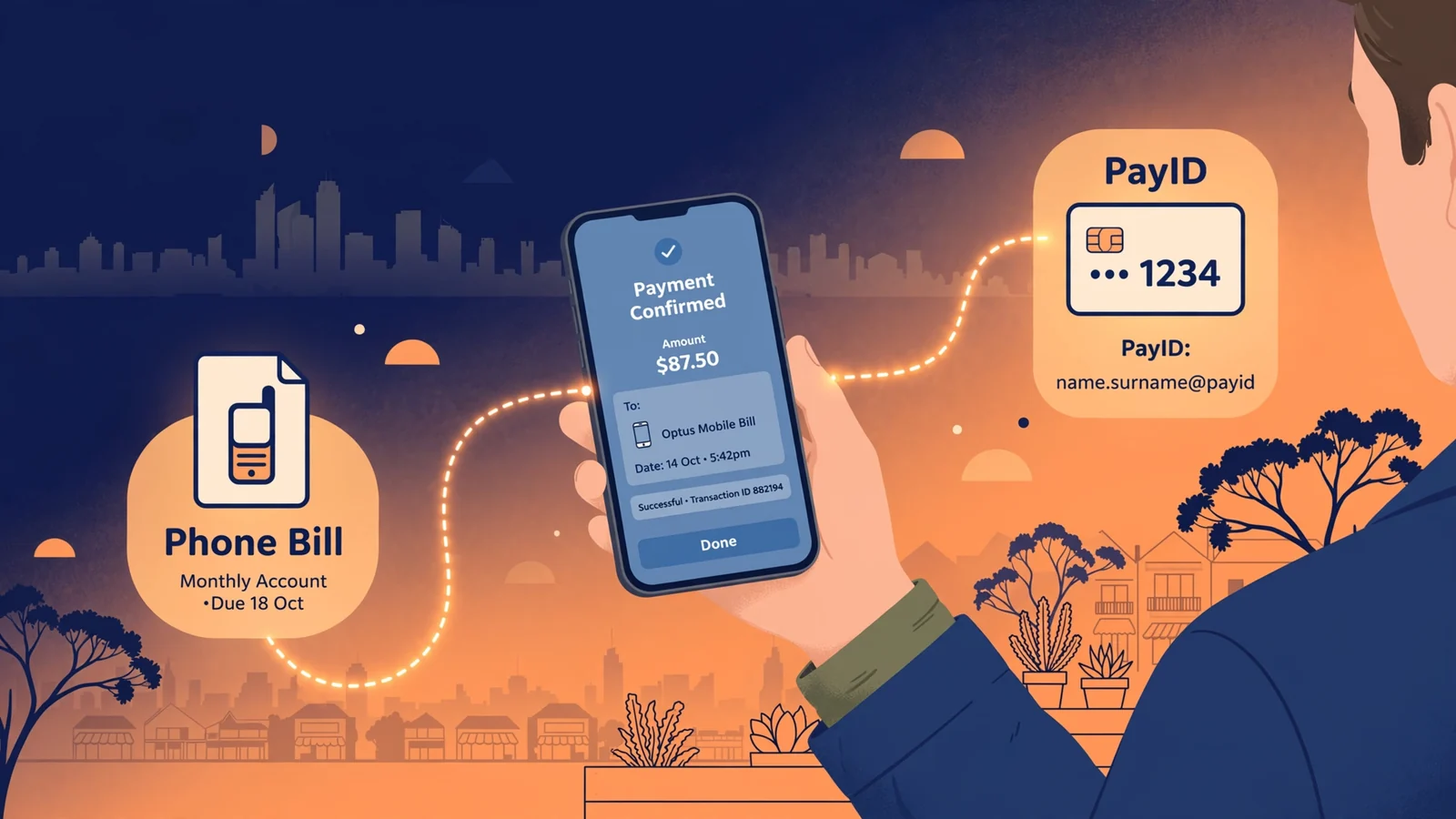
PayID is a way to route a bank transfer using an identifier associated with an account, rather than relying only on conventional account details. Its role in a withdrawal is to direct the payment into a linked bank account through Australia’s New Payments Platform. The NPP provides the infrastructure; Osko is the network through which the transfers described here are processed in real time.
For a PayID withdrawal, the general request flow is to sign in, open the wallet or withdrawal area, enter the PayID identifier, specify an amount and confirm the transaction. Those actions submit a request. They do not establish that the request has been approved or that money has already left the operator. The operationally important event is release: the transfer stage begins when the operator sends the funds.
The PayID mechanism therefore narrows the possible delay between release and receipt. It does not remove the earlier interval. A payment route can be fast and the overall withdrawal can still take longer than the route’s transfer time, because a payment method cannot approve its own payment request.
PayID Mechanism
PayID routes bank transfers using an identifier associated with an account through Australia’s New Payments Platform (NPP) and Osko network to enable real-time processing after release.
This is the source of the apparent mismatch between “instant” branding and a longer wait. Both descriptions can refer to different parts of the same transaction. The transfer may move in real time after release, while the elapsed time measured from the original request includes a pending period beforehand. There is no contradiction unless a claim presents a post-approval transfer estimate as though it covered the whole process.
What reported timing figures do—and do not—show
A specialist review of Australian PayID options reported withdrawal processing in under five minutes for the operators it assessed, compared with one to three business days for standard bank transfers. That is a report about a particular review and its selected examples, not a market-wide service standard. Its figures should be read as an attributed comparison, not as a guaranteed time available across every operator or every request.
A separate specialist review reported average PayID withdrawal times of 30–90 seconds for the options it assessed. Again, that figure belongs to the review’s observations and scope. An average is not a promise for an individual transaction, and it does not show that every request completed within that interval. Nor does a transfer-stage figure necessarily reveal when the withdrawal request was first submitted or how long it waited for release.

These distinctions matter because a small number of fast observations can produce an eye-catching average without describing the full range of outcomes. A report may measure a particular set of requests under particular conditions. The result can illustrate what is technically possible in the payment phase, but it cannot establish an unconditional request-to-receipt deadline.
The comparison with standard bank transfers is also about payment timing as presented by the review, not a universal timetable for every bank or account. The cited one-to-three-business-day range should remain attached to that report. It does not turn PayID’s reported figures into a guarantee, and it does not account for operator handling unless the review explicitly measures from request submission through receipt.
For that reason, “under an hour” is best understood as a threshold someone is testing against a complete elapsed time, not a result implied by the payment method’s name. A reported transfer in seconds can be relevant to the threshold, but only if the operator releases the funds promptly enough for the combined elapsed time to remain below it. The payment rail can contribute a short final stage; it cannot certify the earlier stage.
Reported processing in under five minutes or average times of 30–90 seconds for certain assessed options.
Typically reported to take between one to three business days, and in some cases up to five business days.
A precise reading of “instant withdrawal”
In payment language, “instant” can describe the network’s transfer capability. In consumer-facing language, it can sound like a complete service promise. Those meanings should not be collapsed. For PayID, the defensible interpretation is that the funds can move in real time once released. It does not mean that every withdrawal request is approved at the moment it is made, or that receipt follows instantly from the request.
A timing statement should therefore be tested against three points:
- The starting event: Is the clock measured from submission of the withdrawal request, approval, or release of funds?
- The finishing event: Does the stated time end when the operator marks a payment as sent, or when it reaches the bank account?
- The scope of the claim: Is the figure an observed result from a specialist review, or a condition stated by the operator for its own process?
If any of these points is unclear, the number cannot be treated as a complete elapsed-time estimate. A figure measured from release is useful for understanding PayID’s transfer speed, but it does not answer how long the whole withdrawal takes. A figure measured from request to receipt would answer the broader question, provided its conditions and scope were also clear.
The difference is not fine print in the arithmetic; it changes the quantity being measured. A post-approval transfer time excludes the period during which a request is waiting. A request-to-receipt time includes it. Both can be measured in minutes, but they are not the same measure.
Why the under-an-hour threshold is conditional
An under-an-hour result requires the full interval from request to receipt to remain below that threshold. PayID can make the transfer component very short once funds are released. The remaining question is whether the request reaches release soon enough. If it does, the network’s real-time capability can make a short total plausible. If it does not, the same PayID transfer capability remains unused while the request is pending.
That conditional structure explains why payment descriptions should not be read as guarantees. “PayID available” identifies a route. “Real-time transfers” describes the network. Neither statement alone specifies the operator’s handling time. A claim of instant payment is incomplete if it does not say whether instant refers to the transfer after approval or to the entire withdrawal process.

The practical benchmark, then, is not simply whether PayID appears among the available methods. It is whether the timing being quoted begins at the withdrawal request and ends at receipt. Reports of very short PayID times can show that the payment stage need not be the slow part. They cannot, without a clearly defined measurement, establish the total time for every request.
This is also why reported averages require careful wording. The 30–90-second average reported by a specialist review is evidence of the times observed in that review, not a forecast for each future transaction. The under-five-minute comparison from another specialist review is likewise an attributed result, not a general operating rule. Neither figure should be silently converted into “all PayID withdrawals arrive within five minutes” or “every request is paid in seconds.” That conversion would change a reported observation into a promise.
The contrast with a standard bank transfer can still be informative when kept in scope. The specialist review’s comparison of under five minutes for the PayID options it assessed against one to three business days for standard transfers illustrates how much the transfer route can affect the payment phase. It does not prove that operator approval is equally fast across methods, nor that the comparison applies to all providers. The difference is material, but the measurement still needs its boundaries.
An accurate description of the under-an-hour window therefore has two parts. First, PayID is built for real-time bank-to-bank movement through the NPP and Osko. Second, that speed applies after the operator releases the payment. The first statement explains the payment advantage; the second keeps the total-time claim honest.
Withdrawal Timing
- PayID enables real-time transfers, but only after the operator releases the funds.
- A complete withdrawal time includes both the operator’s handling period and the transfer period.
- Reported fast averages are observations from specific reviews, not guaranteed deadlines for all users.
- The under-an-hour threshold depends entirely on prompt operator approval.
The boundary of the timing claim
The phrase “under-an-hour withdrawal” can mean a complete request-to-receipt result, but the available PayID timing reports also describe much shorter payment-stage measurements. Those are not interchangeable. A figure stated without its clock boundaries can give the impression of a faster end-to-end process than it actually measures.
For Australian readers, there is a further boundary: real-money online casino services are prohibited when provided to people physically located in Australia. The Interactive Gambling Act 2001 covers online casino-style services such as slots, poker and table games. Payment information does not alter that legal position. Describing PayID’s mechanics is not an endorsement of an operator or an invitation to use a prohibited service.
Within the narrow payment question, the conclusion is factual rather than promotional: PayID can transfer funds in real time after release, while a withdrawal request and a released payment are separate events. Specialist reviews have reported very short PayID processing figures, but those observations should retain their attribution and scope. An under-an-hour outcome is established only when the complete interval—from request to receipt—is what the timing claim actually measures.
How the Payment Method Changes the Clock
The payment method sets a ceiling on how plausible an under-an-hour arrival is, but it does not control the whole withdrawal. A transfer may move quickly once released while the cashout request itself remains pending. For timing purposes, the key distinction is between the casino approving a withdrawal and the payment network carrying the approved funds.
E-wallets
PayPal and Skrill are among the e-wallet options identified for Australian players. A specialist review describes e-wallet withdrawals as commonly processed within a day, while another characterises e-wallet transactions as taking hours rather than days. These descriptions make an e-wallet a more plausible route to a short wait than a conventional bank transfer, but they do not establish that funds will arrive within an hour.

The clock also depends on what the stated estimate measures. “Processed” can refer to the operator sending a payment, not the moment it appears in the receiving wallet. A published estimate should therefore be read as a timing claim about a defined stage, not as a promise of end-to-end delivery. E-wallet speed can narrow the payment portion of the wait; it cannot, by itself, turn a pending request into an approved one.
Bank transfers and cards
A standard bank transfer has a longer stated range. A specialist review reports that traditional transfers may take as long as five business days, and another describes bank and card payments as potentially taking several days. Neither route supports an under-an-hour expectation on the transfer timing described.
Cards are a separate option in the available payment mix: credit and debit cards are named, but their withdrawal timing is grouped with bank transfers as potentially taking several days. The practical comparison is therefore not “card versus bank” as if one had a demonstrated short-cut. Both are less compatible with a strict hour target than a fast electronic route, based on the timing descriptions available.
Instant banking
Some real-money platforms have been reported to offer instant banking through providers such as POLi. The label describes a payment route, not a guarantee about a completed withdrawal arriving instantly. The operator still has to release funds before the payment stage can occur, and the route’s availability depends on the particular platform and transaction.
Attention The term “instant banking” refers to the transfer mechanism, not a guarantee that the entire withdrawal process from request to receipt is immediate.
That distinction matters because “instant banking” can sound like a statement about the entire cashout. It is better understood as a characteristic of the transfer mechanism. If the operator has not approved the request, the banking method has no funds to move. If the request is released, the method may make the transfer phase more compatible with a short wait than a conventional bank transfer, but the label alone does not settle the total time.
Cryptocurrency
Some platforms have been reported to offer cryptocurrency, and a specialist review describes crypto transactions as capable of being near-instant. This makes cryptocurrency another possible fast-transfer route, but the timing description applies to the transaction mechanism rather than every stage of a withdrawal.
A near-instant transaction does not mean a near-instant cashout from the moment the request is submitted. Funds must first be released by the operator, and the stated speed should not be mistaken for a firm arrival time. Cryptocurrency may make the transfer phase comparatively short; it does not remove the distinction between approval and payment.
Prepaid vouchers
Neosurf is an example of a prepaid voucher. A specialist review describes prepaid cards and vouchers as generally being available for deposits rather than withdrawals. That makes them a poor choice when the objective is to receive a cashout through the same instrument: a deposit option is not necessarily a withdrawal route.
Where a voucher cannot receive withdrawals, the relevant question is what alternative method the operator permits for paying out funds. The deposit method and the withdrawal destination may not be interchangeable. A payment option that works at the point of funding therefore says little about the speed—or even the availability—of a return payment.
Across these categories, the relative timing is clear enough to guide expectations: e-wallets and some instant or crypto routes have descriptions compatible with shorter payment phases, while conventional bank transfers and card payments can take considerably longer. None of those descriptions makes an under-an-hour arrival automatic. The method changes the transfer clock; it does not erase the operator’s approval stage.

What to Check Before Treating a Casino as an Under-an-Hour Option
An advertised payment speed is not enough to establish what a withdrawal would deliver or whether it could be requested. In Australia, providing real-money online casino games to people in the country is prohibited under the Interactive Gambling Act 2001. The terms below therefore describe how withdrawal conditions can be assessed, not an endorsement or invitation to use an offshore service.
Per-transaction limits and cashout caps
A minimum withdrawal sets the smallest amount an operator will release in one request; a maximum sets the largest amount allowed in a single transaction. A specialist review reports that some PayID casinos publish both figures. The operative terms, rather than a headline about fast payouts, are what determine whether the intended amount fits the permitted range.
A per-transaction ceiling is not necessarily the whole restriction. A separate weekly or monthly cashout cap can limit the total released across multiple requests during that period. A specialist review notes that these broader caps may sit alongside transaction-level maximums. If a balance exceeds a cap, the remainder may need to wait for a later period or be released under another operator rule. The timing claim for one transfer does not resolve the schedule for the whole balance.
Do
- Check per-transaction minimums and maximums
- Verify weekly or monthly cashout caps
- Review the release arrangement for large amounts
Don’t
- Rely solely on headline payment speeds
- Assume all balances are immediately withdrawable
- Ignore how transaction limits interact with caps
Large withdrawals may also be paid in instalments under an operator’s policy. That changes the practical result: even if each instalment travels quickly after approval, the full amount is not necessarily received at once. The relevant comparison is therefore between the amount requested, the per-transaction ceiling, any period-wide cap and the stated release arrangement. Where terms are unclear about how those limits interact, a simple headline speed cannot settle the question.
Fees and the amount received
A withdrawal fee reduces the amount that reaches the account. Filmink.com.au has reported that a fee may apply when PayID is used for a withdrawal; that is a report about a possible charge, not evidence that every transaction carries one. The operator’s current terms need to state whether the fee is fixed, conditional or absent for the selected route.
The calculation is straightforward: the net receipt is the amount approved for withdrawal less any applicable charge. A fee can make a fast route less favourable than its stated processing time suggests, particularly when comparing payment methods. It is also worth distinguishing a casino-imposed charge from any separate charge disclosed by a payment provider. If the terms do not identify who applies a fee or when it is deducted, the final amount remains uncertain.
Withdrawal amounts can also be restricted by casino policy, according to Filmink.com.au. That point matters independently of payment speed: a route may be available while the requested amount is not. The maximum shown for one payment method may not apply to another, so the terms should be checked against the specific route rather than treated as a general account-wide promise.
Bonus conditions and withdrawable funds
A displayed balance does not necessarily equal the amount eligible for withdrawal. Bonus terms can attach wagering requirements either to bonus funds alone or to the combined deposit and bonus. A specialist review describes both structures and identifies bonus-only wagering as the preferable arrangement, because the deposit is not included in the qualifying amount.
The distinction affects how much must be wagered before funds become withdrawable. The terms should define which balance is subject to the requirement, which activity counts towards it, and what happens to unused bonus funds when a withdrawal is requested. Without that detail, a fast payment method does not make restricted funds available sooner. Bonus requirements need to be completed before attempting to withdraw; otherwise the request may be unavailable or the bonus may be affected under its conditions.
Read the terms as one calculation
The useful figure is not simply the fastest advertised transfer. It is the amount that can be requested under the minimum and maximum, reduced by any fee, adjusted for a weekly or monthly cap, and limited to funds whose bonus conditions have been met. These terms should be stated in the operator’s conditions, including withdrawal limits, charges and processing arrangements. If a key term is absent or inconsistent across pages, the advertised speed cannot establish the amount or timing of a completed cashout.
Withdrawal Readiness
- Confirm the amount is within the minimum and maximum limits
- Check if the amount exceeds any weekly or monthly caps
- Verify that all bonus wagering requirements are met
- Check for any applicable withdrawal fees for the chosen route
Why a Fast Payment Can Still Take Longer Than an Hour
An under-an-hour payout depends on more than the payment route. The request must first pass the operator’s checks and be approved for release. Only then does the payment network’s transfer time become relevant. A fast transfer cannot recover time spent waiting for identity documents, resolving account details or completing an internal review.
The word “instant” therefore needs a narrow reading: it can describe the payment phase after approval, not the full interval from submitting a withdrawal request to receiving funds. A specialist review reported that some sites advertised instant withdrawals but took as long as 24 hours because of internal review. That account illustrates the distinction; it does not establish a general processing time. The request can be waiting inside the operator’s system even when the payment method itself supports rapid transfers.
Verification can be the first hold-up
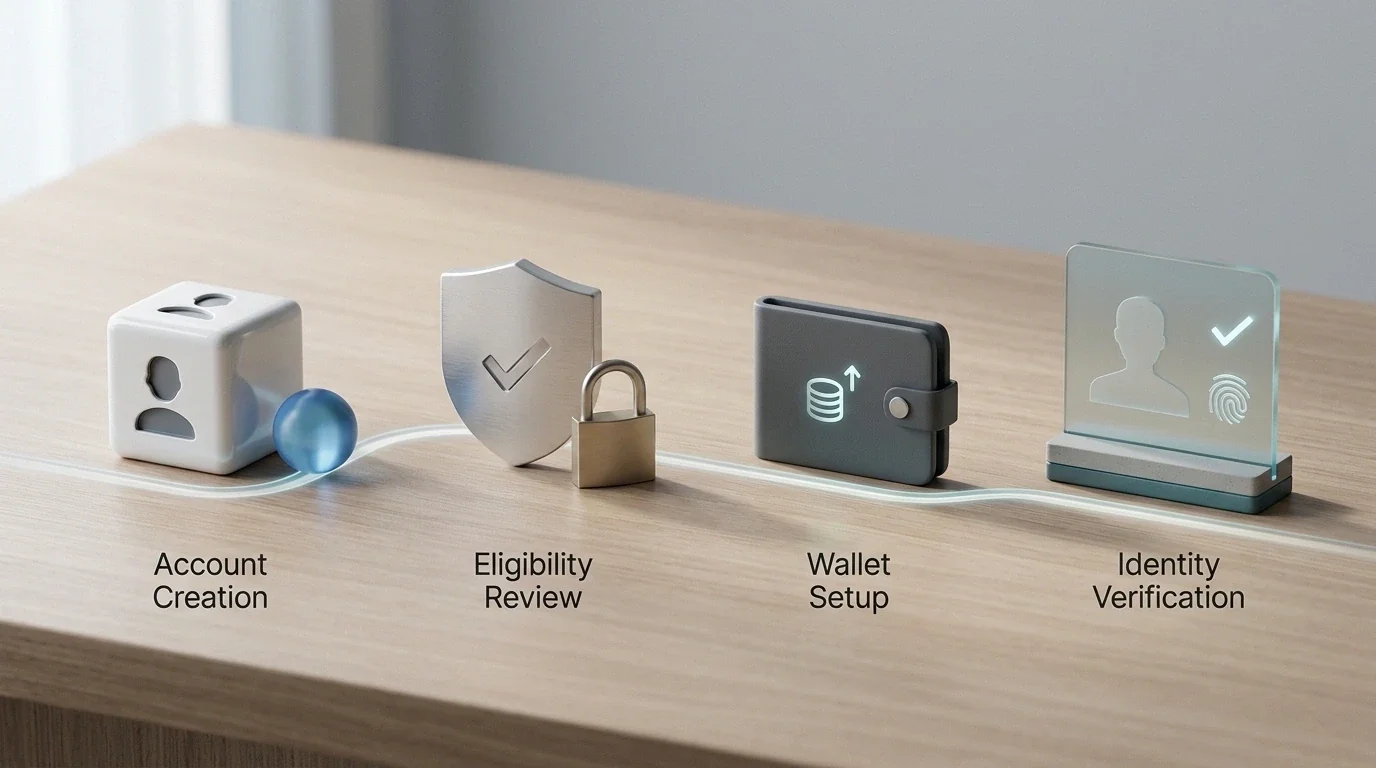
First withdrawals can prompt a request for identity verification. Casinos must verify a player’s identity through KYC procedures before processing withdrawals, so an incomplete check can prevent approval altogether. If documents are requested only after a cashout is submitted, the review period begins before the transfer stage.
Completing identity verification in advance can significantly speed up later withdrawals, because the basic identity check may already be resolved when a request is made. It does not remove every possible review: an operator may still need to examine a particular transaction or confirm account details. Verification is a prerequisite, not a promise of a particular payout time.
Account and payment details must align
Operators generally require funds to be returned to the same payment method used for the deposit where possible. For PayID, the details used for withdrawal should match those used for deposit; using different details can trigger a security review. Funds should be sent only to accounts linked to the casino profile.

A mismatch is not merely a form error. It can create a question about ownership of the destination account, requiring checks before release. The same applies when requested payment details do not correspond with the account information already held. Even if the eventual transfer is fast, the payment remains pending until those checks are settled.
Amounts and account conditions affect approval
A specialist review identified first-time KYC checks, withdrawals above $2,000 and bank processing windows as possible sources of delay. The amount is therefore relevant before the payment network is considered: market constraints require casinos to disclose manual review for withdrawals exceeding $2,000. That threshold should not be read as a universal rule for every operator, but a stated review condition can change the time between request and approval.
Bonus funds can also affect whether a balance is ready to withdraw. Any applicable wagering requirements must be met before funds are withdrawn. Terms may apply wagering to bonus funds alone or to the combined deposit and bonus; the latter makes more of the balance subject to conditions. Until the relevant requirement is complete, a withdrawal request may not be eligible for release. The transfer method cannot bypass a bonus condition.
Read the status as two separate clocks
A useful assessment separates the time spent awaiting approval from the time spent in transit. A pending request points to an operator-side step, such as verification, review or an unmet account condition. An approved request has moved past that stage, although the bank or payment service may still need to complete its part. Bank processing windows were identified in a specialist review as a possible delay, so approval alone does not establish that funds have arrived.
Terms should make clear which stage a stated processing time covers, along with withdrawal limits and fees. A time claim that covers only the transfer after approval is not equivalent to a promise that the entire request-to-receipt process will finish within an hour. The practical test is whether the account is verified, the withdrawal details match, all bonus conditions are satisfied, and the operator has approved the request. Only after those conditions are met does the payment route’s speed determine the remaining wait.
What payment methods are available?
Available methods include credit and debit cards, PayPal and Skrill, bank transfers, and, at some casinos, cryptocurrency. PayID and POLi banking services are also mentioned; prepaid vouchers such as Neosurf are generally for deposits, not withdrawals.
How fast are withdrawals?
PayID transfers can arrive in real time once the operator releases the funds, but approval time comes first. Reported PayID processing ranged from 30–90 seconds on average in one review to under five minutes in another; e-wallet withdrawals are typically processed within 24 hours, while bank transfers and card payments may take several days.
What are easy withdrawal casinos?
The examples with reported fast PayID payouts are Fastpay Casino, averaging 47 seconds, PlayAmo, averaging 68 seconds, and National Casino, averaging 3.2 minutes. These are review figures, not guaranteed payout times.
How do you choose the best easy withdrawal casino site?
Check whether the site clearly publishes withdrawal limits and fees, supports a suitable method such as PayID, and explains its approval process. Complete identity verification early, check for weekly or monthly cashout caps, and confirm whether withdrawals must return to the deposit method.
Created by the ”Oscarspin Casino” editorial team.