





New PayID Pokies in Australia: Payments Explained
 Available in AU
PayID uses a phone number or email linked to a bank account, while funds move through participating banks and the New Payments Platform.

How PayID Connects to Online Pokies Payments
PayID is an Australian digital payment system built around an identifier linked to a bank account. That identifier can be a mobile phone number or email address, rather than the account details traditionally entered for a bank transfer. PayID operates through the New Payments Platform (NPP), which enables quick transfers between banks.
The distinction between the identifier and the money matters. PayID does not hold a separate balance for a player, and it is not a casino wallet. It gives a bank transfer a simpler way to identify the recipient. The funds still move between bank accounts through the payment system; PayID supplies the destination identifier used in that process.
When a payment service is offered at an online gambling site, the site may present PayID as a way to fund an account. In technical terms, that connects a bank transfer to the site’s payment process: the payer uses a PayID identifier associated with the intended recipient, and the transfer is handled through participating banks and the NPP. PayID deposits at online casinos are described as completing within seconds, but that speed concerns the transfer itself. It does not establish that a site is lawful, trustworthy, or suitable.
That separation is essential in Australia. Under the Interactive Gambling Act 2001, operators are prohibited from providing real-money online casino games, including pokies, to people physically located in Australia. A payment option cannot alter that legal position. The presence of PayID in a cashier, or a claim that a transfer is fast, is not evidence that an operator may lawfully provide those services to Australian residents.
What the identifier does
A PayID replaces the need to use conventional bank-account details as the identifier in a transfer. The bank associates the chosen identifier with an account, allowing a payment to be directed through the NPP. It is still a bank payment, rather than a card transaction or a payment made from funds held by PayID itself.

That structure explains why a reference to “PayID pokies” can be misleading if treated as though it describes a single product. PayID is the payment mechanism; pokies are gambling services. Connecting the two in a payment flow does not make the gambling service permissible. Nor does the payment label tell anything about how a site operates beyond the payment method it claims to accept.
The system is designed for instant and secure transactions, and transfers between banks through the NPP can be quick. “Instant” describes the payment rail, not every part of a gambling site’s account process. A recipient’s system must still associate an incoming transfer with the relevant account. The payment mechanism alone does not explain what checks a site performs, whether it accepts a transfer, or what happens after funds arrive.
Bank controls remain part of the route
PayID relies on the banking system, so a payment is not independent of the payer’s bank. A specialist review has reported that some Australian banks, including major banks, may block PayID transfers to gambling merchants under acceptable-use policies. That is a reported possibility, not a universal rule or a stable statement about every bank’s current treatment. Bank policies and transaction decisions can vary.
This means that the same payment label does not guarantee that a transfer will be available through every bank. A blocked or declined payment is a bank-side outcome, not proof that PayID itself is unavailable as a system. Equally, a transfer that proceeds says nothing about whether the recipient is authorised to provide gambling services in Australia.
The technical route is therefore narrower than promotional descriptions often suggest: an identifier points to a bank account, and the NPP supports a quick transfer between banks. The rest depends on the institutions and services involved. PayID does not certify the recipient, assess the legality of an online casino, or endorse its claims.
For anyone reading descriptions of new PayID online pokies, the relevant distinction is between a payment capability and the activity being funded. A method can work technically while the underlying service remains prohibited. PayID’s role is limited to identifying and moving a bank payment; it does not convert an offshore gambling offer into a lawful Australian service.
Legal Warning
Under the Interactive Gambling Act 2001, operators are prohibited from providing real-money online casino games, including pokies, to people physically located in Australia.
Deposits, Withdrawals and the Costs Between Them
A PayID transaction has two separate cost layers: the transfer itself and the terms imposed by the service receiving or releasing the money. PayID does not charge a transfer fee. Reputable venues also do not add a PayID-specific charge to deposits or withdrawals. That does not establish that every operator is fee-free: a withdrawal charge or a deduction tied to the amount requested can change the final sum.
There is a separate legal issue in Australia. Under the Interactive Gambling Act 2001, providing real-money online casino games, including pokies, to people in Australia is illegal for operators. The payment method does not alter that rule or establish that a service is lawful. The amounts below describe payment terms reported in the market; they are not a recommendation to deposit or use an online casino.
Deposit amount and bank limit
A deposit has to satisfy both the operator’s minimum and the player’s bank limit. The reported starting amount at many operators is AU$10 to AU$20. That is a minimum threshold, not a recommended deposit and not a guarantee that the same amount will be accepted by every service. The applicable minimum is set by the operator and can differ between payment methods or account conditions.
The bank’s daily PayID limit is a separate constraint. A specialist review reports that the player’s bank sets this limit; the amount available for a transaction therefore cannot be inferred from the operator’s minimum alone. If a transfer exceeds the bank’s permitted amount, the operator’s listed minimum does not resolve the conflict. The bank’s own limit and the operator’s payment terms have to be considered independently.

Before any payment terms are assessed, the cashier information should be checked to see whether PayID is listed and what minimum applies. A payment option appearing in a cashier does not confirm the operator’s legality, fairness, or willingness to pay a withdrawal. Those are separate matters, not properties of the transfer method.
PayID details also need to match the details registered with the bank. A mismatch can obstruct a transaction or complicate a later withdrawal. Since a confirmed PayID transfer is irreversible, an incorrect recipient or amount is not a routine adjustment that can simply be reversed through PayID. The cost of a deposit is therefore not only its stated amount: it includes the risk of sending an irreversible transfer under incorrect details.
Withdrawal thresholds and deductions
Withdrawal terms have their own minimum. Reported PayID withdrawal minimums commonly fall between AUD 20 and AUD 50, but an operator may set a different threshold. A balance below that minimum may not be eligible for withdrawal through the chosen method. The threshold is a condition of the receiving service, not a PayID transfer fee.
The amount requested can also affect what arrives. A specialist review reports that some operators deduct A$5 to A$10 when a withdrawal falls below an internal threshold, with A$100 or A$200 identified as common threshold points in that report. These deductions should not be treated as a universal rule: they are operator-specific terms and need to be confirmed in the applicable withdrawal policy. If a fee applies, the net payout is the requested amount minus that deduction.
PayID does not charge a transfer fee, but operators may apply their own withdrawal charges or deductions based on internal thresholds.
A separate specialist review reports that some casinos charge AUD 2 to AUD 5 per withdrawal. That charge is distinct from PayID’s own transfer fee, which is zero. It is also distinct from a deduction triggered by a low withdrawal amount. The two forms of charge should not be conflated: one may apply to each withdrawal, while the other depends on the operator’s internal threshold. Whether either applies depends on the terms of the particular service.
The practical calculation is straightforward. Start with the withdrawal amount, subtract any stated per-withdrawal charge, then subtract any applicable threshold deduction. The resulting figure is the amount payable before considering any separate account or verification issue. A quoted gross withdrawal is not the same as the amount received where deductions are permitted.
Reading the total cost
A useful payment record separates the deposit amount, withdrawal request, minimum thresholds, and any listed deductions. PayID itself does not charge for the transfer, but that fact alone cannot establish the total cost of using a service. The operator’s rules can add costs that do not originate with PayID.
Where the written terms are unclear, a fee should not be assumed to be absent merely because the payment method has no transfer charge. Conversely, a reported fee at some operators should not be treated as a standard charge across all services. The relevant figure is the one disclosed in the specific operator’s payment terms, including conditions attached to low-value withdrawals.

The difference between a threshold and a fee matters. A minimum deposit determines whether a deposit can be made; a minimum withdrawal determines whether a payout request can be submitted. A deduction reduces the payout, while a per-withdrawal charge is attached to processing that withdrawal. These conditions affect the final amount in different ways, so collapsing them into a single “PayID cost” hides the actual calculation.
For a hypothetical account balance, the arithmetic would depend on the applicable minimum and deductions rather than on the payment label. If the balance does not meet the stated withdrawal minimum, it may not be eligible for that withdrawal. If a threshold deduction applies, the received amount is lower than the requested amount. If a per-withdrawal charge applies, that further reduces the net figure. PayID’s lack of a transfer fee does not cancel either operator charge.
For Australian residents, this accounting remains distinct from the legal status of real-money online casino services. PayID is a payment mechanism, not an endorsement or a safeguard. A zero transfer fee cannot make a prohibited service lawful, and a completed payment does not establish that a later withdrawal will be paid.
What “New” Means for PayID Pokies in Australia
Choosing a PayID pokies site in Australia calls for checking the details that are available, including licensing and any stated minimum deposit. Use these entries as a concise reference when considering the options for 2026.
License: Curacao Gaming Control Board OGL/2023/174/0082 (Dama N.V.) SpinsUp is listed with a Curacao Gaming Control Board licence, OGL/2023/174/0082, held by Dama N.V.
License: Curacao – Antillephone N.V. (Versus Odds B.V.) · Min. deposit: EUR 20 Thor Casino is licensed in Curacao through Antillephone N.V. (Versus Odds B.V.). Its stated minimum deposit is EUR 20.
License: Curacao Gaming Control Board (TechSolutions Group N.V.) Bizzo Casino is listed with a Curacao Gaming Control Board licence held by TechSolutions Group N.V.
License: Curacao Gaming Control Board OGL/2023/176/0095 (Hollycorn N.V.) GoldenCrown is listed with a Curacao Gaming Control Board licence, OGL/2023/176/0095, held by Hollycorn N.V.
License: Curacao eGaming OGL/2023/174/0082 (Dama N.V.) · Min. deposit: A$15 LevelUp Casino is listed with a Curacao eGaming licence, OGL/2023/174/0082, held by Dama N.V. Its stated minimum deposit is A$15.
License: Curacao Gaming Control Board OGL/2023/176/0095 (Hollycorn N.V.) Rollero Casino is listed with a Curacao Gaming Control Board licence, OGL/2023/176/0095, held by Hollycorn N.V.
License: Curacao eGaming OGL/2024/923/0383 (Antillephone N.V.) · Min. deposit: A$30 WinSpirit Casino is listed with a Curacao eGaming licence, OGL/2024/923/0383, held by Antillephone N.V. Its stated minimum deposit is A$30.
License: Curacao eGaming (Roby Games Ltd) Roby Casino is listed with a Curacao eGaming licence held by Roby Games Ltd.
License: Curacao Gaming Control Board JustCasino is listed with a Curacao Gaming Control Board licence.
License: Curacao (operating since 2017) · Min. deposit: A$20 Uptown Pokies is listed as operating since 2017 under a Curacao licence. Its stated minimum deposit is A$20.
“New” is not a payment feature with a fixed meaning. It may describe a recently added cashier option, a change to an operator’s payment terms, or simply a page refreshed for 2026. None of those labels establishes that a venue has newly opened, that its services are lawful in Australia, or that a payment method makes it suitable for use.
That distinction matters because PayID is a payment system, not an approval of the business receiving funds. The Interactive Gambling Act 2001 prohibits operators from providing real-money online casino games, including pokies, to people physically located in Australia. A PayID listing does not alter that position. Nor does it establish that an operator will process a withdrawal, disclose all relevant terms or handle personal information appropriately.
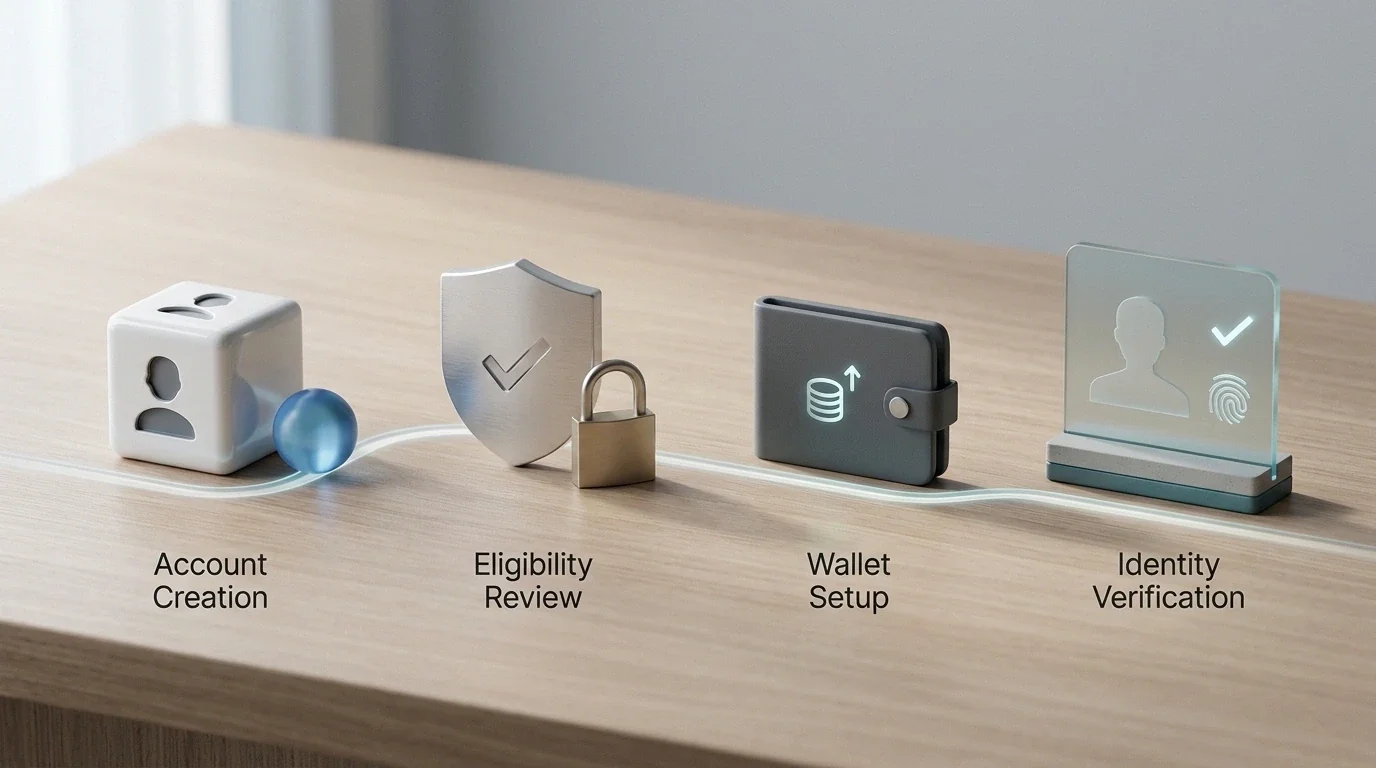
The useful meaning of “new” is therefore narrower: payment and identity conditions may have changed, and those conditions can be assessed as facts rather than inferred from a label. For any service, the relevant questions concern whether the payment identifier is correct, whether account details agree, and whether verification is complete. Those checks describe transaction handling; they do not turn prohibited online casino services into permitted ones.
Do
- Ensure PayID details match bank registration
- Align bank account name with casino profile
- Complete all KYC identity verification
Don’t
- Assume a new payment label implies legality
- Expect immediate reversal of confirmed transfers
- Rely on profile edits to fix identity mismatches
Identity matching is a transaction condition
A PayID is linked to an identifier registered with a bank, such as a mobile number or email address. The details used for a payment must match the PayID registered with that bank. A mismatch can mean the transfer is directed incorrectly or cannot be processed as intended. Since a confirmed PayID transaction is irreversible, correcting an error after confirmation is not equivalent to editing a pending form.
Account identity is a separate point. Where a payment service compares account ownership with a customer profile, inconsistent names may prevent a transaction from proceeding or may lead to additional checks. A bank account name that differs from the name on a profile can therefore create a practical obstacle, particularly when a payment is being returned or withdrawn. The exact handling depends on the relevant institution and service; there is no single rule that can safely be assumed from the word “PayID.”
This is why a newly displayed payment option cannot be assessed on its label alone. A changed cashier page may say little about the identity conditions applied after a transaction is requested. The decisive information is the matching requirement in the applicable terms and the details actually held by the bank.
Verification can affect a withdrawal
Payment initiation and withdrawal approval are different stages. A payment identifier may be valid while an account remains subject to identity review. Specialist reviews of casino payment processes describe internal withdrawal checks and identify the player’s KYC status as one factor that can affect whether a payout proceeds. These accounts are not a guarantee of how any particular service will handle a case, and the process may differ between operators.

KYC refers to identity checks. The relevant point is not a presumed document list or a promised processing window; neither can be inferred from the payment method. It is that an unresolved identity check can affect a withdrawal even when the payment details themselves are correct. A payment option being visible at the start of a transaction does not establish that later verification has been completed.
The distinction is financially material. A transfer confirmed through PayID cannot simply be reversed by changing the profile details afterward. If the name or identifier is wrong, or if verification is incomplete, the resulting issue may require review rather than an immediate correction. The payment system’s speed does not remove the need for accurate identity information.
What a 2026 label can and cannot establish
A page using “new PayID pokies Australia 2026” may be presenting recent wording, but the phrase alone proves no change in the underlying payment arrangement. A claim about a new option is meaningful only when it points to a specific, verifiable change in payment conditions. Even then, that change concerns payment availability—not legality, fairness, game characteristics or the likelihood of receiving funds.
Attention: A newly listed PayID route does not create a legal exception and should not be read as an assurance that an online casino service is lawful in Australia.
For Australian residents, the legal boundary remains central: providing real-money online casino games to people in Australia is prohibited under the Interactive Gambling Act 2001. A payment method does not create an exception. Accordingly, a newly listed PayID route should not be read as an invitation or assurance that an online casino service is lawful for use in Australia.
The sound interpretation of “new” is limited to details that can be checked without treating marketing language as evidence: whether the PayID identifier corresponds to the bank registration, whether account names align where required, and whether identity review is complete. Those conditions can explain why a transaction might proceed, pause or fail. They cannot establish that the underlying casino service is legal, or that a payment listing guarantees a payout.
Why PayID Appeals to Pokies Players
PayID’s appeal is mainly about the movement of funds. A deposit can reach an online account within seconds, while the same payment method can also be used for withdrawals. That creates a relatively direct route in both directions: money does not have to enter through one method and leave through an unrelated one simply because the payment options differ.
For someone assessing the payment experience, that distinction matters more than a label such as “new”. A recently presented payment option is not necessarily a different kind of service. The useful question is whether it supports the transactions that matter and what happens when funds move in or out. PayID’s practical attraction is that it can cover both sides of that movement, with deposits typically arriving within seconds.

Speed, however, describes the transfer rather than every step attached to an account. A quick deposit does not establish that any other part of an online service is quick, reliable or suitable. Nor does the presence of PayID establish that an operator is lawful, transparent or willing to pay a withdrawal. A payment method and the service receiving the money are separate matters; treating them as one would turn a banking feature into a conclusion it cannot support.
There is also a straightforward cost appeal. PayID itself does not impose a transfer fee, and reputable venues do not add a separate charge for PayID deposits or withdrawals. Where those conditions apply, the payment route does not reduce the amount through a PayID fee. That is a narrow point about transfer charges, not a statement that every transaction is free of other costs or that every operator follows the same terms.
The distinction between “no PayID fee” and “no cost at all” is material. A payment method can carry no fee of its own while the wider service has separate conditions. The absence of a transfer charge therefore answers only one part of the cost question. It says nothing by itself about the quality of the service, the legal status of the operator or the eventual outcome of a withdrawal.
PayID also makes the direction of a transaction less one-sided. A method associated only with deposits can feel like an entrance door: it moves money in, but says little about how money comes back out. PayID can support withdrawals as well, so the payment experience can include both funding and receiving. The value is functional rather than promotional. A route that handles both directions is easier to assess as a complete payment arrangement than one considered only at the point of deposit.
Practical PayID Appeal
- Deposits typically reach accounts within seconds
- The same method can be used for both deposits and withdrawals
- PayID itself imposes no transfer fees
- Functional efficiency does not certify the legality of the service
That does not make the two directions identical. A deposit typically completes within seconds, but that should not be read as a promise that a withdrawal will arrive on the same schedule. The payment method supports movement both ways; the pace of an individual transaction is not a guarantee about every stage involved. This is why speed is best understood as a feature of the transfer mechanism, not a blanket assurance about the account or operator.
The phrase “new PayID pokies” can suggest that a payment option itself has changed. In practical terms, the appeal rests on familiar features: fast deposits, the ability to withdraw through the same method, and no PayID transfer fee. Those features may make the payment route easier to understand, but they do not certify the service attached to it. A new presentation of an established payment method does not change what that method can prove.
In Australia, the legal boundary is decisive. Under the Interactive Gambling Act 2001, providing real-money online casino games, including pokies, to people physically located in Australia is illegal for operators. PayID availability does not alter that position. It is a payment system, not permission to provide prohibited gambling services, and its use should not be read as evidence that an online casino is lawful to serve Australian residents.
The practical appeal is therefore limited but clear: PayID can move deposits quickly, can also be used for withdrawals, and does not itself charge a transfer fee. These are payment characteristics, not endorsements. The distinction matters because an efficient transfer can make a transaction feel simple without resolving the more important question of whether the underlying service may lawfully be provided in Australia.
Comparing PayID Payment Terms Without a Casino Ranking
A payment comparison is useful only when it separates the terms that apply to money going in from those that apply to money coming out. A low deposit threshold says nothing about the withdrawal threshold, deductions or time taken to process a payout. Treating these as one measure of “value” hides the conditions that determine the final amount and when it might be received.
There is also a legal boundary to keep clear. Under the Interactive Gambling Act 2001, operators cannot lawfully provide real-money online casino games, including pokies, to people physically located in Australia. A payment method appearing in a cashier does not establish that an operator may serve Australian customers, or that its terms are fair or that it will pay winnings. Payment comparisons are not endorsements.
Compare like with like
The first figure to record is the minimum deposit specifically attached to PayID, not a general minimum that may apply to another payment method. A specialist review describes AUD 10–20 as a typical PayID deposit range. Another specialist review reports that some operators set a lower starting deposit of AU$5. These are reported terms, not guarantees of what a particular cashier will currently accept.
The difference matters in practical comparison: a low entry threshold is relevant only if it applies to PayID and is available under the stated conditions. A general deposit minimum, a promotional offer and a PayID-specific minimum are not interchangeable. Terms should be checked in the operator’s cashier information, where PayID needs to be listed explicitly; its presence there still does not establish legality or suitability.
Typically ranges from AU$10 to AU$20, though some operators may set it as low as AU$5.
Commonly fall between AUD 20 and AUD 50 depending on the operator’s thresholds.
Pending periods range from 0 to 12 hours, with manual reviews taking 12–24 hours or longer.
Withdrawal thresholds need their own column. A specialist review reports that many operators set a minimum withdrawal in the A$20–A$50 range. That amount can leave a small balance below the level eligible for withdrawal. It is not the same as a fee: a threshold determines whether a request can be made, while a deduction reduces the amount paid. Combining the two into a single “cash-out cost” obscures the actual condition.
A useful comparison therefore keeps at least three entries separate: the PayID deposit minimum, the minimum withdrawal, and any deduction or charge stated for a withdrawal. A term that is absent from a cashier or payment policy should not be assumed to be zero. Nor should a low deposit minimum be treated as evidence that the withdrawal conditions are favourable.
Compare processing rules, not promises
Processing rules also need to be divided into stages. A specialist review reports operator pending periods ranging from zero to 12 hours, with manual reviews described as taking 12–24 hours or longer over weekends. These are reported examples of policies and outcomes, not a fixed timetable for every venue. A separate specialist review notes that withdrawal processing speed varies by casino.
For comparison, the relevant distinction is whether the stated time describes internal approval or the movement of funds after approval. A published processing estimate can refer to only one stage. If the wording does not define when its clock starts or stops, it cannot be compared directly with a clearer estimate from another operator. Weekend handling and manual review rules can also change the practical meaning of a headline time.
The comparison should record what the policy actually says, including whether a pending period is stated, whether additional checks can delay approval, and whether the estimate concerns approval or transfer. That approach is more informative than labelling one payment option “fast” on the basis of a number that may cover only part of the process.
Account details are another condition with direct consequences for comparison. The PayID details used for payment must match the PayID registered with the bank. The bank-account name should also match the casino profile name; a mismatch can create withdrawal problems. These are not advantages or disadvantages unique to a particular minimum, but they affect whether the listed payment route can work as expected for the account holder.
A comparison is not a ranking
The phrase “best new PayID pokies” can suggest that a new operator or payment label is inherently preferable. The terms above do not support that conclusion. A lower minimum may matter to one person and be irrelevant to another; a withdrawal threshold, deduction rule or review process can alter the practical outcome. No single figure captures all of those conditions, and PayID availability does not verify licensing, game fairness or willingness to pay.
A disciplined comparison records the source and date of each term, because cashier rules can change. It avoids filling gaps with assumptions: an unstated fee is not proof that no fee applies, and an unlisted processing period is not a promise of immediate payment. The resulting table can describe payment conditions without ranking operators or presenting offshore real-money casino services as an option for people in Australia.
Comparison Limit
Comparing payment terms clarifies conditions but cannot turn an unlawful offshore offering into a suitable service for Australian residents.
For Australian readers, that distinction is material rather than cosmetic. The legal restriction applies to the operator’s provision of the service; a payment feature does not change it. Comparing stated terms can clarify what those terms mean, but it cannot turn an unlawful offering into a suitable one.
Real-Money Transfers: Timing, Bonuses and Final Payouts
A payout request and money received are separate events. The request first enters the casino’s internal review; only after approval does the PayID transfer leave the operator’s system. A quick bank transfer therefore cannot remove time spent waiting for the casino to assess a withdrawal.
Specialist reviews describe casino-initiated pending periods of 24–72 hours before funds are released. They also report that, after approval, a PayID withdrawal may arrive within the same day, with transfer estimates ranging from a few hours to 24 hours. These are reported timeframes, not a service guarantee. The total elapsed time depends on both stages: internal handling and the transfer after approval.

Some specialist reviews put the combined request-to-receipt period at 2–4 days when an internal pending period applies. That estimate should not be read as a fixed deadline. A first withdrawal or an account selected for additional review may take longer: specialist reviews report 24–48 hours at the slower end for these cases. A pending status means the operator has not yet released the funds; it does not mean the bank transfer itself is underway.
Verification affects the approval stage. Withdrawals are reviewed internally, and processing depends partly on the player’s KYC status. If identity checks remain outstanding, the transfer cannot be treated as approved simply because a request has been submitted. The practical distinction is between a request awaiting review, an approved payment being sent, and funds appearing in the account. Each status represents a different point in the process.
Bonus funds add a separate condition to the final payable amount. Specialist reviews report wagering requirements of 30x–45x the bonus amount. The multiple applies to the bonus, so the required wagering turnover is calculated from that bonus amount—not simply from the cash balance shown on screen. A displayed balance is not necessarily an amount that can be withdrawn immediately.
The calculation can be represented without assuming a particular offer: if the bonus is B, the reported requirement corresponds to turnover of 30B–45B. Completing that turnover is a condition attached to the bonus; it does not mean the same amount will be available as a payout. The final amount depends on the balance remaining when the conditions are met, along with the applicable terms. A bonus can therefore increase the amount of play required without increasing the cash ultimately received.
The maximum bet condition matters during bonus wagering. Exceeding the bonus’s maximum bet limit can void the bonus and associated winnings. That changes the payout calculation directly: an amount that appeared eligible may be removed under the terms, rather than included in the final withdrawal. The limit and the consequence should be read in the bonus rules before wagering begins, not inferred from the size of the balance.
For a real-money transfer, the relevant figure is the amount approved for release, not an earlier balance that still includes restricted bonus funds. Where a bonus remains active, the conditions governing completion, cancellation and winnings determine what can be requested. Where no bonus applies, the bonus wagering calculation is irrelevant, but internal approval and KYC review can still affect timing.
There is also a legal boundary to this subject in Australia. The Interactive Gambling Act 2001 prohibits operators from providing real-money online casino games, including pokies, to people physically located in Australia. Payment availability or a reported transfer time does not change that status, and it is not evidence that an operator is authorised to provide those services locally.
The useful distinction is therefore between a payment rail and a payable balance. PayID may move approved funds quickly, while the operator’s review determines when a transfer is released and bonus rules may determine how much is eligible to be paid. Neither a fast transfer estimate nor a large on-screen balance settles those conditions.
How to deposit money into online casino sites using PayID?
Use your bank’s payment service to send a transfer to the recipient’s PayID, such as a mobile number or email address. Check the recipient details before confirming, because PayID transfers cannot be reversed once confirmed.
Does PayID charge fees for casino deposits or withdrawals?
PayID itself does not charge transfer fees. A venue may still impose its own withdrawal charge or deduction, so check its payment terms.
Do online casino sites in Australia use PayID?
Yes, some sites accept PayID transfers; Ricky Casino and Bizzo Casino are reported to accept deposits starting at A$10–A$20. A payment option does not make real-money online casino games lawful for people in Australia.
Are there any casino sites in Australia that offer withdrawals via PayID?
Some operators offer PayID withdrawals. After casino approval, transfers usually reach the account within the same day, although the casino’s review process can add time; offering this method does not make the service lawful in Australia.
Are online pokies legal in Australia?
No. Under the Interactive Gambling Act 2001, operators are prohibited from providing real-money online casino games, including pokies, to people physically located in Australia.
Created by the ”Oscarspin Casino” editorial team.