






Casinos That Accept PayID in Australia: What’s Verified
 Available in AU
Australian law, payment claims and available evidence leave PayID acceptance and withdrawal terms unverified.

Table of Contents
- Online Casino Payments in Australia: The Legal Boundary
- Assessing Casino Payment Terms Without a Site Ranking
- What a PayID Deposit Would Need to Confirm
- Checking PayID Acceptance Claims for Australia
- Payment Methods and Online Casino Games: A Regulatory Distinction
- Australian Payment Preferences Do Not Verify PayID Support
- PayID Withdrawals: Processing Terms Remain Unverified
- Real-Money Payments and the Limits of the Available Evidence
- PayID as a Casino Payment Method: No Verified Terms Available
- Bonus Conditions Cannot Be Assessed From Payment Claims Alone
Online Casino Payments in Australia: The Legal Boundary
In Australia, the legal starting point for real-money online casino services is the Interactive Gambling Act 2001. The Act prohibits operators from providing online casino games to people located in Australia. That prohibition covers casino-style gambling, including pokies and table games; describing a service as offshore or attaching an Australian-facing payment option does not change the underlying legal boundary.
The distinction in the law is important. The prohibition is directed at operators providing the service, not framed as an explicit criminal offence for an individual who uses an offshore casino. That does not make offshore gambling a regulated or protected activity. In particular, Australian consumer law does not protect players who use offshore casinos. The absence of an explicit player offence should not be mistaken for approval, endorsement or a guarantee that a transaction or dispute will receive the protections available in lawful Australian consumer arrangements.
The Australian Communications and Media Authority, known as ACMA, administers enforcement of the Act. Its role concerns the statutory restrictions on prohibited interactive gambling services. This is separate from the question of whether a particular payment method appears in an operator’s cashier. A payment option is a transaction facility; it is not a licence, an exemption or evidence that the gambling service may lawfully be offered in Australia.
PayID availability can depend on the casino and your location, so check the payment options shown to Australian players before depositing. This reference summarises the licensing and deposit details available for each operator.
License: Curacao Gaming Control Board OGL/2023/174/0082 (Dama N.V.) SpinsUp is listed with a Curaçao Gaming Control Board licence, OGL/2023/174/0082, held by Dama N.V. The available details do not confirm whether PayID is supported.
License: Curacao – Antillephone N.V. (Versus Odds B.V.) · Min. deposit: EUR 20 Thor Casino is listed under an Antillephone N.V. licence, with Versus Odds B.V. identified, and has a minimum deposit of EUR 20. The available details do not confirm whether PayID is supported.
License: Curacao Gaming Control Board (TechSolutions Group N.V.) Bizzo Casino is listed with a Curaçao Gaming Control Board licence held by TechSolutions Group N.V. The available details do not confirm whether PayID is supported.
License: Curacao Gaming Control Board OGL/2023/176/0095 (Hollycorn N.V.) GoldenCrown is listed with a Curaçao Gaming Control Board licence, OGL/2023/176/0095, held by Hollycorn N.V. The available details do not confirm whether PayID is supported.
License: Curacao eGaming OGL/2023/174/0082 (Dama N.V.) · Min. deposit: A$15 LevelUp Casino is listed with a Curaçao eGaming licence, OGL/2023/174/0082, held by Dama N.V., and has a minimum deposit of A$15. The available details do not confirm whether PayID is supported.
License: Curacao Gaming Control Board OGL/2023/176/0095 (Hollycorn N.V.) Rollero Casino is listed with a Curaçao Gaming Control Board licence, OGL/2023/176/0095, held by Hollycorn N.V. The available details do not confirm whether PayID is supported.
License: Curacao eGaming OGL/2024/923/0383 (Antillephone N.V.) · Min. deposit: A$30 WinSpirit Casino is listed with a Curaçao eGaming licence, OGL/2024/923/0383, held by Antillephone N.V., and has a minimum deposit of A$30. The available details do not confirm whether PayID is supported.
License: Curacao eGaming (Roby Games Ltd) Roby Casino is listed with a Curaçao eGaming licence, with Roby Games Ltd identified. The available details do not confirm whether PayID is supported.
License: Curacao Gaming Control Board JustCasino is listed as holding a Curaçao Gaming Control Board licence. The available details do not confirm whether PayID is supported.
License: Curacao (operating since 2017) · Min. deposit: A$20 Uptown Pokies is listed as operating under a Curaçao licence since 2017 and has a minimum deposit of A$20. The available details do not confirm whether PayID is supported.
That distinction matters when a search is framed around Australian online casinos accepting PayID. The wording can make payment acceptance sound like the decisive issue. Legally, it is not. Whether a payment is offered cannot by itself establish that an operator is permitted to supply real-money casino games to people in Australia. Payment availability and the legality of the underlying service are different questions, and answering one does not answer the other.
Nor does a local-looking payment route alter the character of the activity. A casino game remains an online casino game whether a customer reaches it by computer or phone, and whether a transaction is presented in Australian dollars or through a bank-linked service. The relevant legal question is whether the operator is providing a prohibited gambling service to someone physically located in Australia—not whether the interface offers a familiar way to move money.
This also limits what can responsibly be inferred from claims about Australian PayID casinos, mobile casinos or a “best” casino using PayID. Such labels describe, at most, a payment or marketing claim. They do not establish that the operator is authorised to provide online casino gambling to Australian residents. Treating payment acceptance as a shortcut to legal suitability would collapse two separate tests into one, with the payment label doing work it cannot do.

The consequences of that distinction are practical. A payment dispute involving an offshore gambling service cannot be assumed to have the same route to resolution or consumer-law protections as a transaction with a lawful domestic provider. Australian consumer law does not protect players using offshore casinos. The fact that a payment service or financial institution may be familiar in Australia does not extend those protections to the gambling relationship.
For the same reason, a cashier’s available options should not be read as a legal status indicator. A listed method says nothing conclusive about the operator’s compliance with Australian law, and the absence of an obvious warning on a payment screen does not change the Act’s restriction. The legal boundary is set by the nature of the service and the location of the customer, not by the branding of the transfer option.
This is a narrower conclusion than a claim about whether a particular site accepts PayID. The legal framework does not establish the payment terms of individual operators, and payment terms cannot establish that casino games may lawfully be supplied in Australia. Those questions should remain separate: the Act governs the provision of the gambling service, while a payment label concerns only how a transaction is presented.
Accordingly, “Australian online casino that accepts PayID” is not a legal category. It combines a market description with a payment claim, but neither phrase settles whether the service may be offered to people in Australia. Under the Interactive Gambling Act 2001, operators are prohibited from providing online casino games to Australian residents, and ACMA is the body charged with enforcement. No payment method changes that boundary.
Legal Boundary
Under the Interactive Gambling Act 2001, operators are prohibited from providing online casino games to people in Australia, and Australian consumer law does not protect players using offshore casinos.
Assessing Casino Payment Terms Without a Site Ranking
A payment label is a narrow fact. It can indicate that a method is presented as available, but it does not establish the full terms attached to an account or make an operator suitable. A list of casinos described as the best places to use PayID would imply a comparison across conditions, not merely confirmation that the name appears in a cashier. Without comparable, operator-specific terms, that ranking would have no sound basis.
The distinction matters because payment conditions are only one part of an account’s financial rules. Any assessment would need to separate what is stated about a method from what applies to the account as a whole. A method’s presence does not, by itself, show whether the stated conditions are current, whether eligibility depends on account status, or whether other rules affect a transaction. Those are separate terms, and treating them as one claim produces a misleadingly simple verdict.
A useful assessment therefore begins with the wording of the operator’s own terms, not with a popularity label. The relevant questions include whether the payment method is expressly named, what conditions apply to its use, whether those conditions differ by account status, and whether other account rules can affect financial activity. Each point needs to be supported by a clear, current statement. If the wording is ambiguous, the uncertainty belongs in the assessment; it should not be converted into a confident ranking.


The same discipline applies to cost. A payment method cannot be judged on the basis of its name alone. Any stated charges, conversion conditions, or account-level fees would need to be read together to understand the financial result. A claim that a method is “available” does not settle what a transaction costs. Nor does the absence of a fee in one description establish that no other charge can apply. Without defined terms, there is no reliable comparison of the final amount.
Timing also needs a precise basis. A processing claim is meaningful only when it identifies what event is being timed and which party controls that stage. An operator’s handling of a request and the completion of a transaction are not necessarily the same event. A broad phrase such as “fast payments” cannot substitute for terms that specify the relevant process. Where those details are not established, speed should not be used to distinguish one site from another.
Account checks are another condition that can affect access to financial functions. Online casinos commonly require customers to undergo identity and customer checks before they can carry out financial transactions. That means a payment method’s appearance in an account interface would not, on its own, resolve whether the account has met the operator’s other requirements. Payment availability and account eligibility are different questions.
A comparison also needs consistent evidence. One operator’s promotional description cannot be placed beside another operator’s detailed rules as though the two were equivalent. A fair comparison would use the same categories for each service and distinguish explicit terms from general claims. It would also need to account for changes to those terms; a snapshot cannot establish that conditions remain the same later. A polished label is not a substitute for comparable information.
Do
- Use the operator’s own current terms for assessment
- Distinguish explicit terms from general claims
- Use the same categories for each service compared
Don’t
- Rely on popularity labels or the word “best”
- Treat a payment label as a legal status indicator
- Use a promotional description as equivalent to detailed rules
The word “best” adds a further problem. It requires a defined standard: lowest total cost, clearest terms, broadest availability, or some other measurable basis. These standards can point in different directions, and no single payment feature settles them all. A site may state that a method is accepted while leaving other important account conditions outside that statement. Without a stated measure and evidence against it, “best” is an opinion presented as a result.
In Australia, this comparison has an additional boundary. The Interactive Gambling Act 2001 prohibits operators from providing real-money online casino games to people physically located in the country. Australian consumer law does not protect players using offshore casinos. Payment comparisons should not be mistaken for an endorsement or a way around that legal position.
Accordingly, payment acceptance is not a sufficient basis for naming a leading casino, and a defensible ranking cannot be built from the method label alone. The assessment standard is narrower and more useful: distinguish a stated payment claim from the operator’s broader account terms, and do not treat an unresolved condition as a favourable one. A ranking without comparable terms would be packaging, not a calculation.
What a PayID Deposit Would Need to Confirm
A casino deposit by PayID cannot be described in useful financial terms from the payment label alone. The method’s name does not establish whether a particular operator supports it, what amount it permits, whether a charge applies, or when a deposit would be credited. Each of those points would need to appear in current, operator-specific terms before a PayID deposit claim could be treated as reliable.

The first item to establish would be availability in the cashier for the relevant account and location. A general reference to PayID elsewhere on a site would not, by itself, show that the method is available for deposits to that account. The terms would also need to identify the transaction currency and state whether the displayed deposit amount is the amount debited, the amount credited, or subject to any conversion or other adjustment.
Amounts and charges
A stated minimum or maximum deposit is useful only when its scope is clear. Terms should distinguish any limit applying to a single transaction from a limit applying to an account or a period. They should also say whether the cashier enforces the limit automatically or whether another condition can affect the amount accepted. Without those details, a figure cannot safely be treated as a usable deposit threshold.
Fees require the same precision. A claim that a PayID deposit is free would need to specify whose fees are covered and whether the operator may deduct anything from the submitted amount. A payment service, bank, or operator could each have separate terms; a statement about one party would not establish the total cost. If a fee is percentage-based or fixed, its calculation and any applicable currency should be disclosed before the transaction is submitted. No PayID-specific charge can be inferred from information about other payment methods.
A claim that a PayID deposit is free requires specification of whose fees are covered and whether the operator may deduct anything from the submitted amount.
The relevant comparison is the amount leaving the payer’s account against the amount credited to the casino balance. If either side can differ, the terms need to explain why. Otherwise, “deposit amount” is not a complete description of the cost.
Crediting and failed transactions
Processing language should distinguish payment initiation from funds being available in the account. “Instant” or “fast” is not a measurable term unless the operator defines the event being timed and the conditions that can delay crediting. A PayID deposit claim would need a stated processing standard, together with any exceptions, rather than a general description of the cashier.
The process for an unsuccessful or unmatched payment also matters. Terms should explain how a payment is identified, what happens if the casino account details or payment reference do not match, and how the operator handles money that is debited but not credited. Those are deposit questions, not withdrawal promises. A clear remedy should identify the responsible party and the information needed to trace the transaction, without implying that every failed payment will be resolved in the same way.

Account eligibility is another deposit condition. Online casinos typically require a Know Your Customer assessment before financial transactions. Any account checks that must be completed before a deposit can be accepted should therefore be stated, along with the consequences of an incomplete check. A cashier showing a payment option would not establish that an account is cleared to use it.
These checks do not make a real-money casino deposit lawful in Australia. The Interactive Gambling Act 2001 prohibits operators from providing real-money online casino games to people in Australia, and Australian consumer law does not protect players who use offshore casinos. A description of hypothetical deposit terms is not an endorsement or an instruction to transact.
Until the relevant terms specify availability, currency, amount rules, charges, crediting conditions, and failed-payment handling, a PayID deposit has no substantiated cost or timing that can be quoted. The missing details are not minor qualifications; they determine what leaves the account and what, if anything, reaches the balance.
Checking PayID Acceptance Claims for Australia
A casino’s Australian-facing wording is not, by itself, proof that PayID is an available payment method. A banner, search snippet or general payment-methods page may describe an intended audience without confirming what appears for a particular account. The claim needs to be read as a statement to verify, not as a settled transaction condition.
Verifying PayID Acceptance
- Check if PayID is named in the cashier for the relevant account
- Review the payment terms for eligibility conditions
- Confirm that the cashier matches the claims on promotional pages
The clearest evidence of acceptance would be consistent, current information from the operator: PayID named in the cashier for the relevant account, and terms that explain the conditions attached to that option. A mention on a separate promotional or informational page carries less weight if the cashier and payment terms do not match it. A payment label can be present in one part of a site and still fail to establish that the method is available in practice.
The wording matters. “Payments for Australian players” can refer to several methods, not necessarily PayID. “PayID supported” is more specific, but still leaves practical questions: whether the option applies to the account, what conditions govern its use, and whether the operator’s current terms agree with the claim. Those points should be visible in the operator’s own materials rather than inferred from a broad statement.
A useful check is to compare three things:
- the exact payment method named in the claim;
- the methods displayed in the operator’s cashier for the relevant account;
- the payment terms, including any stated eligibility conditions.
If one element conflicts with another, the claim is not confirmed. For instance, a page naming PayID while the cashier lists other methods does not demonstrate PayID availability. Nor does a reference to a bank-linked payment service establish that it is PayID: similar descriptions are not interchangeable evidence.
Independent reviews and forum posts can provide context, but they do not replace current operator terms. Payment arrangements can change, and a report about one account or one point in time cannot establish availability for every Australian-facing account. A named casino should therefore not be treated as a confirmed PayID option solely because it appears in a third-party list.
The phrase “casino that accepts PayID” is meaningful only when acceptance is tied to the specific method and supported by current, consistent terms. A general statement about Australian payment options does not meet that standard. The same applies to wording that combines PayID with debit cards: the mention of one does not verify the other.

This distinction is especially important in Australia. An operator’s wording aimed at local users does not establish that the service is lawful or protected under Australian consumer law. Australian consumer law does not protect players who use offshore casinos. A payment claim should not be mistaken for a regulatory assurance.
In practical terms, an acceptance claim has evidential value only to the extent that the operator’s current cashier and terms support it. Without that alignment, “PayID accepted” remains a label, not a verified payment condition. That is a narrower conclusion than a list of casinos, but it is the one the wording can sustain.
Payment Methods and Online Casino Games: A Regulatory Distinction
PayID is a way to describe a payment method; it does not determine whether a service receiving a payment may lawfully offer online casino games in Australia. A reference to PayID casino payments, or to games associated with that method, cannot change the legal status of the underlying service. Payment capability and permission to provide gambling services are separate questions.
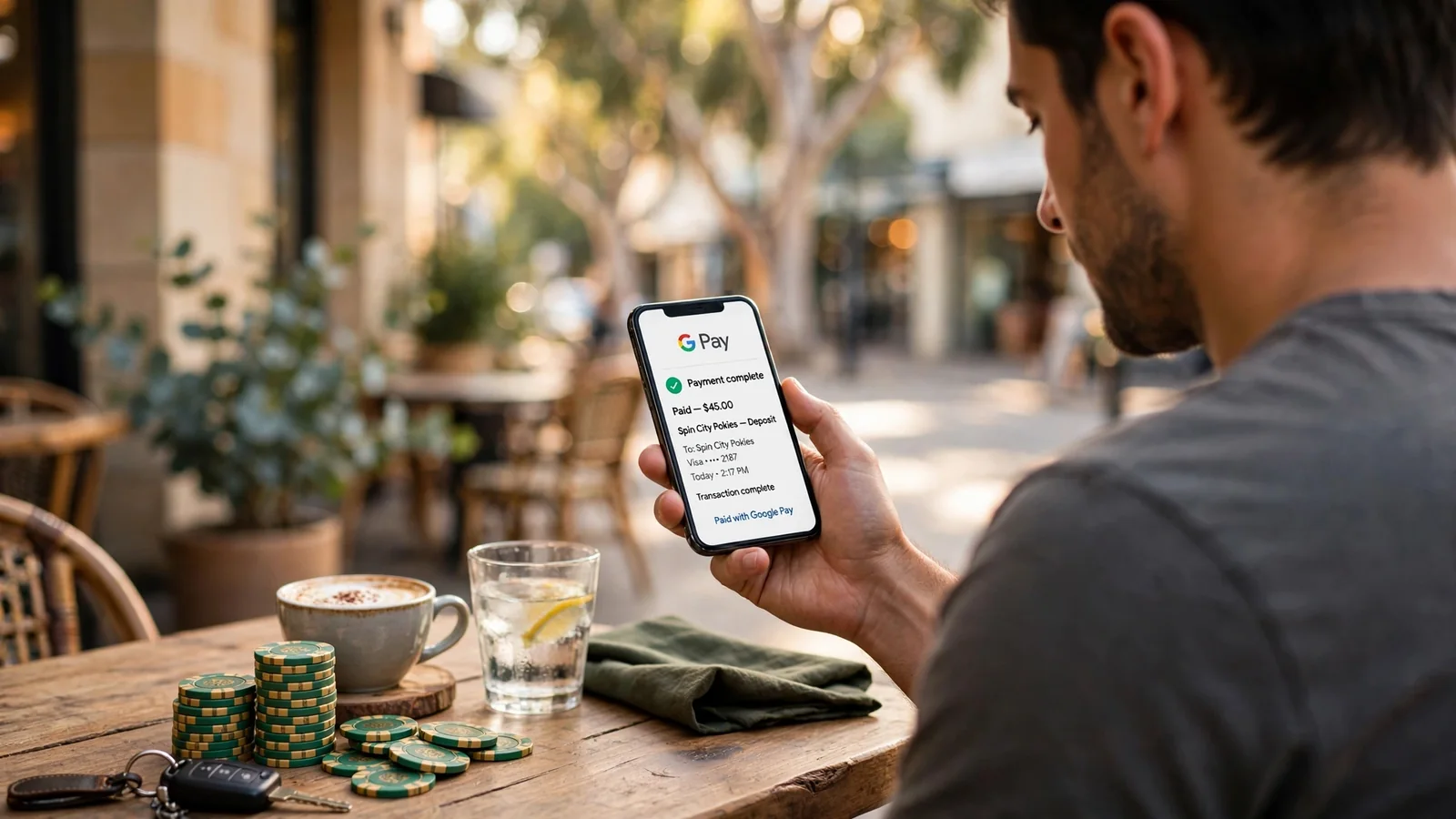
Under the Interactive Gambling Act 2001, operators may not provide real-money online casino games to people in Australia. The restriction applies to the service being offered, not to the label attached to its cashier or the route by which money is transferred. Describing an online casino as accepting PayID would therefore say nothing, by itself, about whether its games may lawfully be offered to Australian residents.
The distinction matters because payment language can sound like an endorsement of the entire transaction. A method might be discussed in connection with a casino without that discussion establishing that casino games using PayID are lawful, locally authorised or available as a permitted service. Nor does a payment reference establish that a particular operator has a right to serve people in Australia. Those are not conclusions that can be drawn from the payment name.
The Australian Communications and Media Authority, commonly shortened to ACMA, administers enforcement of the Act. Its role concerns the legal restrictions on prohibited interactive gambling services; it does not turn a payment method into approval for an operator or a game. A payment option is not a regulatory status, and a cashier’s list is not a licence.

The Act places the prohibition on operators providing these services. It does not expressly make an individual’s use of an offshore site a criminal offence. That distinction should not be mistaken for consumer protection: Australian consumer law does not protect players who use offshore casinos. The absence of an express player offence is not a finding that an offshore service is lawful, endorsed or subject to the protections available for lawful domestic transactions.
Accordingly, phrases such as “PayID casino games” or “PayID payment options” can identify a subject of discussion, but they cannot establish legality. A payment method answers a narrow question about how a transaction might be described. It does not answer whether real-money casino games may be provided to people in Australia. Keeping those questions separate avoids treating payment convenience as regulatory permission.
Australian Payment Preferences Do Not Verify PayID Support
Australian payment habits provide context, not evidence that a particular service supports PayID. Contactless credit and debit cards are accepted almost everywhere in Australia, and mobile wallets such as Google Pay and Apple Pay are similarly widespread. Consumers are also comfortable moving between cards, mobile wallets and bank-linked services such as PayPal.
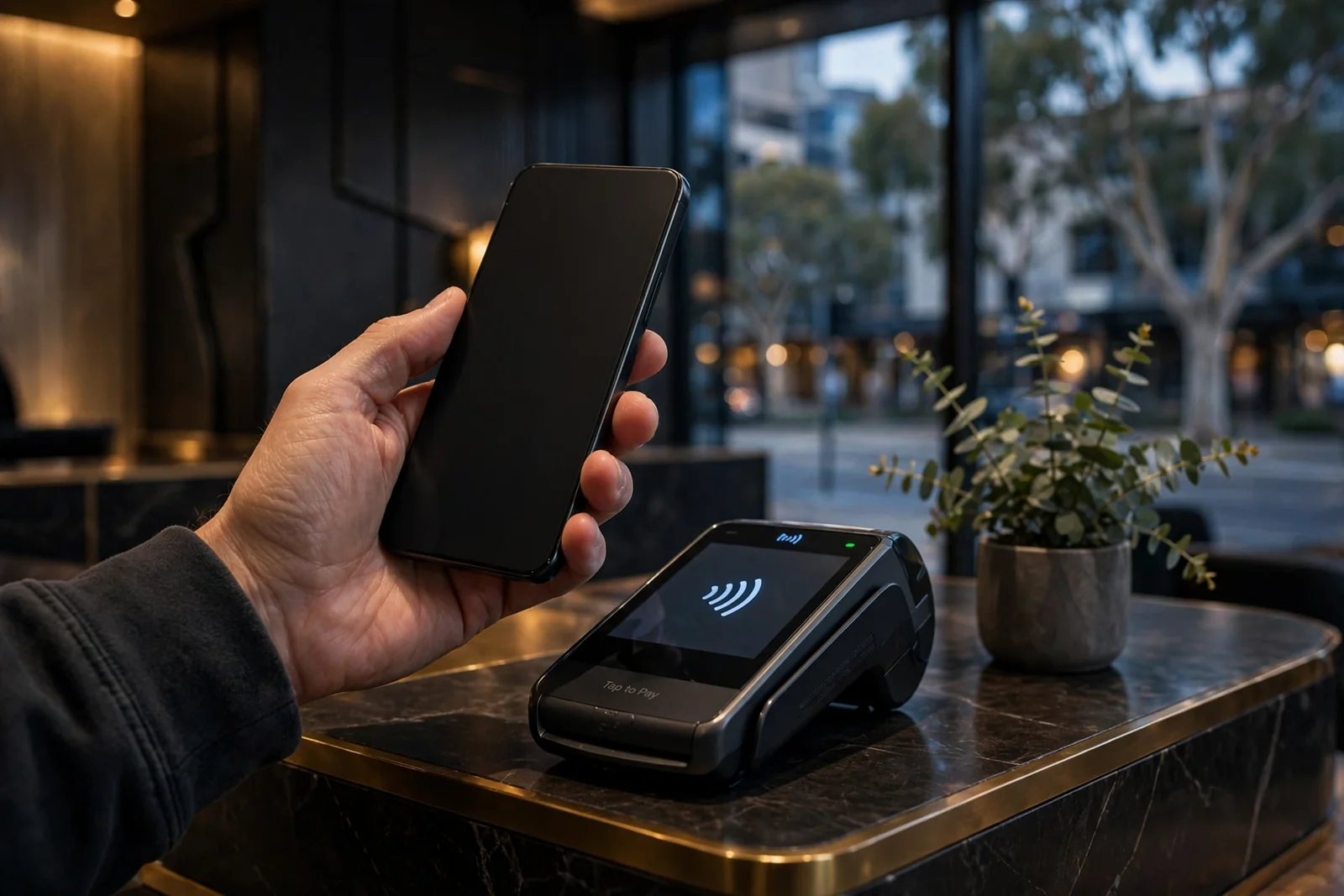
That flexibility describes how people pay across the market. It does not establish which options a particular business accepts, and it cannot confirm that an online casino offers PayID. Familiarity with bank-linked payments is not a substitute for a stated, current payment term.
The distinction matters because payment methods are not interchangeable. A business that accepts contactless cards or a mobile wallet does not thereby support every bank-linked service. Nor does broad consumer use of digital payments show that a casino has a working PayID route. The payment preference belongs to the customer; acceptance is a separate condition set by the service.
For the same reason, the phrase “Australian casino with PayID” cannot be treated as a category established by general Australian payment habits. A casino using PayID would need to be identified through its own applicable terms, rather than inferred from the popularity of contactless payments or mobile wallets. Without that distinction, market-wide behaviour can make a specific acceptance claim sound more certain than it is.
There is also a separate legal boundary. The Interactive Gambling Act 2001 prohibits operators from providing real-money online casino games to people in Australia. Australian consumer law does not protect players using offshore casinos. Payment preferences do not change either point, and the prevalence of a payment method does not make an otherwise prohibited service lawful.
The practical conclusion is narrow: Australians’ comfort with different ways to pay explains why several payment types may be familiar, but it does not confirm PayID support at any casino. General payment habits cannot establish an operator’s terms, the availability of a particular route, or the legal status of an online casino service.
Attention: General Australian payment habits and the popularity of contactless payments do not confirm that a specific online casino supports PayID.
PayID Withdrawals: Processing Terms Remain Unverified
A casino withdrawal is a separate transaction from a deposit. A PayID option shown for adding funds would not, by itself, establish that PayID can also be used to receive a payout. The two directions can have different conditions, so deposit acceptance cannot be treated as evidence of withdrawal availability.
For a PayID casino withdrawal, the relevant terms would include whether the method is offered for payouts, which account details must match, whether identity checks must be completed, and whether the operator applies fees or other conditions. Calling a service an “instant withdrawal casino” does not turn that label into a processing commitment.
Timing also needs precise wording. A displayed or submitted withdrawal request is not necessarily the same event as funds arriving in an account. Any claim about speed would need to say what stage it measures and which conditions affect it.
Fees affect the amount received, not just the convenience of the payment route. A withdrawal fee, currency conversion charge, or other deduction would need to be stated in the applicable terms before a net payout could be calculated.
Identity checks may also affect financial transactions. Online casinos typically require customers to complete a Know Your Customer assessment before transactions, but that general requirement does not establish a PayID withdrawal timetable or guarantee that a payout method will be available.
These payment questions do not change the Australian legal position. Real-money online casino games are prohibited services when provided to people in Australia, and Australian consumer law does not protect players who use offshore casinos. A payment label cannot resolve either issue.

Real-Money Payments and the Limits of the Available Evidence
A claim that an online casino accepts PayID for real-money activity needs evidence specific to that service and transaction. A reference to PayID alongside casino content does not establish that a payment can be made, that it would be credited to an account, or that the transaction would be available to someone in Australia. Without substantiated payment terms, claims about PayID casinos for real money cannot be treated as confirmed.
The distinction matters because a payment method’s existence does not prove that it is supported by a particular operator. Nor does a general statement about payments establish whether the method is available for gambling transactions, whether it applies to debit-linked payments, or whether any stated option is current. Those are separate claims, and each requires evidence tied to the actual service and its terms.
The same limit applies to claims about a casino that accepts PayID and pays winnings back through it. A deposit claim, even if independently confirmed, would not establish a withdrawal route. The method used to fund an account cannot be assumed to determine how any later payment would be handled. A description of a real-money payment arrangement therefore needs to distinguish incoming and outgoing transactions rather than treating them as one feature.
A PayID promotion also cannot be inferred from a payment reference. Establishing an offer would require clear terms showing that it exists and specifying its conditions. Without those terms, describing a promotion would turn an unconfirmed payment claim into an unconfirmed financial offer.
Real-Money Evidence
PayID use for real-money casino activity cannot be established from a payment-method mention alone without substantiated transaction conditions.
This is not merely a question of whether a transaction sounds plausible. A reader making a money decision needs an identifiable method, supported transaction conditions and clear treatment of both funds paid in and funds paid out. If those particulars are not substantiated, no reliable real-money PayID claim can be made.
Australian consumer law does not protect players who use offshore casinos. That exposure is separate from the payment question, but it makes unsupported assurances about real-money transactions especially unsuitable as a basis for confidence. The defensible conclusion is narrow: PayID use for real-money casino activity cannot be established from a payment-method mention alone.
PayID as a Casino Payment Method: No Verified Terms Available
The name of a payment method does not describe the terms attached to its use. A reference to PayID alongside a casino does not, on its own, establish how the method would work, what conditions would apply, or whether a transaction could be completed.

That distinction matters when comparing payment options. A usable description needs to identify the actual method offered and the rules governing it. Without those details, claims about paying with PayID at a casino cannot be translated into a clear transaction cost or outcome. A label is not a fee schedule, a processing commitment or a guarantee of availability.
The same restraint applies to statements that a casino supports PayID. Support is not a complete account of the payment arrangement. It says nothing by itself about the applicable terms or whether they remain the same across accounts and transactions. No particular PayID casino payment method can therefore be characterised by steps, charges or conditions without operator-specific terms to support those claims.
For the same reason, a list answering which casinos accept PayID would require current, attributable information about each named operator. A payment method’s presence in general discussion does not establish that any particular casino offers it. Naming operators without that distinction would turn an unsubstantiated label into a recommendation.

The practical conclusion is narrow: PayID cannot be assessed as a casino payment option from its name alone. Claims about using it, or playing casino games with it, should not be treated as a complete account of payment terms. Until the relevant terms are stated clearly, there is no sound basis for assigning the method a cost, a transaction process or a particular set of conditions. The apparent simplicity of a payment label does not settle any of those points.
Bonus Conditions Cannot Be Assessed From Payment Claims Alone
A payment option and a bonus entitlement are separate terms. Even if an operator’s cashier lists PayID, that alone says nothing about whether a promotion applies to PayID deposits, whether a deposit is required, or what conditions govern any resulting funds. A casino bonus cannot be valued from the payment label.
Assessment would require the actual promotion rules: eligibility, qualifying payment methods, any minimum deposit, wagering requirements, expiry, game restrictions, maximum conversion to withdrawable funds, and withdrawal conditions. None of those terms can be inferred from a claim about payment acceptance. Without the rules, a headline offer has no calculable net value.

The same distinction applies to a no-deposit bonus. The phrase describes a type of promotion, not proof that one is available or that it carries no conditions. Eligibility checks, play-through requirements, expiry rules or withdrawal limits would materially affect its value; none should be assumed.
For Australian audiences, there is an additional boundary: real-money online casino services are prohibited for operators serving people in Australia, and advertising those services is restricted. Australian consumer law does not protect players who use offshore casinos. A bonus description should not turn a payment claim into an inducement to use such a service.
The practical accounting rule is simple: treat a bonus as having no established value until its complete terms can be assessed. A PayID reference does not establish an offer, qualify a deposit, or settle what can be withdrawn.
What are the deposit and withdrawal limits at the best Amex casinos?
Limits are set by each casino and can vary. Check the casino’s payment terms for its current Amex deposit and withdrawal limits.
Which online casinos accept American Express for deposits?
Jackpot City Casino, Spin Palace, Ruby Fortune, Ignition Casino, Joe Fortune, and PlayAmo are listed as accepting Amex deposits for Australian players.
Can I use Amex to withdraw winnings from an Australian online casino?
Some casinos allow Amex withdrawals, but not all do; you generally need to have made a previous deposit with Amex. Withdrawals can take up to five days to clear.
Are casino Amex payments instant?
Amex deposits are processed instantly. Withdrawals can take up to five days to clear.
Does American Express work for online casinos?
Yes, some online casinos accept Amex deposits, though others do not. A payment option does not make an online casino lawful to offer in Australia: the Interactive Gambling Act 2001 prohibits operators from providing online casino games to people in Australia.
Are there fees for using Amex at online casinos?
Amex deposits typically have no fee, but a casino may add a 1.5% surcharge, and some withdrawals may incur fees. Amex cards can also incur a 3% currency conversion fee.
Prepared by the Oscarspin Casino editorial staff.