




Pokies Casinos in Australia: Laws, Bonuses and Safety
 Available in AU
Australia’s rules target operators offering real-money casino games, while bonus terms, verification and site access shape the practical experience.

Table of Contents
- Playing Online from Australia: What the Law Covers
- House of Pokies in the Australian Market
- Free Play, Pokie Reviews and What the Numbers Mean
- No-Deposit Offers: The Wagering Calculation
- Signup Bonuses and Code Activation
- Bonus Codes: Check the Terms Before Counting the Value
- Login Access and the Limits of Site Availability
- Withdrawals: Verification, Methods and Processing Time
- Real-Money Spins and the Meaning of a Pokie Outcome
- Is House of Pokies Safe? The Regulatory Limits
Playing Online from Australia: What the Law Covers
Australia’s online casino rules draw a clear line between the business providing a game and the person who plays it. The Interactive Gambling Act 2001 (IGA) makes it illegal for operators to provide real-money casino-style games to people physically in Australia. That category includes pokies, roulette and blackjack. The legal restriction is directed at the service provider; it does not make an individual player’s choice to use an offshore site a breach of the Act.
This distinction matters because a site’s location and the player’s location are not interchangeable. A company may operate from outside Australia, but offering prohibited casino games to people in Australia remains within the scope of the rules. The fact that a service is described as offshore does not turn the offer into a locally permitted one. In practical terms, the law is about what the operator provides and where its customers are, rather than imposing the same prohibition on the customer.
For anyone searching for an online casino, the first legal question is therefore not simply whether a page loads or whether it has a login screen. Those details concern access, not the legal character of the service. A website can present games, account tools and mobile access while still offering a type of gambling service that operators are prohibited from providing to people in Australia. The interface does not change the underlying category of the activity.

The same distinction applies to queries about playing pokies online or accessing a casino account. Those phrases describe possible actions, but they do not determine whether an operator may lawfully make the game available in Australia. Under the IGA, online casino-style games offered for real money to people in the country are prohibited services. The rule covers the games themselves, whether they are played on a desktop computer or a mobile device; changing the screen does not change the service.
Provider rules and player position
The IGA targets providers, not individual players. An Australian resident is not breaking this law simply by playing on an offshore casino site. That point should not be stretched into a claim that offshore gambling is approved, supervised or protected in the same way as a lawful domestic consumer service. It describes the allocation of responsibility under the Act: the restriction applies to the operator offering the prohibited service.
Nor does the absence of player liability make an operator’s offer lawful. These are separate questions, with separate answers. A player may not be committing an offence by using an offshore site, while the operator may still be providing a service that Australian law prohibits. Treating the two positions as identical would erase the central distinction in the legislation.
This is also why the phrase “online casino” needs to be read in context. A search result, promotional description or sign-in page is not itself a legal determination. What matters for the IGA is whether the service involves casino-style gambling for real money and is offered to people physically located in Australia. Pokies fall within that category alongside table games such as roulette and blackjack.
Legal Restriction
Under the Interactive Gambling Act 2001, it is illegal for operators to provide real-money casino-style games to people physically located in Australia.
The law is not a general ban on every form of online activity involving games. Its relevant scope here is the provision of real-money online casino gambling to people in Australia. That distinction keeps the analysis focused: the issue is not whether a game can be opened in a browser, whether an account can be created, or whether a provider calls its product entertainment. The substance is the service being offered and the location of the customers it serves.
Searches for a casino’s online presence, mobile play or account access can therefore raise two different matters. One is practical: whether the service can be reached. The other is legal: whether operators may offer the gambling service in Australia. They should not be collapsed into a single conclusion. Availability does not establish permission, and the player’s lack of liability does not amount to approval of the operator.
For Australian readers, the legal baseline is consequently narrow but important. Operators are prohibited from providing real-money online casino games to people in Australia under the IGA. The Act’s focus is on those providers, not on individual players using offshore services. That distinction explains the Australian position without treating access as endorsement or suggesting that an offshore casino is a locally authorised alternative.
House of Pokies in the Australian Market
Choosing a pokies casino in Australia calls for checking the details that can be verified, including licensing and any stated minimum deposit. Use these entries as a concise reference when considering options for 2026.
License: Curacao Gaming Control Board OGL/2023/174/0082 (Dama N.V.) SpinsUp is listed with a Curacao Gaming Control Board licence, OGL/2023/174/0082, held by Dama N.V.
License: Curacao – Antillephone N.V. (Versus Odds B.V.) · Min. deposit: EUR 20 Thor Casino is listed with a Curacao licence through Antillephone N.V. (Versus Odds B.V.). Its stated minimum deposit is EUR 20.
License: Curacao Gaming Control Board (TechSolutions Group N.V.) Bizzo Casino is listed with a Curacao Gaming Control Board licence, with TechSolutions Group N.V. named as the operator.
License: Curacao Gaming Control Board OGL/2023/176/0095 (Hollycorn N.V.) GoldenCrown is listed with a Curacao Gaming Control Board licence, OGL/2023/176/0095, held by Hollycorn N.V.
License: Curacao eGaming OGL/2023/174/0082 (Dama N.V.) · Min. deposit: A$15 LevelUp Casino is listed with a Curacao eGaming licence, OGL/2023/174/0082, held by Dama N.V. Its stated minimum deposit is A$15.
License: Curacao Gaming Control Board OGL/2023/176/0095 (Hollycorn N.V.) Rollero Casino is listed with a Curacao Gaming Control Board licence, OGL/2023/176/0095, held by Hollycorn N.V.
License: Curacao eGaming OGL/2024/923/0383 (Antillephone N.V.) · Min. deposit: A$30 WinSpirit Casino is listed with a Curacao eGaming licence, OGL/2024/923/0383, held by Antillephone N.V. Its stated minimum deposit is A$30.
License: Curacao eGaming (Roby Games Ltd) Roby Casino is listed with a Curacao eGaming licence, with Roby Games Ltd named in connection with it.
License: Curacao Gaming Control Board JustCasino is listed with a Curacao Gaming Control Board licence.
License: Curacao (operating since 2017) · Min. deposit: A$20 Uptown Pokies is listed as operating under a Curacao licence and as having operated since 2017. Its stated minimum deposit is A$20.
The name House of Pokies may suggest a casino built around Australian-style pokies, but a brand name is not evidence of who operates a site, where it is based or whether its games can lawfully be offered to people in Australia. Those points matter more than the wording of a homepage or the appearance of an Australian-themed design. For a House of Pokies casino Australia search in 2026, the practical starting point is therefore to separate what the name implies from what can actually be established about the service.
The Interactive Gambling Act 2001 restricts operators that provide casino-style games to Australian residents. That restriction applies to the operator’s offer of the games, rather than making an individual player liable simply for choosing to play. Players must be at least 18. These distinctions set the Australian context for assessing House of Pokies: a site may present itself as available to Australians, but that presentation does not change the rules applying to its operator.
What the brand name can—and cannot—establish
“House of Pokies” is a label, not a regulatory status. It does not, on its own, identify a legal entity, show which company controls a website or establish that an Australian business is behind the service. Nor does it demonstrate that casino games are authorised for residents in Australia. An Australian flag, local terminology or references to Australian players would be marketing signals, not proof of those details.

The same care applies to variations such as “the House of Pokies,” “House of Pokies Australia” and “House of Pokies Casino AU.” These phrases can describe what someone is looking for, but the words “Australia” or “AU” do not certify local approval or establish that the site is operated in Australia. A casino name can be adapted for different audiences without changing the legal position of the service.
The distinction is particularly important when a name appears across more than one page, advertisement or app listing. Similar branding does not necessarily prove that the same operator controls each version. Conversely, a different web address does not, by itself, prove that a service is separate or legitimate. The brand should not be treated as a substitute for identifying the entity responsible for an offer.
Australian availability is not the same as Australian authorisation
A page loading on a device would establish only that it loaded at that moment. It would not establish that the operator may legally provide online casino games to people in Australia, that the service is consistently available or that a player is covered by Australian consumer protections in a dispute. The market distinction is straightforward: the Interactive Gambling Act addresses the provision of casino-style games by operators to residents.
An Australian flag, local terminology or references to Australian players are marketing signals and do not prove local approval or legal status.
That is why “House of Pokies Australia” should be read as a location-oriented description, not as a statement of legal standing. The phrase does not establish an Australian licence, local oversight or a right to offer pokies to Australian residents. The brand itself cannot fill in those gaps. A polished site, a local payment reference or a welcoming message to Australian players would not alter the underlying legal restriction.
Availability also has a practical dimension separate from what a site claims. Australian regulators can take enforcement action against prohibited services, including asking internet providers to block access. A brand’s stated availability is therefore not a guarantee that a page will remain accessible. The details of access are a separate issue from identifying what the House of Pokies name signifies.
App, free play and similarly named services
A search for a House of Pokies app should not be taken as proof that an official app exists or that a particular download is connected to the casino. An app’s name and design alone cannot establish who published it or whether it is affiliated with a website using similar branding. Treating similarity as confirmation would turn an assumption into a fact.
Likewise, “house of fun pokies” may be used as a descriptive phrase or in reference to a differently named product. The words alone do not establish a connection to House of Pokies. Any such relationship would need to be made clear by the relevant operator rather than inferred from overlapping terms.

Free-play pages, reviews and promotional descriptions can also make the brand appear more established than the available information supports. They may describe features or experiences, but they do not independently verify the identity of the operator or the legal status of the service in Australia. Those are separate questions from whether a page displays games or uses familiar casino language.
For Australian readers, the useful conclusion is narrow but material: House of Pokies is a name, not proof of local authorisation or reliable availability. The applicable operator restriction remains in place regardless of how the brand is styled. A description that includes “casino,” “AU” or “Australia” does not change that position, and the age threshold for gambling remains 18.
Free Play, Pokie Reviews and What the Numbers Mean
Free spins and a free chip can look like a simple test of a casino: play without paying for each spin, see what happens, then decide whether the experience is worth anything. That reading skips the accounting. A free-play result may show how a game behaves on screen, but it does not establish that a cash withdrawal is available or that the balance shown can be treated as money.
A specialist review describes winnings from free spins as bonus funds rather than cash, with a separate wagering requirement that may be higher than the one attached to other funds. That is a report about a particular offer, not a rule that can safely be applied to every House of Pokies promotion. The distinction matters: a displayed balance can represent funds with conditions attached, not an amount ready to withdraw.
Attention! A displayed balance in free play may represent bonus funds with wagering conditions and is not necessarily a reliable measure of withdrawable cash.
The terms determine what a free-play win is worth in practice. The relevant details are whether winnings are credited as bonus funds, what wagering requirement applies to them, and what conditions govern their conversion or withdrawal. Without those terms, the result on screen is only a game outcome. It is not a reliable measure of the amount a player can ultimately receive.
What a review can establish
A House of Pokies review is useful when it separates observable features from claims that depend on current terms. A review might describe the interface, explain how free spins are presented, or identify the conditions attached to a bonus. Those details are not interchangeable. A positive description of the game experience does not settle the value of the promotion, and a bonus balance does not prove that cash has been won.
Reviews also need to be read for what they actually support. A statement about free spins may refer to a specific promotion, while a general comment about the casino may not confirm that the same offer is available to every player or remains unchanged. For an assessment of House of Pokies in Australia, the useful distinction is between a reviewer’s description and a condition that can be checked in the applicable offer terms. A rating alone cannot supply that detail.
The same caution applies to searches about a free chip or whether the casino is real. The existence of a game or a balance in a demonstration does not, on its own, answer questions about bonus conditions or cash value. Nor does a collection of reviews automatically verify every claim repeated within them. The substance is in the terms and mechanics, not the number of positive adjectives.

RNG and the meaning of a result
Modern online pokies use software governed by a Random Number Generator, or RNG, to produce outcomes. Each spin is independent: an earlier result does not influence the next one. A run of wins does not make a loss due, and a run of losses does not make a win due. Reading a short sequence as evidence that the game is about to change confuses pattern recognition with the mechanics of the game.
That independence also shapes how free play should be interpreted. A session can show a sequence of outcomes, but it cannot establish what the next spin will produce. Free play is therefore not a forecast of future results or proof that a particular session will be repeated. It provides an experience of the game, not a predictive signal.
RTP, or return to player, is a theoretical percentage describing how much of the total money wagered a pokie is expected to pay back over an infinite number of spins. The long-run qualification is essential. RTP is not a promise that a specific session will return a set share of its wagers, and it does not determine the result of an individual spin. A short demonstration cannot reproduce an infinite sample, so its outcome should not be used to confirm or disprove the theoretical figure.
Software that ensures each spin is independent, meaning previous results do not influence the next outcome.
A theoretical long-run percentage of total wagers a pokie is expected to pay back over infinite spins.
Specific conditions that determine if winnings are bonus funds and what requirements must be met for withdrawal.
A careful House of Pokies casino review should keep these measures in their proper places. RNG describes how outcomes are generated; independence explains why previous spins do not set up the next one; RTP describes a long-run theoretical return. None of these measures tells whether a bonus balance is withdrawable. That is a separate question governed by the promotion’s conditions.
The practical assessment is consequently narrower than a headline rating suggests. Free play can reveal whether the game is available to try and how its interface presents a result. The RNG and RTP explain why that result should not be treated as a forecast. The offer terms establish whether any winnings are bonus funds and what conditions attach to them. Without all three distinctions, a free-play result is easy to overvalue: it may be genuine as a game outcome while still not representing cash.
No-Deposit Offers: The Wagering Calculation
A no-deposit offer can show a bonus balance without requiring an initial payment, but the displayed balance is not the same as withdrawable cash. The key figure is the wagering requirement: it sets the total value of bets that must be placed before winnings derived from the bonus can be withdrawn. The arithmetic can make a small promotional balance carry a substantial betting obligation.
A specialist review gives one worked example: a 35x wagering requirement applied to a $100 bonus. The calculation is $100 × 35 = $3,500 in required bets before bonus-derived winnings become withdrawable. That figure describes the stated example, not a standard term for House of Pokies, a current offer, or every no-deposit promotion. The multiplication is simple; the condition attached to it is what matters.

The requirement is calculated on the bonus in that example, not on the total balance after any winnings are added. That distinction matters because a balance shown on screen can combine funds with different status. A bonus may be available for play while remaining subject to a wagering condition, and winnings generated from it may remain restricted until that condition is met. A balance display alone does not establish that funds can be cashed out.
For an offer described as a free chip or no-deposit bonus, the same question applies: what amount is used as the base for the wagering calculation? If the terms state that the requirement applies to the bonus, the calculation is bonus value multiplied by the stated wagering multiple. If the terms define a different base, such as bonus plus deposit, the result changes. The label “free” does not settle the calculation; the base and the multiplier do.
The total required betting is also not the same as a loss or a fee. It measures the value of wagers that must be placed, not the amount guaranteed to be spent or returned. Pokies can produce wins and losses during that process, but those outcomes do not erase the stated requirement unless the promotion’s terms say otherwise. Nor does reaching the required turnover by itself prove that a withdrawal is available: the conditions attached to the offer still govern the bonus funds.
Wagering Calculation
Determine the bonus amount, for example, $100.
Identify the wagering requirement, such as 35x.
Multiply the bonus by the requirement ($100 × 35) to find the total required bets ($3,500) before winnings are withdrawable.
A practical assessment therefore starts with the exact offer terms: bonus amount, wagering multiple, calculation base, eligible games and any restrictions on how the bonus may be used. Without those details, a nominal bonus cannot be assigned a reliable cash value. The advertised amount is only the starting input; the required betting total is the more useful measure of the obligation.
Searches for House of Pokies no-deposit codes or sister sites do not establish that a specific no-deposit offer exists, that a code is valid, or that another brand shares its terms. A reference to House of Fun pokies and slots likewise says nothing about the wagering conditions of a House of Pokies promotion. Each offer needs its own stated terms, assessed on its own arithmetic. A bonus with no deposit attached can still carry a material condition: the absence of an upfront payment does not remove the turnover required before bonus-derived winnings are withdrawable.
Signup Bonuses and Code Activation
A signup bonus is not activated merely because an account has been created. For a deposit promotion, the sequence matters: the offer must be selected, and any required bonus code entered, before the qualifying deposit is made. If the deposit is completed first, the promotion may not attach to it. The balance can then be treated as an ordinary deposit rather than a bonus-eligible one.
That distinction is relevant to searches for a House of Pokies signup bonus or a no-deposit offer. The wording of a promotion does not establish that it is available to Australian players, or that a code remains valid. The offer’s own terms determine eligibility, the activation steps and whether a code is needed at all. A code found on a third-party page is not evidence that the operator will accept it.
The practical check is the order of operations. Before depositing, the promotion should be visible in the account or offer interface, and any stated code should be entered in the designated field. The resulting confirmation matters: a code entered incorrectly, omitted or applied after the deposit may leave the account outside the offer. A deposit should not be assumed to qualify simply because a promotion was viewed beforehand.
A no-deposit signup bonus has a different trigger because it does not depend on a qualifying deposit. If such an offer is presented, its terms still need to specify how it is claimed, which accounts qualify and whether a code is required. The phrase “no deposit” describes the entry condition, not the value that can be withdrawn. Bonus funds can carry restrictions, so the advertised amount is not equivalent to cash available for withdrawal.
A specialist review gives one specific illustration of the cost attached to a bonus: a 35x wagering requirement on a $100 bonus would mean $3,500 in bets before winnings derived from those bonus funds could be withdrawn. That is a reported example, not a confirmed current House of Pokies offer. The calculation also shows why activation and value are separate questions: a correctly applied code can attach an offer, but it does not remove the conditions attached to the resulting funds.
Do
- Select the offer and enter the bonus code before making a deposit
- Verify the claiming conditions for no-deposit bonuses
Don’t
- Assume a deposit qualifies if the code was applied after the transaction
- Treat the advertised bonus amount as immediate withdrawable cash
For any deposit promotion, the key timing test is therefore whether activation happened before the deposit, not whether the code was eventually entered. For a no-deposit promotion, the equivalent check is whether the account meets the stated claiming conditions. In either case, the offer terms—not the code alone—define what is credited and what can later be withdrawn.
Bonus Codes: Check the Terms Before Counting the Value
A House of Pokies bonus code is not a cash amount. Its value depends on the conditions attached to the offer and on whether the resulting funds can eventually be withdrawn. Until those conditions are met, the displayed bonus balance is conditional credit, not money available for payment.
The first figure to identify is the wagering requirement and the balance it applies to. A requirement calculated on bonus funds produces a different obligation from one calculated on the deposit and bonus together. The terms need to make that basis clear. A multiplier without its calculation base is not enough to establish the amount of betting required.
The offer should also be read for any limits that affect how the bonus can be used or converted. If the terms set a maximum stake, restrict which pokies count, or impose an expiry, each condition can reduce the practical value. These are points to verify in the offer itself, not assumptions that can be safely carried over from another promotion. A code can activate an offer; it cannot improve its terms.

A specialist review describes winnings from certain spins as being credited to bonus funds rather than cash, with a separate wagering requirement that may be higher. That is a description of a particular offer, not a general rule for every House of Pokies promotion. The relevant terms need to state how winnings are classified and what conditions apply before they become withdrawable.
For any House of Pokies codes, the useful comparison is between the advertised bonus and the conditions attached to it: what balance the wagering requirement covers, which activity counts, and what restrictions apply to resulting winnings. If any of those points is unclear, the headline value cannot be treated as a reliable cash equivalent. A larger bonus can carry a larger obligation; the number displayed alone settles nothing.
The same check applies when the promotion is described simply as a House of Pokies bonus. The code is only one part of the arrangement. Its value is the amount that remains after the applicable terms have been satisfied, not the amount shown at activation.
Login Access and the Limits of Site Availability
A login page loading in a browser does not establish that a gambling service is authorised to operate in Australia, or that access will remain available. House of Pokies may be reachable at one point and unavailable later. A failed page can reflect a block or a change in the service’s availability; it does not, by itself, confirm what caused the failure.
ACMA can request internet service providers to block access to prohibited offshore gambling services and their advertisements at the network level.
The Australian Communications and Media Authority (ACMA) enforces restrictions on prohibited offshore gambling services. It can ask Australian internet service providers to block websites that provide those services or advertise them in Australia. As a result, access to an offshore casino can be interrupted at the network level. A login problem is therefore not necessarily an account error that can be fixed by changing a password or browser.
Searches for House of Pokies login access, or for casinos like House of Pokies, do not establish that a particular page is genuine or that a service is available to Australian residents. Search results and links can change, and an unfamiliar page that resembles a login screen is not proof of a valid account destination. Entering account details into an unverified page creates a separate security risk.
A numbered mirror network or other alternate address should not be treated as a reliable route around an access restriction. A different address does not establish the operator’s identity, the status of the service, or the safety of the page. Nor does the ability to open a page override an ACMA block or demonstrate that the underlying service is compliant.
The practical distinction is between account access and site availability. A password reset can address some account problems; it cannot restore a site blocked by an internet provider. If access disappears, repeated attempts through lookalike pages do not resolve the regulatory or technical issue. Availability is conditional, and a functioning login screen is not a measure of legitimacy.

Withdrawals: Verification, Methods and Processing Time
A House of Pokies withdrawal has two separate timing components: account verification and payment processing. The payment estimate is not a complete cash-out deadline if identity checks are still outstanding. KYC verification is generally handled once, commonly before the first withdrawal, but the account must still pass that check before funds can be released.
Verification can require identity documents, proof of address and, in some cases, evidence that the payment method belongs to the account holder. Missing, unclear or inconsistent documents can delay completion of the checks. The time attributed to a payment method should therefore be read as the provider’s processing window, not as a guarantee of when money will arrive after a withdrawal request.
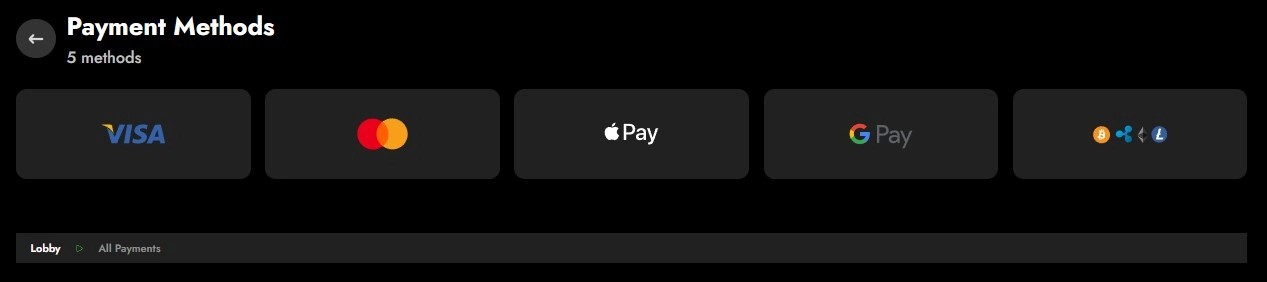
A specialist review gives these indicative windows for different methods: e-wallets, 1–24 hours; credit or debit cards, 3–5 business days; and bank transfers, 5–7 business days or longer. These are reported estimates, not a fixed schedule for every account or transaction. They may not include the time required for the operator to review a request or complete verification.
The distinction matters most when comparing payment methods. An e-wallet estimate can be short once processing begins, while a bank-transfer estimate explicitly allows for a longer wait. Neither estimate resolves how long a pending account check may take. A withdrawal request made before verification is complete cannot be treated as though the payment clock were already running.
Processing estimate of 1–24 hours.
Processing estimate of 3–5 business days.
Processing estimate of 5–7 business days or longer.
Before relying on a stated House of Pokies withdrawal time, the relevant terms should be checked against the current cashier information and the account’s verification status. Payment methods and processing arrangements can change, and a review’s estimate may not reflect the conditions applying to a particular request. A useful comparison records the method, the stated processing window and whether identity checks have been completed; without those distinctions, a single time figure says little about the likely wait.
Real-Money Spins and the Meaning of a Pokie Outcome
A real-money pokie records each spin as a separate event. The result of the previous spin does not alter the next one: a win does not make another win more likely, and a run of losses does not make a payout due. A sequence can look patterned to a player, but the next outcome is not a correction for what came before.
That distinction matters when interpreting a session. A short run can produce results well above or below a game’s stated return without contradicting its design. Individual outcomes are variable; the return figure describes behaviour across an effectively unlimited number of spins, not a target that a single account or session must reach.
RTP, or return to player, is a theoretical percentage of the total amount wagered that a pokie is expected to pay back across infinite spins. It is not a forecast of the amount returned on a particular visit, nor does it specify when a payout will occur. The calculation aggregates many spins, including results from many plays. A player’s own session is only a small sample against that theoretical horizon.
The same reasoning applies whether a spin follows a paid stake or a free-spin feature. A promotional label does not make an individual outcome predictable, and a code does not change the meaning of randomness. Real-money play adds a direct financial consequence to each stake, but it does not make previous results informative about the next spin.
For anyone comparing House of Pokies with other real-money pokies, the useful distinction is between a game’s long-run theoretical return and the outcome of a particular session. The former describes a model over an infinite number of spins; the latter is a finite sequence of independent events. Treating the theoretical figure as a personal recovery schedule would assign it a job it does not perform.
Is House of Pokies Safe? The Regulatory Limits
Whether House of Pokies is safe for someone in Australia cannot be established by a site loading or a page remaining reachable. Availability is not a safety check, and it does not establish that Australian protections apply to a dispute.
The relevant regulator is the Australian Communications and Media Authority (ACMA). It oversees compliance with federal interactive-gambling rules, including the Interactive Gambling Act 2001. Where a website offers prohibited gambling services or advertises them in Australia, ACMA can ask internet service providers to block access. A block is an enforcement measure, not a rating of a particular casino.

The scale of that activity is substantial: ACMA reports blocking more than 1,455 illegal gambling and affiliate websites following enforcement actions since November 2019. Figures for services that have left the Australian market since enforcement began in 2017 are not consistent across accounts. One states that more than 210 services withdrew; another gives a figure of over 190.
These figures describe action across the market. They do not confirm that House of Pokies has been assessed as safe, nor do they verify its current status. A site that can be opened may still be subject to access restrictions, while a blocked site is not made safe by a later change in availability. The regulatory position is therefore a limit on what can be inferred: ACMA enforcement provides context, but it is not a guarantee of account security, payment recovery or a favourable outcome in a dispute.
Prepared by the Oscarspin Casino editorial staff.