






Online Craps Casinos in Australia: Rules and Risks
 Available in AU
The guide separates Australia’s rules for offshore providers from player considerations, then explains gameplay, bonus wagering, verification and payouts.

Table of Contents
- Electronic Craps and the Australian Offshore-Casino Framework
- Live Craps: How Table-Game Wagering Can Affect a Bonus
- How to Play Craps: The First Roll and What Follows
- Free Craps, Odds and the Limits of a Comparison
- Craps Rules and Bonus Terms: Calculate the Wager Before Playing
- Reading a Craps Table Layout Without Guessing at Strategy
- The Craps Casino Game in Australia: Who May Offer It
- Playing Craps for Real Money: Deposits, Verification and Payouts
- Craps Tips for Managing Bonus and Withdrawal Conditions
- Crapless Craps: A Variant the Available Evidence Cannot Assess
Electronic Craps and the Australian Offshore-Casino Framework
Electronic craps sits within the same legal framework as other real-money online casino games in Australia. The central distinction is between the rules applying to a company that provides the service and the position of an individual who uses a foreign-licensed site. Treating those as the same question can make a casino’s offshore licence look more protective than it is.
There are no domestically licensed real-money casino sites available to Australian players. The Interactive Gambling Act 2001 prohibits companies from supplying real-money interactive casino games to people in Australia. A casino based overseas does not become locally authorised simply because it accepts Australian customers or displays a foreign licence. Nor does an offshore licence change the Australian restriction on providing the service.
The law does not make an individual Australian player’s use of a foreign-licensed site a criminal offence. That distinction is narrow: it does not establish that the site is approved in Australia, or that the player receives the protections available under Australian regulation. The legal exposure described in this framework falls on the provider, while the practical safeguards associated with domestic oversight are absent for customers using offshore platforms.
Choosing an online craps casino in Australia is easier when you can quickly check what is known about each operator. Use these brief notes as a starting point and verify the casino’s current terms and availability before playing.
License: Curacao Gaming Control Board OGL/2023/174/0082 (Dama N.V.) SpinsUp is listed with a Curacao Gaming Control Board licence, OGL/2023/174/0082, held by Dama N.V. The available information identifies its licence but does not provide details about its craps offering.
License: Curacao – Antillephone N.V. (Versus Odds B.V.) · Min. deposit: EUR 20 Thor Casino is licensed through Antillephone N.V. for Versus Odds B.V. Its stated minimum deposit is EUR 20; no specific craps details are provided.
License: Curacao Gaming Control Board (TechSolutions Group N.V.) Bizzo Casino is listed with a Curacao Gaming Control Board licence held by TechSolutions Group N.V. The available information does not specify its craps games or other casino features.
License: Curacao Gaming Control Board OGL/2023/176/0095 (Hollycorn N.V.) GoldenCrown is listed with Curacao Gaming Control Board licence OGL/2023/176/0095, held by Hollycorn N.V. No specific details about its craps offering are provided.
License: Curacao eGaming OGL/2023/174/0082 (Dama N.V.) · Min. deposit: A$15 LevelUp Casino is listed with a Curacao eGaming licence, OGL/2023/174/0082, held by Dama N.V. Its stated minimum deposit is A$15, while details about craps are not available here.
License: Curacao Gaming Control Board OGL/2023/176/0095 (Hollycorn N.V.) Rollero Casino is listed with Curacao Gaming Control Board licence OGL/2023/176/0095, held by Hollycorn N.V. The information provided does not describe its craps selection.
License: Curacao eGaming OGL/2024/923/0383 (Antillephone N.V.) · Min. deposit: A$30 WinSpirit Casino is listed with Curacao eGaming licence OGL/2024/923/0383, held by Antillephone N.V. Its stated minimum deposit is A$30; no specific craps details are given.
License: Curacao eGaming (Roby Games Ltd) Roby Casino is listed with a Curacao eGaming licence held by Roby Games Ltd. The available information does not specify its craps offering.
License: Curacao Gaming Control Board JustCasino is listed as holding a Curacao Gaming Control Board licence. No details about its craps games or other features are provided.
License: Curacao (operating since 2017) · Min. deposit: A$20 Uptown Pokies is listed as a Curacao operator and has been operating since 2017. Its stated minimum deposit is A$20; specific craps information is not available.
That matters when assessing a site offering electronic craps. A licence issued outside Australia may indicate that an overseas authority has issued credentials to the operator, but it is not a substitute for Australian authorisation. It also does not bring the platform under the Australian Communications and Media Authority (ACMA). Player protections available through domestic regulators such as ACMA do not extend to offshore casino platforms. If a dispute arises, the existence of a foreign licence should not be mistaken for access to the same complaint or enforcement process available in the domestic system.
A specialist review reports that four casinos it covers hold active licences from recognised offshore authorities. That is a time-sensitive statement about the operators reviewed, not a standing description of the whole market. Licence status can change, and the report does not establish that any operator is locally licensed or that its services are protected by Australian regulators. The useful distinction is between a reported offshore credential and an Australian approval: the former does not supply the latter.
The phrase “online craps casino” describes a product category, not a regulatory status. The same applies to electronic craps presented through a casino website or app. The game’s digital format does not create a separate legal route around the rules for real-money interactive casino services. Whether the interface resembles a physical table or uses an electronic display, the relevant framework concerns the provision of the gambling service, not the appearance of the game.


Access is also not the same as authorisation. Offshore casino services may be subject to blocking and enforcement measures in Australia, so a site appearing online does not prove that it is approved for Australian use or that access will remain available. A foreign licence should therefore be read as information about the operator’s claimed or reported offshore regulatory position, not as a local compliance certificate.
For Australian residents comparing electronic craps platforms, the defensible conclusion is limited. There is no domestic real-money casino licensing route, and an offshore licence does not attach Australian consumer protections to a casino. The legal position of the provider and the protections available to a player are separate matters; neither should be inferred from a game listing, a licence badge, or the fact that a site can be reached.
Live Craps: How Table-Game Wagering Can Affect a Bonus
A bonus balance can look larger than its usable value when the games played contribute only a fraction of each stake toward the wagering requirement. Live-table play contributes less than slots, and live dealer games often count at a rate of 0–10%. Table games typically contribute 10–20%. These are different stated categories, not a promise that every live craps game receives the same treatment.
The distinction matters when a casino labels a game as live dealer play. A live craps table may be subject to the live-dealer weighting in the promotion terms, while a broader table-game category may have a different contribution rate. The category assigned to the specific game and offer determines the calculation. A game’s name alone does not establish how its wagers count.
Contribution Rates
Live dealer games often count at a rate of 0–10%, while table games typically contribute 10–20% toward wagering requirements.
For a simple illustration, if a qualifying stake is counted at 10%, only a tenth of that stake is credited toward wagering. At a 0% contribution, the stake adds nothing to the requirement. This is not a change to the amount wagered or the game’s outcome; it is an accounting rule for bonus clearance. The difference between a stake and its credited amount is where a seemingly playable offer can become slow to clear.
Slots generally contribute fully, so the same stake may move a wagering requirement further on a slot than at a live table. That comparison is about bonus accounting, not game quality or expected return. A higher contribution rate does not make a game more suitable for a particular balance, and it does not remove the offer’s other conditions.
Live craps should therefore be assessed against the exact promotion terms rather than a general assumption about casino table games. Terms may assign separate rates to table games and live dealer games, or exclude particular games. Where the wording is unclear, the contribution rate cannot safely be inferred from the provider, the live presentation, or the fact that the game resembles a table game. The written classification is the operative one.
The calculation is straightforward once the rate is known: multiply the qualifying stake by the contribution rate to find the amount credited. Repeating that calculation across play gives the progress toward the requirement. A low rate means more wagering is needed to produce the same credited progress; it does not mean the player owes a separate fee. At the bottom of the live-dealer range, play may produce no progress at all.


Contribution is only one condition. Bonus offers can also impose a maximum bet and exclude games, and violating those terms can void bonus winnings. The wagering requirement must be cleared before a withdrawal request is accepted. An active promotion can therefore restrict access to funds even when a live session has produced a cash balance on screen. The displayed balance is not necessarily withdrawable while its associated wagering remains incomplete.
Before using a bonus on online live casino craps, the relevant checks are the game’s listed contribution, whether live dealer games are eligible, the maximum permitted bet, and any excluded-game wording. The full terms and conditions should be reviewed before play begins. If live play receives little or no credit, accepting the promotion may add a longer clearance condition without adding equivalent progress. The arithmetic is less generous than the presentation.
How to Play Craps: The First Roll and What Follows
A clear account of a craps round depends on the game’s own instructions, not on assumptions carried over from another casino game. The label “first roll” does not, by itself, explain what wagers are available, when they are settled or what happens next. Those details determine how a round works and should be understood before any money is committed.
Following a Round
Identify when the round begins and which wagers are available at that moment.
Establish what the game treats as the relevant result of the opening roll.
Check whether play continues under a changed condition or ends there.
Confirm when each wager is settled and what result controls that settlement.
The useful starting point is the sequence shown by the specific game. Its rules should identify the opening state, the event that moves play forward, and the point at which a wager is resolved. They should also explain whether a decision is required between those stages. Without those links, a description of the first roll can sound complete while leaving out the conditions that determine the result.
Track the round, not just the roll
A roll is an event; a round is the full process around it. To follow play, the important distinction is between an event that changes the state of the game and one that settles a wager. The interface or rules should make clear which is happening. Otherwise, a displayed result may be mistaken for the end of the round when another stage still applies.
A sensible reading order is:
- identify when the round begins and which wagers are available at that moment;
- establish what the game treats as the relevant result of the opening roll;
- check whether play continues under a changed condition or ends there;
- confirm when each wager is settled and what result controls that settlement.
These are questions to resolve from the game’s stated rules, not conclusions that can safely be inferred from the name of a bet or the animation on screen. A button, label or visual marker is not a substitute for the written condition attached to the wager.
Decisions need defined consequences
Knowing how to bet on craps means knowing more than where a stake can be placed. Each available choice needs a defined trigger and an outcome: what event makes it win, lose or remain unsettled, and whether the choice can be changed after play begins. If any of those terms are unclear, the value of the wager cannot be assessed from its label alone.
The same standard applies to casino play in person and online. A digital display may present the sequence differently from a physical table, but presentation does not establish the underlying rules. Before starting, the game instructions should explain the order of events and the consequences of each decision. If the explanation and the interface appear inconsistent, the discrepancy should be resolved before staking money.
A step-by-step understanding also prevents a common reasoning error: treating a visible outcome as evidence that a particular decision was correct. One result does not establish that a choice has a favourable long-term value, and a run of outcomes does not prove a reliable method for winning. Claims about winning at craps require more than a remembered sequence or a confident-sounding tip; they depend on the actual rules and probabilities governing the game.


The practical standard is therefore exact rather than elaborate: establish what starts a round, what changes its state, which decisions remain available, and when the wager is finally resolved. Until those points are clear, a description of how to play craps online—or at a casino—would leave the central mechanics to guesswork.
Free Craps, Odds and the Limits of a Comparison
“Free” and “real-money” describe different financial conditions, not different levels of certainty about a game. A free-play option, where one is offered, does not by itself show that the same game, rules or available bets apply in real-money play. Nor does the label establish whether any balance or winnings can be withdrawn. Those details depend on the terms attached to the offer, and should not be inferred from its name.
That distinction matters when comparing online craps. A demonstration mode may be useful for seeing an interface, but it cannot establish the cost or outcome of wagering with money. Conversely, a real-money table’s presentation does not establish that it has better odds. Without confirmed rules and a clearly stated basis for the comparison, either conclusion is guesswork dressed as a rating.
Attention: A free-play option does not guarantee that the same rules, available bets, or odds apply to real-money play.
What “odds” needs to specify
Craps odds are not a single figure that can be applied to every wager or every version of a game. A meaningful comparison would need to identify the particular bet being assessed and the rules that determine its outcomes. It would also need to distinguish the probability of an outcome from the payout attached to it. These are related, but they are not interchangeable: a payout alone does not show how likely the result is.
A claim about the “best odds” therefore has no useful meaning unless its scope is clear. Is the comparison about one specified bet, the game as a whole, or the potential return under a stated set of conditions? If those terms are absent, a ranking cannot be checked. A favourable-sounding label supplies none of the missing calculation.
The same restraint applies to comparisons between electronic and live formats. A format name does not establish a particular set of rules, a payout structure or a mathematical advantage. The relevant details must be stated for the specific game and bet. Without them, describing one format as offering better casino craps odds would claim more than the comparison supports.
What free play can and cannot show
Free online craps may sound like a low-cost way to assess a game, but the phrase alone does not confirm that a free version is available or explain what it permits. Even where a no-cash mode exists, it should not be treated as proof of real-money conditions. The game may be presented differently, and the terms governing any promotional balance or winnings may differ from ordinary cash play.

A comparison should consequently separate three questions: whether a free mode is offered, what its terms allow, and whether the real-money game’s rules and payouts are disclosed. An answer to one does not settle the others. If the terms do not say whether a balance is withdrawable, it should not be counted as cash value. If the game information does not state the relevant rules and payouts, an odds comparison cannot be completed.
For anyone weighing the best online casino for craps, a headline about free casino craps or “best odds” is not a substitute for those particulars. A defensible comparison needs identifiable game rules, bet-specific probabilities and payouts, plus clear conditions for any free-play balance. Without that basis, no reliable conclusion follows about the best casinos for online craps in Australia in 2026. The gap is not a minor detail: it is the calculation.
Craps Rules and Bonus Terms: Calculate the Wager Before Playing
A bonus is not a cash addition with no conditions attached. Its wagering requirement sets the amount that must be bet before eligible winnings can be withdrawn. The calculation starts with the basis named in the offer: the bonus alone, or the deposit and bonus together. Those produce different totals, even when the displayed multiplier is identical.
Let B represent the bonus amount and D the deposit. If the terms apply a multiplier m to the bonus, the required turnover is m × B. If the multiplier applies to the combined deposit and bonus, it is m × (D + B). The second formula creates a larger target whenever the deposit is positive. An offer’s headline multiple is therefore incomplete information until its calculation base is clear.
Wagering Calculation Formulas
If the multiplier m applies to the bonus B, the turnover is m × B. If it applies to the combined deposit D and bonus B, the turnover is m × (D + B).
A specialist gambling review reports wagering requirements of 30x–45x the bonus amount on pokies offers. That range is a report about those offers, not a default rule for every casino promotion or for craps. A separate specialist review describes a 60x requirement on deposit plus bonus as capable of tying up funds. The arithmetic explains the concern: the multiple applies to a broader base, and the resulting turnover target can be substantial. Neither figure should be assumed to describe a particular craps promotion without its terms.
The next adjustment is game weighting. A dollar wagered does not necessarily count as a dollar of qualifying turnover. Slots generally receive full contribution, while a table game may count at a reduced rate under the offer’s rules. If a game contributes a fraction c, the qualifying turnover from a bet of W is W × c. Reaching a target of T then requires total bets of T ÷ c, assuming the same contribution rate throughout. A reduced weighting increases the amount that must be wagered to clear the requirement; it does not reduce the stated target.
That distinction matters when assessing an online casino craps bonus. The label “table game” does not establish how a particular craps title is weighted. The promotion may assign a game category, exclude certain games, or specify a contribution rate in its own terms. The title and format alone are not a reliable basis for calculating credited play. If craps is excluded, wagers on it do not advance the requirement; if it is included at partial weighting, only the credited portion counts.

Maximum-bet rules affect the calculation from the other direction. A bet above the stated cap while wagering on a promotion can void bonus winnings. Excluded games can have the same consequence. The target may be mathematically reachable, yet the route taken can still make the winnings ineligible. A balance displayed in the account does not override those conditions.
Before accepting an offer, the financial check is straightforward: identify whether the multiplier applies to the bonus or the combined deposit and bonus; calculate the turnover target; confirm the craps game’s weighting and eligibility; and note the maximum permitted bet. Read the full terms before play, including any conditions in the account’s promotions area. If any of those inputs is unclear, the final wagering cost cannot be calculated reliably. The bonus has a value only after those conditions are accounted for.
Reading a Craps Table Layout Without Guessing at Strategy
A picture of a craps table can look informative while leaving the important questions unanswered. Labels and marked areas are not, by themselves, enough to establish what a wager does, when it is accepted or how a result is settled. Those details need to be confirmed for the particular game before a layout can support a tutorial or a strategic recommendation.
A useful guide would identify each area on the table and explain its meaning in the game being shown. It would also distinguish the visual position of a control from the conditions attached to using it. Without that explanation, a diagram may invite assumptions: that two similarly placed options work alike, or that a prominent marking indicates a sensible choice. Neither follows from appearance alone.
Do
- Connect table markings to stated rules
- Explain assumptions behind a choice
- Separate description from advice
Don’t
- Assume layout positions imply strategy
- Treat similar layouts as interchangeable
- Rely on confident tones without calculation
The same caution applies to casino craps strategy. A strategy claim needs a defined wager, the conditions under which it is made and the outcome it is intended to affect. A label on a casino craps table cannot establish those points on its own. Nor does a tutorial become reliable merely by walking through the visible layout. It has to explain what each instruction depends on, rather than turning an unexplained screen into a sequence of confident directions.
For a reader comparing guides, the practical test is whether the explanation connects the marking to a stated rule. If it does not, the recommendation has no clear basis. Claims that a particular area is “safe,” “best” or strategically superior are not calculations unless the relevant rules and assumptions are made explicit. In money terms, a recommendation without those inputs has no auditable result.
This is especially important where a diagram is presented without enough context to identify the game or its rules. Similar-looking layouts should not be treated as interchangeable on appearance alone. A casino craps table layout needs to be tied to the game it represents; otherwise, advice drawn from it may not apply to the table in front of the player. A detailed graphic can still leave the central decision unsupported.
A careful craps tutorial therefore separates description from advice. Description names what is shown and explains the terms. Advice states the rule and assumptions that make a choice relevant. If either link is absent, the sensible conclusion is not that the layout proves a strategy, but that the strategy has not been demonstrated.

That is a narrower standard than a promise of a winning system, and a more useful one. A layout can help orient a player only when its markings are explained against the applicable rules. Until then, the image is a diagram, not a decision model. A confident tone cannot supply the missing calculation.
The Craps Casino Game in Australia: Who May Offer It
The legal distinction is between the person placing a wager and the company supplying the game. Under the Interactive Gambling Act 2001, an individual Australian resident does not commit an offence simply by playing casino craps on a foreign-licensed site. The Act does not make the player’s participation in that offshore service a criminal offence.
That does not give an operator permission to provide real-money casino games from within Australia. The Act prohibits companies from supplying those services to people in Australia from a domestic base. A business operating under an overseas licence is therefore not equivalent to an Australian-licensed casino, and a foreign licence does not authorise domestic provision.
Curaçao, Malta and Anjouan are among the offshore jurisdictions under which casinos used by Australian residents may be licensed. Most online casinos that accept Australian players are registered in Curaçao. Those details describe the operator’s offshore licensing position; they do not establish that the operator is licensed under Australian law or that local player protections apply.
The distinction matters for any casino game, including craps. Whether a site offers a digital version, a live table or another format does not change the central legal question: where the company is based and whether it is providing real-money interactive gambling services to people in Australia. The game’s name or table format does not create a separate exemption.
Legal Status
An offshore licence is not a substitute for Australian authorisation and does not provide players with protections available under domestic regulation.
A casino game’s rules are also separate from its legal status. Knowing how a craps game works cannot establish that the company offering it is authorised to operate in Australia. Conversely, the fact that a player is not criminalised for using a foreign-licensed site does not convert that site into a locally regulated service. These are different positions under the same legal framework, not two descriptions of one licence.
For Aussie punters, the practical reading is narrow: offshore licensing may identify the jurisdiction that supervises the operator, while Australian law governs what companies may provide from within the country. ACMA protections available for domestic services do not extend to offshore platforms. The player’s lack of criminal liability should not be mistaken for local approval, a domestic licence or equivalent recourse if a dispute arises.
Playing Craps for Real Money: Deposits, Verification and Payouts
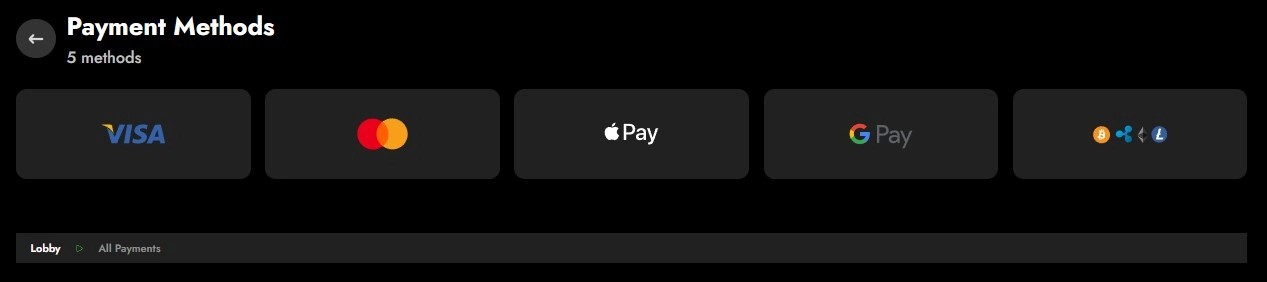
Funding an account and receiving a payout are separate transactions, with different method restrictions. Deposits may be accepted through card payments, e-wallets or cryptocurrency. The method available depends on the operator, and a payment option shown at deposit should not be assumed to work in reverse.
Neosurf illustrates the distinction: its vouchers can fund an account, but they cannot receive withdrawals. A voucher balance therefore does not provide a cash-out route. Before depositing, the account’s withdrawal methods and any requirements attached to them need to be checked in the terms. Otherwise, the deposit can be straightforward while the exit route remains unresolved.
Cards also require care. The general availability of card deposits does not mean that every card type is appropriate for online gambling transactions; credit-card payments for online gambling services are prohibited. E-wallets and cryptocurrency are other possible deposit channels, but their presence on a cashier page does not establish that they are available for withdrawal or that a particular payout will be processed through them. The operator’s stated payment conditions determine the route.

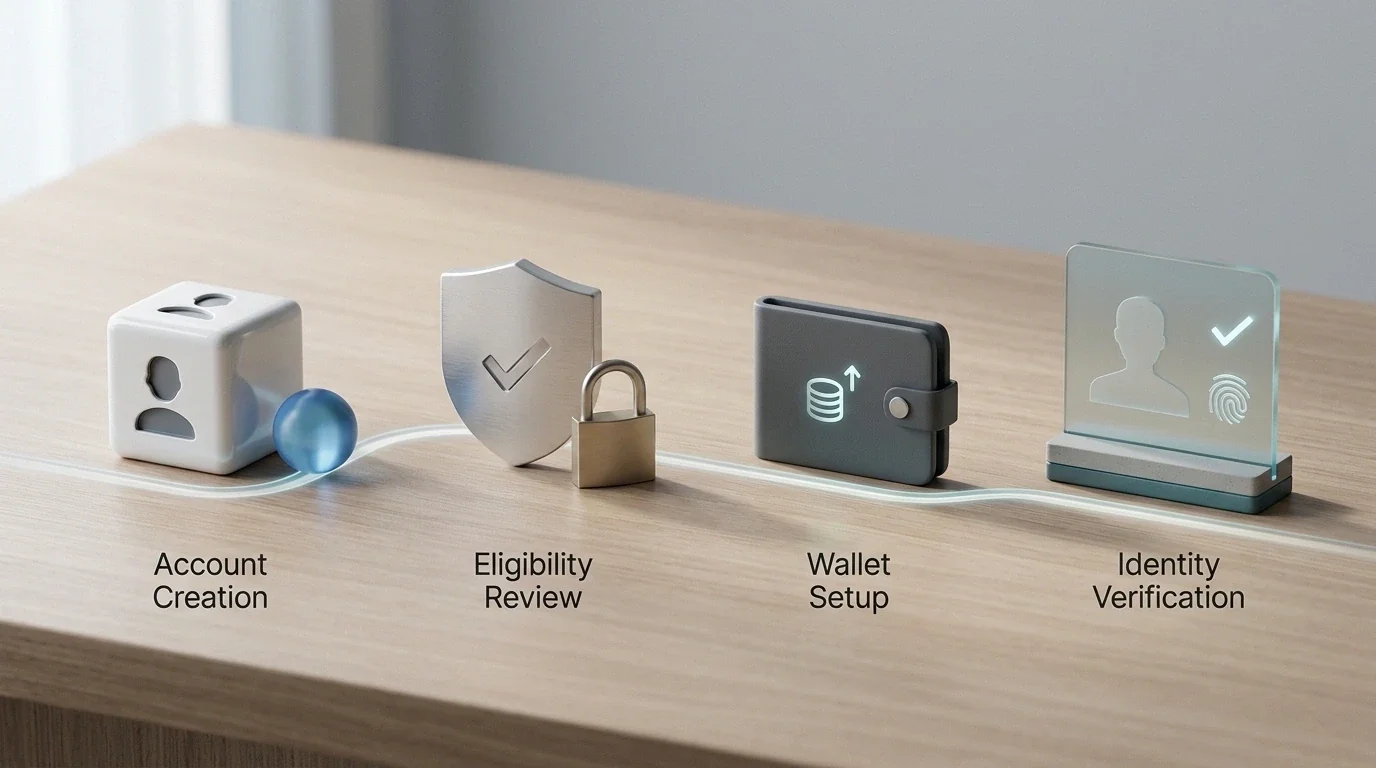
Identity checks can affect when a withdrawal is processed. A specialist review reports that casinos may require government-issued identification and proof of address when a withdrawal exceeds the operator’s threshold. The threshold is not universal, so it cannot be inferred from another casino’s policy. The account holder’s name and address should match the submitted documents; a mismatch can create a verification issue at the point funds are requested.
That timing matters because verification is not merely an account-opening formality. If documents are requested only after a withdrawal application, processing may pause while the operator reviews them. Completing identity checks before requesting a payout can reduce that particular source of delay, although it cannot determine how quickly the operator handles the payment itself.
For a casino craps game played with real money, the practical sequence is therefore to establish which deposit methods are permitted, confirm the available withdrawal route, and understand what identity documents may be required. Deposit acceptance alone says little about payout access. A deposit-only voucher is especially clear: it moves money in, not out. The transaction terms—not the game label—set the usable path from funding to withdrawal.
Craps Tips for Managing Bonus and Withdrawal Conditions
A withdrawal is an account process, not just a payment instruction. The useful craps tips are therefore administrative: clear promotion conditions, complete identity checks and understand any operator hold before treating a balance as available cash. None of these checks changes the game’s outcome; they determine whether funds can leave the account.
Withdrawal Readiness
- Review all promotion terms and conditions
- Complete all active wagering requirements
- Verify maximum-bet and excluded-game rules
- Complete all identity verification checks
- Confirm available withdrawal routes
An active bonus can prevent a withdrawal while its wagering requirement remains incomplete. A request made during that period may be declined, or the bonus and associated winnings may be forfeited. The balance shown on screen can therefore exceed the amount currently eligible for withdrawal. The distinction is contractual, not cosmetic.
Before playing under a promotion, read the full terms and conditions, including any rules on eligible games and maximum bets. Keep each bet within the stated cap and avoid excluded games. Breaching either condition can void bonus winnings. Where a promotion has unusual wagering conditions, the full terms in Account – Promotions need to be understood before play begins; a headline offer is not a substitute for the calculation.
Withdrawal holds introduce a separate risk. A specialist review reported that some casinos hold requests for 0–24 hours, during which a player may be able to cancel and wager the money again. That is a report about particular terms, not a universal processing standard. The hold policy should be checked before a request is submitted, and a pending withdrawal should not be treated as spending money without consequence.
Verification is another point of failure. A specialist review identified account-verification status as the most common trigger for withdrawal delays. Identity verification should be completed before requesting a withdrawal, rather than left until a balance is ready to cash out. If documents are still outstanding, the payment timeline may depend on resolving that account check first.
A clean sequence is straightforward: review the promotion terms, finish any active wagering, check the maximum-bet and excluded-game rules, complete verification, then submit the withdrawal. Keep a record of the request and its status. If a hold permits cancellation, cancelling can return the funds to play rather than move them closer to a bank account. That is a choice with a measurable cost: the withdrawal remains unfinished, while the balance is exposed to further wagering.

Crapless Craps: A Variant the Available Evidence Cannot Assess
The name crapless craps identifies a variant, but the label alone does not establish how it differs from standard casino craps. It does not confirm the available bets, the sequence of play, the treatment of particular rolls or the house edge. Those details cannot be inferred safely from the name.
That distinction matters when comparing games. A familiar title can suggest continuity while leaving the rules that determine outcomes unspecified. Without a ruleset for a particular version, there is no reliable basis for describing its mechanics or calculating its odds. Calling it a variant is not enough to establish what happens at the table.
Availability is equally uncertain. The title by itself does not show whether a casino offers the game, whether it is presented electronically or through a live table, or whether versions at different sites share the same rules. A listing or promotional label can identify a product, but it cannot substitute for the game’s rules and payout information.

A meaningful assessment would require the operator’s rules for the exact version, along with its available wagers and payout schedule. The rules would need to explain how each relevant outcome is treated; the payout information would need to make the return for each wager clear. Any comparison with standard craps would then have to use the same basis for both games. Without those particulars, statements about strategy, risk or relative value would be speculation.
For Aussie punters, the practical conclusion is narrow: crapless craps cannot be ranked against standard craps on the strength of its name. Nor can a general description establish that a particular casino craps offering uses one consistent set of rules. The version’s own documentation is the necessary starting point; until that is available and clear, claims about its mechanics and odds remain unsubstantiated.
The distinction is not a minor technicality. Rules define what a wager means, and odds depend on those rules. A variant name may help locate a game, but it is not evidence of how the game works. In money terms, an unverified comparison has no usable result.
Can you play at an online casino in Australia?
Yes, playing at a foreign-licensed casino is not a criminal offence for an individual Australian resident. However, companies are prohibited from providing real-money online casino games to Australians, and offshore sites are not locally licensed or covered by Australian regulator protections.
Which payment methods can Australians use?
Deposits can be made by card, e-wallet or cryptocurrency; Neosurf vouchers are deposit-only. Available withdrawal methods include cryptocurrency, PayID, credit-card refunds and bank transfers.
Are withdrawals simple, and how long do they take?
Withdrawals can be delayed if your account verification is incomplete, and casinos may hold requests for 0–24 hours, during which you may be able to cancel them. You may need to provide government ID and proof of address for withdrawals above certain thresholds.
Written by the editors at Oscarspin Casino.