






Aussie Pokies Online in Australia: A Practical Guide
 Available in AU
A guide to free and paid play, random outcomes, payment routes and the conditions that shape online pokies in Australia.

Table of Contents
- Free Play and the Limits of a Practice Session
- Real-Money Play and the Australian Legal Position
- How Return-to-Player Settings Can Differ
- PayID Transfers and the Deposit Route
- Social-Casino Language Versus Real-Money Gambling
- Browser Access, Randomness and Session Controls
- Pokies in the Australian Online Context
- Bonus Turnover: The Amount That Must Be Wagered
- A Ranking Is Only as Useful as Its Evidence
- Downloads, Verification and Withdrawal Conditions
Free Play and the Limits of a Practice Session
Free play and real-money play may look similar at the level of a spinning reel, but they are not the same kind of activity. A no-stakes session involves no money being risked on each spin and produces no real-money winnings. Its value is limited to experiencing the basic sequence of play: a spin begins, symbols appear, and the result is displayed. That can make the format useful for understanding the flow of a pokie, but it cannot show what a later paid session will produce.
The distinction matters because familiarity can be mistaken for evidence. A practice session may feel informative after a run of results appears to follow a pattern. It is not a record of what must happen next. Each pokie spin is generated as a separate random event by a Random Number Generator (RNG). The previous result does not determine the next one, whether the earlier spin took place in free play or involved money.
That independence places a firm limit on what practice can establish. A sequence of favourable results does not demonstrate that another favourable result is due. A sequence of losing results does not make a win more likely on the next spin. The same applies when the session is extended: more observations can create a longer record, but they do not turn past outcomes into instructions for future ones.
Free aussie pokies can therefore offer a low-stakes way to become acquainted with the mechanics of play, not a rehearsal that forecasts a later outcome. The distinction is straightforward: free play can show how the game presents a spin; it cannot reveal what a subsequent spin will return. Treating one as a test of the other gives a practice session more predictive power than it has.
The interface may also encourage a sense of continuity. Repeated spins appear one after another, and the visible sequence is easy to read as a developing story. But the order on screen does not mean the game is building towards a result. A near miss, a cluster of similar symbols or a long interval without a particular outcome does not create a debt that the next spin has to settle. Randomness does not keep accounts in that way.
This is why a free pokies session should be read as an experience of the interface, not as a sample from which to calculate a personal forecast. Even if a session contains many spins, its outcomes describe only the events that have already occurred. They do not establish a dependable pattern for a later session. Practice can make the sequence of actions familiar; it cannot remove uncertainty from the result.
The same limit applies to switching between free and paid play. A change in whether money is involved does not make the earlier spins predictive. The prior session remains prior history, not a signal. A result that appeared in free play has no special claim on the next real-money spin, and a run of outcomes during paid play does not reach backwards and validate a practice-session theory.
The phrase “free spins” can also blur two different ideas. A no-stakes practice spin is not the same thing as a promise of cashable winnings. The word “free” describes the absence of a stake for that play; it does not, by itself, establish that any resulting balance has monetary value. The relevant point is the status of the play, not how a session is labelled.
For anyone comparing free pokies online with play involving money, the cleanest distinction is therefore practical rather than predictive. No-stakes play can familiarise a person with how a pokie presents its mechanics. It does not supply a forecast, a reliable edge or evidence that a particular result is approaching. Each spin starts as a separate random event, and a practice session cannot change that.
Real-Money Play and the Australian Legal Position
Real-money pokies sit on the wrong side of a clear legal distinction in Australia: the Interactive Gambling Act 2001 prohibits operators from providing them to people in Australia unless they hold a domestic licence. No domestic licences for online casinos have been issued, and there is no Australian-licensed online casino. A website’s willingness to accept Australian customers does not change that position.
Legal Risk
Under the Interactive Gambling Act 2001, it is prohibited for operators to provide real-money online casino games to people in Australia without a domestic licence.
The restriction is directed at the company providing the service, not at the individual player. Australians are not made criminally liable simply for playing on an offshore site that accepts them. That distinction matters, but it is not a guarantee of safety or a recommendation to use such a service. The operator’s conduct and the player’s exposure are separate legal questions; answering one does not settle the other.
The practical gap is protection. If an offshore casino refuses to pay winnings, an Australian player has no legal recourse in Australia to compel payment. A balance shown on a screen, or a record of a completed game, does not by itself provide an Australian enforcement route against an overseas operator. In financial terms, the amount displayed and the amount recoverable are not necessarily the same thing.
This is the central risk in real-money Australian pokies online: the law does not provide a local licensing framework for casinos offering these games, while a player’s ability to recover withheld winnings in Australia is absent. That remains true even where a site accepts deposits or permits account access. A working login is an access condition, not evidence of domestic authorisation and not a remedy if a dispute arises.
The word “offshore” can make the arrangement sound like a routine cross-border service. It does not alter the legal status of the offer to people in Australia. Under the Act, the relevant issue is that a company is providing real-money online casino games to customers located here without a domestic licence. The fact that the company operates from another jurisdiction does not create an Australian licence, and none is available for an online casino to rely on.

Nor does the absence of player liability reverse the position for operators. The two statements can coexist: Australian law targets the provider, while an individual is not criminally liable merely for playing. Treating them as interchangeable leads to an inaccurate conclusion. “The player is not the target” does not mean “the service is authorised”; equally, “the operator’s offer is prohibited” does not mean that the player faces the same legal consequences.
Searches for real-money Aussie pokies often combine several separate expectations: a game that accepts a cash stake, a service open to Australian residents, and a way to enforce a payout if something goes wrong. The legal position does not join those conditions into a protected domestic product. There is no licensed Australian online casino behind such an arrangement, and there is no Australian legal route to recover winnings from an offshore casino that withholds them.
That limitation changes the value of any advertised balance. A promise to pay is useful only if it can be enforced when challenged. Where Australian recourse is unavailable, the player’s practical position depends on an offshore operator’s willingness to resolve the dispute, rather than on an Australian casino licence. That is a material difference from a domestic, locally enforceable service—not a minor qualification in the terms.
The legal distinction should therefore be read narrowly. It identifies who the Act targets and what protection is missing; it does not certify an offshore site, validate its terms, or imply that a player should use one. The fact that an offshore service accepts Australian customers describes access, not legal approval. Likewise, the absence of player liability does not create a right to a payout that can be enforced in Australia.
Attention: If an offshore casino refuses to pay winnings, an Australian player has no legal recourse in Australia to compel payment.
For anyone assessing real-money play, the decisive figures are not only the stake and any displayed winnings. The enforceability of the payout is part of the transaction’s value. In this market, where no Australian-licensed online casino exists, an offshore casino’s refusal to pay leaves the Australian player without legal recourse at home. That is the practical consequence of the operator–player distinction: the operator’s offer is prohibited, the player is not criminally liable merely for playing, and local recovery of withheld winnings is unavailable.
How Return-to-Player Settings Can Differ
A return-to-player figure belongs to a particular game configuration, not automatically to every version of that game available through every casino. A specialist review reports that some game providers let casinos select from multiple RTP settings for a given pokie. As a result, the same title can be associated with different stated return percentages at different casinos.
That distinction matters when comparing Australian online pokies. A game name alone does not establish its RTP setting. Nor does a figure shown for one version establish that another casino offers the same configuration. The title may be identical while the selected setting differs. Treating the game name as the complete comparison unit can therefore produce a false like-for-like comparison.
RTP, or return to player, is a percentage used to describe a game’s designed return over play. It is not a forecast of what an individual session will return, and it does not specify what will happen on a particular spin. A stated percentage is most useful as a description of the configuration it applies to. It should not be read as a payout promise or as evidence that the same figure applies wherever the game appears.

The practical issue is attribution: which setting does a published figure describe, and does that setting match the version being compared? A comparison that gives a game title and one RTP number without identifying the relevant configuration leaves that question unanswered. The number may be accurate for one version while still being unsuitable as a description of another.
Compare settings, not just titles
A careful comparison keeps three things separate: the name of the pokie, the RTP setting associated with it, and the casino where that setting is offered. Combining these into one label obscures the difference between a game’s identity and its configuration. If the setting is not specified, the comparison has less precision than the displayed figure may suggest.
This also limits what can be concluded from a game catalogue. Seeing the same title in two places does not, by itself, establish that both are configured identically. Likewise, a return figure attached to a title in one description should not be transferred to another casino’s version without confirmation that the setting is the same.
The distinction is not a technical footnote. RTP figures can shape comparisons, so the setting attached to the figure affects what the comparison actually means. A higher stated return for one configuration does not show that every version of that pokie has that return. It describes only the setting to which the figure applies.

What a stated figure can and cannot show
A clearly attributed RTP figure can help distinguish between configurations of a game. It cannot establish the configuration available elsewhere, predict the result of an individual play session, or turn a game title into a complete measure of value. Those are separate questions, and the percentage does not answer them all.
For a comparison to be meaningful, the stated return needs to be linked to the specific game setting being discussed. Without that link, two figures may appear comparable while referring to different configurations—or one figure may be treated as universal when it is not. In that situation, the problem is not necessarily arithmetic. It is that the comparison has not established what each number describes.
The same care applies when a game is mentioned in more than one context. A title’s familiar name can make separate versions look interchangeable, but the reported availability of selectable settings means that assumption is not safe. The visible label may remain constant while the return setting differs. A comparison based on names alone can miss that difference.
This is why a general claim about the return of a particular pokie needs qualification. The relevant statement is not simply that the game has a given percentage; it is that a particular version or setting is associated with that figure. If the configuration is not identified, the claim should not be carried over to every casino offering the game.

A narrower basis for comparison
For people assessing the best Australian online pokies, RTP is one comparison point, not a complete verdict. The same game may have more than one available setting, so the figure must be tied to the version being assessed. A list that repeats one percentage beside a title without distinguishing its configuration can imply a consistency that the available information does not establish.
The defensible comparison is therefore narrow: identify the game, identify the setting, and keep the stated return attached to that setting. If those details are not clear, the percentage cannot support a precise comparison between casinos. The title may be the same; the setting need not be.
PayID Transfers and the Deposit Route
PayID is not a separate bank account or a gambling-specific payment product. It is an alias layer connected to Australia’s New Payments Platform (NPP): a transfer can be directed using an email address, mobile number or Australian Business Number (ABN), rather than entering the recipient’s bank details. The underlying movement of funds still depends on a bank account linked to the PayID.
The NPP is supported by all major Australian banks and uses end-to-end encryption. Those are characteristics of the payment infrastructure, not a guarantee that every transfer will be accepted by a bank or merchant. Nor does the presence of a PayID option establish anything about the recipient beyond the payment route it offers. The alias makes a transfer address easier to use; it does not turn the recipient into a verified or approved gambling service.
The account link comes first
Using PayID for real-money play at an online casino requires linking the PayID to a bank account before attempting a deposit. That connection is the practical starting point: without an eligible linked account, the alias cannot route funds from that account through the NPP.
PayID is an alias layer connected to Australia’s New Payments Platform (NPP) that allows transfers using an email, mobile number, or ABN instead of bank details.
The distinction matters because PayID can sound like a standalone balance or wallet. It is neither. It identifies the account destination or sender through an alias, while the linked bank account remains part of the transfer. A deposit journey therefore has at least two separate points to consider: whether PayID has been connected to the relevant bank account, and whether the bank permits the particular transfer.
A payment option shown on a cashier page is not evidence that a bank will process every transaction. Banks can apply their own restrictions to payments identified as gambling-related, so availability at the payment interface and approval at the bank are separate conditions.
Bank restrictions can interrupt the route
A specialist gambling review has reported that some Australian banks, including members of the Big Four, occasionally block PayID transfers to known gambling merchants. That should be read as a report about possible restrictions, not as a fixed rule applying to every bank, account or transaction. Banking policies and merchant-recognition practices can change, and an individual transfer may be treated differently from another.
In practical terms, a blocked transfer is a payment constraint, not a technical failure of the PayID alias itself. The alias may be valid and the account linked, while the bank still declines the transaction. A deposit attempt can therefore fail after the setup is complete. Repeated attempts do not alter the bank’s underlying decision, and the existence of another payment button does not establish that it will be accepted either.
The relevant calculation is straightforward: PayID removes the need to enter conventional account details for each transfer, but it does not remove the bank’s role in authorising the movement of money. The convenience is in the addressing method; approval remains a separate step.

For anyone assessing a PayID route, the useful distinction is between three things that can easily be conflated: the NPP infrastructure, the PayID alias linked to an account, and the bank’s decision on a gambling-related payment. Only the first two describe how the route is set up. The third determines whether a particular transfer proceeds. A payment label alone cannot settle that question.
Social-Casino Language Versus Real-Money Gambling
“Social casino” and “real-money casino” describe different ideas, but a label alone does not establish what a service offers. In particular, calling something an Aussie pokies social casino does not, by itself, explain whether money can be staked, whether prizes have cash value, or whether the service is available in Australia. Those details depend on the actual product and its terms, not the wording used to describe it.
The distinction matters because Australian law addresses real-money online pokies specifically. Under the Interactive Gambling Act 2001, a company cannot provide them to Australian residents without a domestic licence. Australia has no licensed online casino, and no domestic licences have been issued for this purpose. The legal position for a real-money service therefore cannot be inferred from a friendly or social-sounding name.
The reverse assumption is unsafe too. A social label does not establish that an offering is free of real-money gambling, or settle how it should be classified. A description is not a substitute for examining what the service actually allows. The label also says nothing on its own about a product’s features or availability.
That distinction applies to searches for an Aussie pokies social casino in Melbourne as much as it does elsewhere in Australia. A city reference identifies a location of interest; it does not demonstrate that a particular service operates there or that its legal status differs from the national position. Nor does “social casino Melbourne” identify a separate category of Australian-licensed online casino.

For a comparison of real-money online casinos, social-casino wording is therefore not evidence of a suitable real-money option. The relevant question is what the service permits, while the legal framework for real-money online pokies remains the same. Treating the names as interchangeable can obscure the central difference: a social description and a real-money gambling service are not established as the same thing merely because both use casino language.
Browser Access, Randomness and Session Controls
Access through a browser does not change how a pokie’s outcome is produced. Each spin is generated separately through a Random Number Generator (RNG), so the result of one turn does not set the result of the next. A run of wins, a run of losses or a long pause between spins provides no reliable signal about what will happen next. The mechanism gives no basis for treating a particular time, sequence or playing pattern as predictive.

That distinction matters when a session feels as though it has acquired momentum. A previous result is history, not an input that makes the next result more or less likely. The same applies after a long losing spell: the RNG does not owe a balancing win. Without a dependable link between past outcomes and the next spin, a session cannot be managed by trying to infer a pattern from recent results.
Session controls address a different problem. Deposit limits set a ceiling on money added; loss limits set a boundary on losses; session-time limits restrict how long play continues. Self-exclusion is a stronger access control, intended to prevent further participation under its terms. These are standard responsible-gambling tools, but they do not alter the RNG or improve the odds of a result. Their function is to put boundaries around exposure, not to convert random play into a predictable activity.
The practical value of a limit depends on treating it as a constraint rather than a target. A deposit ceiling is not a recommended amount to spend, and a loss limit is not a reason to continue until it is reached. Session-time controls likewise define a stopping point; they do not establish that a longer session is more likely to produce a return. The arithmetic remains straightforward: money placed at risk can be lost, while the next spin remains uncertain.

Self-exclusion also has a specific boundary in Australia. BetStop applies to Australian-licensed operators; it does not bind offshore sites. It therefore cannot be treated as a universal block on access to every online pokie service. That limitation is separate from the role of the in-session controls, which can constrain deposits, losses or time where they are available.
Browser access is only the route into a session. It offers no evidence that outcomes can be anticipated, and a familiar-looking interface does not change the independence of spins. The useful distinction is between controls that limit exposure and claims that suggest outcomes can be read in advance. Only the former have a defined role; randomness leaves the latter without a sound basis.
Pokies in the Australian Online Context
The age threshold for gambling in Australia is 18, and online pokies fall within that rule. It is a minimum legal age, not a signal that every form of online gambling is available to adults. The online context is shaped by a separate restriction on the services operators may provide to people in Australia.

The main federal regulator in this area is the Australian Communications and Media Authority (ACMA). Its role includes enforcing the Interactive Gambling Act 2001, which prohibits operators from providing real-money online casino games, including pokies, to people located in Australia. This is distinct from the age requirement: being old enough to gamble does not change the rules governing a service.
ACMA also takes action against illegal offshore gambling services by directing internet service providers to restrict access to sites it identifies. Providers must follow the regulator’s blocking directions. A page becoming inaccessible may therefore reflect an enforcement measure rather than an ordinary technical fault. Access controls do not make an offshore service Australian-licensed, nor do they create domestic consumer protections for it.
The practical distinction is between who may legally gamble and what an operator may legally offer. The age rule concerns the individual’s eligibility; the Interactive Gambling Act concerns the service supplied to customers in Australia. Treating those as one question produces the wrong answer. A person may meet the minimum age and still encounter an online service that is prohibited from serving Australian residents.
For Australian-facing information about pokies, ACMA’s role is therefore central: it enforces the federal law and can seek to limit access to prohibited services. The age threshold remains a separate baseline for gambling generally. Neither point should be read as an endorsement of any online casino or as evidence that a particular service is permitted.
Bonus Turnover: The Amount That Must Be Wagered
A bonus balance is conditional credit, not the same amount of cash available to withdraw. The condition that changes its practical value is the wagering requirement: a multiplier applied to the bonus, or to the deposit and bonus combined. The terms must specify which base applies. The difference is material even when the advertised credit is unchanged.
For a $500 bonus with a 40x requirement on the bonus alone, the calculation is $500 × 40 = $20,000 in required bets. That is turnover, not a loss estimate: it measures the total amount wagered before a withdrawal can be made, not the amount that must remain in the account. A player could still have less—or more—than the initial bonus after that volume of play. The headline figure does not settle the final balance.
Bonus Turnover Calculation
Determine if the wagering requirement applies to the bonus alone ($500) or the deposit plus bonus ($1,000).
Multiply the base by the requirement (e.g., $500 × 40 or $1,000 × 35).
Determine the total amount of bets required (e.g., $20,000 or $35,000) before a withdrawal can be made.
If the same $500 offer applies 35x to the deposit plus bonus, and the deposit is also $500, the base becomes $1,000. The calculation is $1,000 × 35 = $35,000 in bets. Although the multiplier is lower, the required turnover is higher because it applies to a larger amount. Comparing the multiplier alone therefore gives an incomplete picture; the base and the multiplier both belong in the calculation.
A specialist review recommends treating requirements of 35x or less as the more manageable range and describes anything above 40x as punishing. That is an assessment, not a universal measure of value. The worked examples show why: a lower multiplier can still produce a larger turnover when the deposit is included. The offer’s actual terms determine the arithmetic.
Free spins have a separate condition to check. Their winnings may be subject to a cash-out cap, so a displayed win need not be withdrawable in full. The cap and wagering rules affect what the promotion can ultimately deliver; the nominal credit does not. A useful comparison records the qualifying base, multiplier, required turnover and any cap together. Without those terms, the bonus amount alone cannot show its effective value.
A Ranking Is Only as Useful as Its Evidence
Choosing an online pokies site is easier when you can review the available licensing and deposit information before deciding. This list offers a concise reference for Australian players looking at options in 2026.
License: Curacao Gaming Control Board OGL/2023/174/0082 (Dama N.V.) SpinsUp is listed with a Curacao Gaming Control Board licence, OGL/2023/174/0082, held by Dama N.V.
License: Curacao – Antillephone N.V. (Versus Odds B.V.) · Min. deposit: EUR 20 Thor Casino is listed with a Curacao licence from Antillephone N.V. for Versus Odds B.V. Its stated minimum deposit is EUR 20.
License: Curacao Gaming Control Board (TechSolutions Group N.V.) Bizzo Casino is listed with a Curacao Gaming Control Board licence held by TechSolutions Group N.V.
License: Curacao Gaming Control Board OGL/2023/176/0095 (Hollycorn N.V.) GoldenCrown is listed with a Curacao Gaming Control Board licence, OGL/2023/176/0095, held by Hollycorn N.V.
License: Curacao eGaming OGL/2023/174/0082 (Dama N.V.) · Min. deposit: A$15 LevelUp Casino is listed with a Curacao eGaming licence, OGL/2023/174/0082, held by Dama N.V. Its stated minimum deposit is A$15.
License: Curacao Gaming Control Board OGL/2023/176/0095 (Hollycorn N.V.) Rollero Casino is listed with a Curacao Gaming Control Board licence, OGL/2023/176/0095, held by Hollycorn N.V.
License: Curacao eGaming OGL/2024/923/0383 (Antillephone N.V.) · Min. deposit: A$30 WinSpirit Casino is listed with a Curacao eGaming licence, OGL/2024/923/0383, held by Antillephone N.V. Its stated minimum deposit is A$30.
License: Curacao eGaming (Roby Games Ltd) Roby Casino is listed with a Curacao eGaming licence held by Roby Games Ltd.
License: Curacao Gaming Control Board JustCasino is listed with a Curacao Gaming Control Board licence.
License: Curacao (operating since 2017) · Min. deposit: A$20 Uptown Pokies is listed as operating since 2017 under a Curacao licence. Its stated minimum deposit is A$20.
A ranking of pokies is meaningful only when its comparison criteria can be checked. A title’s popularity, visual style or familiar name does not establish its return to player (RTP), and a position near the top of a list says nothing about the setting attached to the game at a particular casino.
A specialist review reports that some providers let casinos choose between multiple RTP settings for the same pokie. As a result, one named game may have different stated return percentages at different casinos. A ranking that names a game without identifying the applicable setting leaves out a material part of the comparison. The title alone is not enough to calculate what its stated return means.
This also limits what a useful comparison can claim. A list of “top” games needs evidence tied to the particular version being assessed, rather than a general reputation or a ranking copied from another market. Without that link, the order is presentation, not a reliable measure of return. Even a correctly stated RTP describes a theoretical return over extended play; it does not predict the result of an individual session.
The practical distinction is between identifying a game and establishing its terms. The same title can be present in more than one casino, while its selected RTP setting differs. A comparison therefore needs to connect the game, the casino and the stated setting before its ranking can carry weight. Where that information is not available, naming a supposed winner would create precision without evidence. The sensible conclusion is narrower: compare the setting attached to the specific game, not the title’s rank in isolation.

Downloads, Verification and Withdrawal Conditions
A download label describes a route to access, not a confirmed app or a defined set of features. It does not establish that a downloadable client exists, what devices it supports or how it differs from browser access. Those details need to be confirmed for the specific service before any file is installed; the word “download” alone is not enough to assess what is being offered.
Withdrawal conditions are more concrete. A specialist review reports that casinos commonly request identity checks before a first withdrawal. Documents may include a photo of identification and proof of address, with some services also asking for a selfie showing the identification. The exact document list can vary, so the terms attached to an account matter more than a general label such as “verified”.
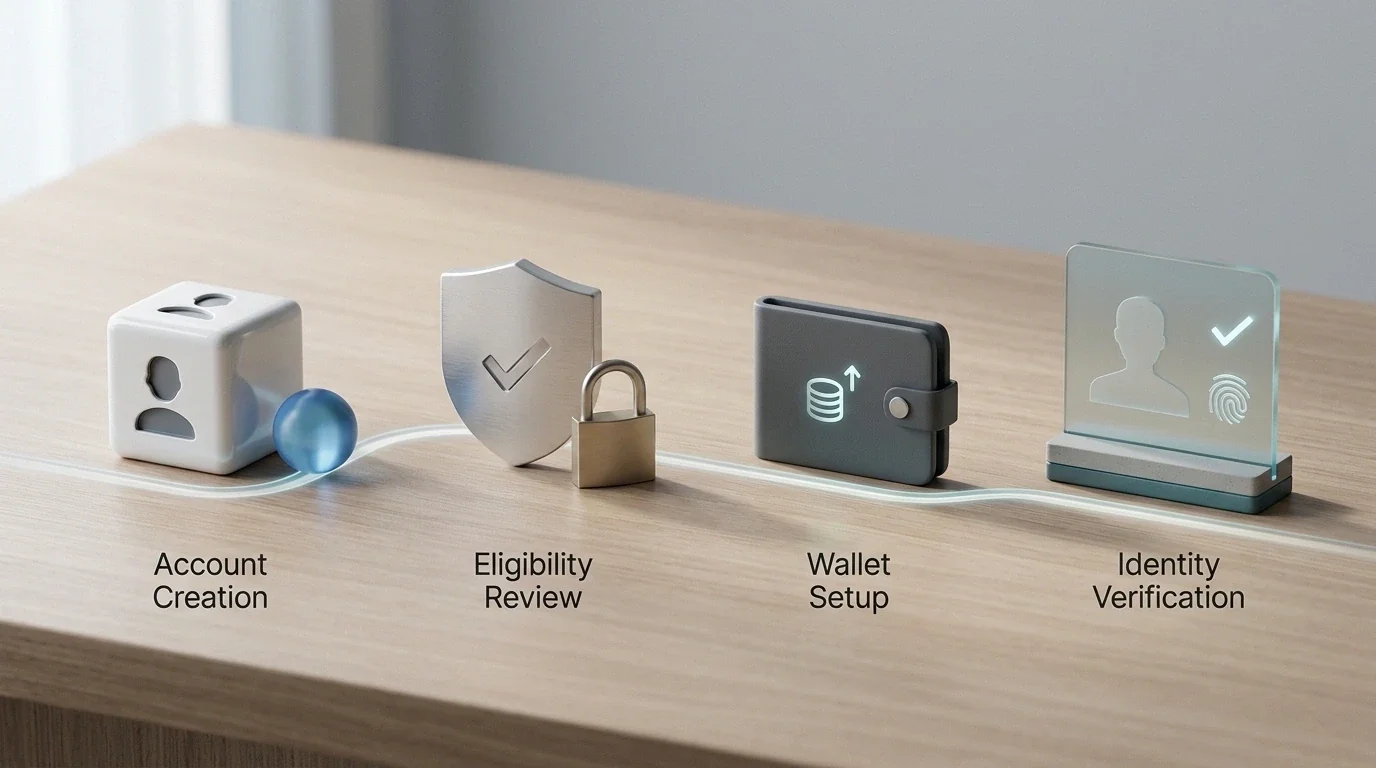
Identity and address documents should be submitted and approved before a first withdrawal is requested. Otherwise, a balance may be displayed while the account still lacks the checks needed to process a payout. That is a timing condition, not a minor administrative detail: the cash-out depends on both the account balance and completion of the required verification.
A sensible comparison therefore separates two questions. First, is there a clearly described download and does its description specify what it installs? Second, what documents must be supplied and when must approval be complete for withdrawal? If either condition is unclear, the cost is uncertainty rather than a confirmed benefit. A download does not remove verification requirements, and an attractive access label does not settle the conditions attached to getting funds out.
Are online pokies legal for Australian players?
Australian law prohibits operators from offering real-money online pokies to people in Australia without a domestic licence, and no such licences have been issued. The law targets operators, not individual players, but Australians who use offshore sites have no legal recourse in Australia if a site withholds winnings.
What is the legal age for online gambling in Australia?
You must be 18 or older to gamble online in Australia.
Can casinos change the RTP of their games?
Yes. Some game providers allow casinos to choose from multiple RTP settings, so the same pokie can have different return percentages at different casinos.
What is the cost-benefit calculation of casino promotions?
Compare the bonus with the total betting required to meet its wagering terms, and check any cash-out caps. For example, a $500 bonus at 40x requires $20,000 in bets; if the 35x requirement applies to a $500 deposit plus a $500 bonus, it requires $35,000 in bets.
What does “wagering requirement” actually mean?
It is the turnover multiplier that tells you how much you must bet before bonus-related winnings can be withdrawn. For example, a 40x requirement on a $500 bonus means $20,000 in bets.
Can I play pokies for free?
Yes, no-stakes practice play can let you try a pokie’s mechanics without risking money, but it does not produce real-money winnings or predict future spins.
Created by the ”Oscarspin Casino” editorial team.